
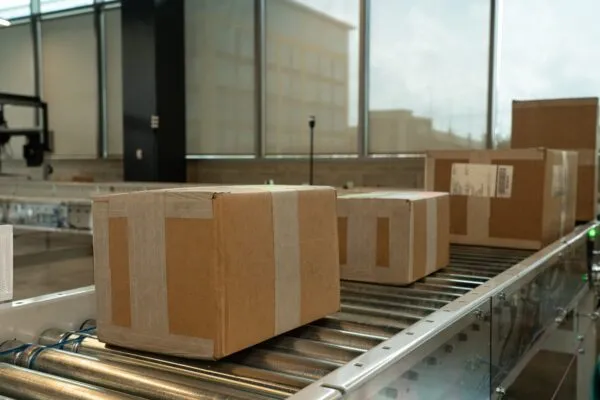
Package Handling
DCS’s design and engineering team has more than 40 years of experience creating unique parcel handling systems for diverse customer applications. With installations including semi-automated handling in small city distribution centers and fully automated, integrated hubs with advanced conveyor and sorter equipment, DCS routinely thinks outside the box.
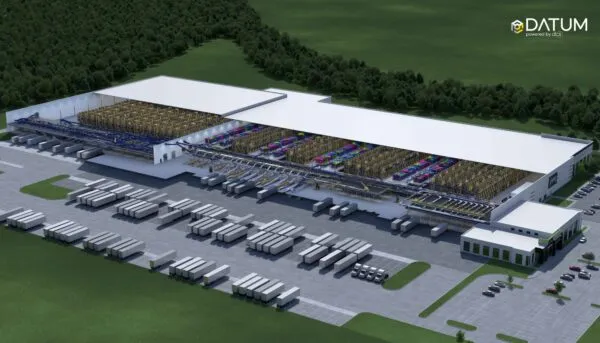
E-Commerce and Multi-Channel Fulfillment
DCS designs and implements end-to-end warehouse automation solutions for e-commerce and multi-channel retailers that address numerous workflow challenges. This includes solutions for receiving, putaway, storage, replenishment, order fulfillment, picking, packing, sortation, and outbound shipping. Our custom integrated warehouse, distribution, and fulfillment systems draw from a deep pool of conventional, semi-automated, and automated material handling technologies.
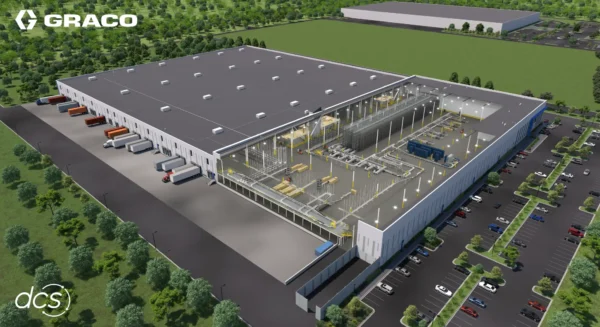
Various Distribution Applications
Whether an operation is considering the construction of a new distribution or fulfillment center, or a retrofit or expansion of an existing facility, it’s important to create a solution that fits the overarching supply chain strategy. DCS has four decades of experience designing and integrating comprehensive, end-to-end material handling solutions that meet a multitude of operational goals. Whether conventional, semi-automated, or fully automated, DCS can help your organization implement a custom solution that meets its goals while maximizing return on investment (ROI).

Supply Chain Consulting
The DCS Supply Chain Consulting team offers a range of services to help your operations address the challenges it faces. Working in partnership with you, DCS consultants analyze your business data- existing workforce, workflow processes, inventory, order data, operations, and more- to determine a strategy that addresses your unique needs. Whether you need an operations assessment, process improvement recommendations, or distribution design services, DCS consultants will help guide you to the material handling system or operational solution that best meets your current and future needs, as well as your budget.

Customer Support
Keeping your warehouse operations and material handling systems running smoothly and at the peak of productivity are the goals of DCS’ Customer Service Team. By partnering with DCS, your warehouse automation solution is supported from commissioning to end of life. You’ll receive comprehensive in-house training of your personnel, including specialized training of your designated internal system expert. Plus, DCS offers a complete package of spare parts and expert system troubleshooting support from qualified engineers dedicated to your installation.

System Design & Integration
DCS offers a broad range of material handling equipment and automated system design, installation, and integration services for a multitude of projects. These include retrofits, expansions, upgrades, and more. While every project is unique, our system design and execution processes are the same, encompassing meticulous attention to detail, frequent communication, and a dedicated partnership with our clients.
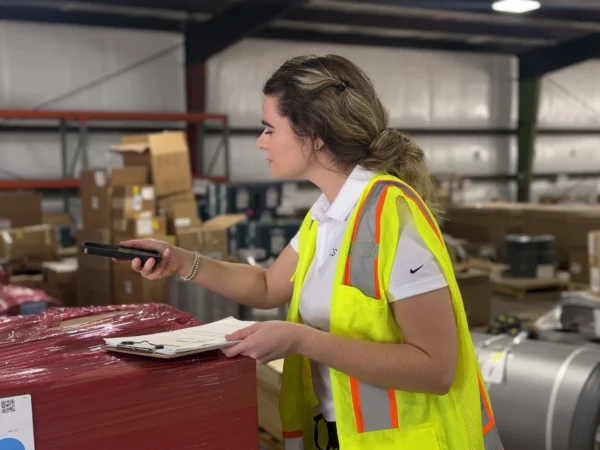
Lifecycle Services
Stop reactive repairs. Lifecycle Services provides expert preventive maintenance and 24/7 technical support to protect your automation and MHE availability.

Life Science & Healthcare
Pharmaceutical, healthcare, and life science companies face mounting pressure from evolving regulatory requirements, rising fulfillment costs, and intensifying accuracy demands. In this environment, automation isn’t optional—it’s essential. Designed Conveyor Systems (DCS) helps distributors of these critical products stay compliant and competitive.

Pet Care
Pet food distribution operations are anything but standard. From bulky kibble bags to delicate fish tanks, stock keeping unit (SKU) complexity and fulfillment pressure are always on the rise. Designed Conveyor Systems (DCS) partners with leading pet retailers to design and engineer automation, software, and material handling systems that keep operations agile, accurate, and ready for what’s next.

Home Improvement
When your distribution center handles everything from hammers to hot tubs, operational complexity isn’t a challenge—it’s your daily reality. Home improvement retailers face intense pressure to meet rising consumer expectations across multiple channels—from in-store pickups to last-mile delivery. At Designed Conveyor Systems (DCS), we specialize in engineering material handling and automation solutions that help home improvement distribution centers keep pace, reduce cost, and drive accuracy at scale.

Sporting Goods
Navigating the unique demands of the sporting goods retail industry requires a distribution strategy that’s both agile and precise. From handling seasonal surges to managing a diverse range of products—from bulky equipment to small accessories—your warehouse operations are the key to a seamless customer experience. Our expertise helps sporting goods retailers streamline their distribution warehouses, improving order accuracy, boosting productivity, and ensuring your team can efficiently move products from the receiving dock to the final customer, no matter the season.

Footwear
In the fast-paced world of footwear retail requires a distribution strategy that can handle a vast array of styles, sizes, and seasonal trends with precision and speed. From managing a high volume of SKUs to ensuring accurate order fulfillment and returns processing, your distribution center is the engine that drives customer satisfaction and brand loyalty. Our expertise helps footwear retailers streamline their distribution centers, improving inventory management, accelerating order processing, and ensuring your team can efficiently move products from the receiving dock to the final customer, no matter the season.

Wholesale & Industrial Distribution
Designed Conveyor Systems (DCS) partners with wholesale, industrial, and electronics distributors to design efficient, optimized fulfillment solutions. Every operation DCS designs streamlines end-to-end functional processes—from inbound receiving and putaway to picking, packing, and shipping. Designed Conveyor Systems (DCS) partners with wholesale, industrial, and electronics distributors to design efficient, optimized fulfillment solutions. Every operation DCS designs streamlines end-to-end functional processes—from inbound receiving and putaway to picking, packing, and shipping.




About Us
Designed Conveyor Systems (DCS) has 40 years of experience serving major clients in multiple industries by providing material handling, full-scale warehouse operations, and conveyor design solutions that are custom crafted for their needs. DCS does not sell ready-made conveyor systems but builds relationships that empower collaboration to craft custom warehouse designs together. DCS utilizes consulting, engineering design, project management, installation services, and client support to ensure our customers can keep their promises to deliver on time.
Projects
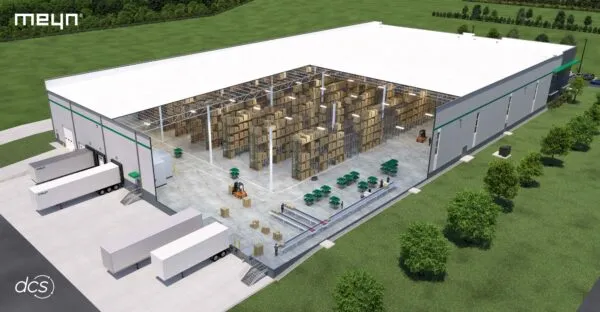
With more than 40 years of experience providing automated system design, installation, and integration services, DCS has created solutions for companies throughout the United States in a broad range of industries and markets. We’ve completed more than 1500 projects ranging from greenfield facilities with completely new systems to expansions and retrofits of existing operations.
Upcoming Events
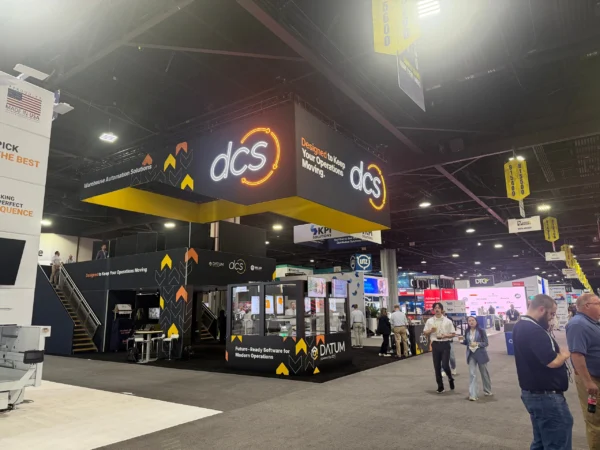
Designed Conveyor Systems values building strong relationships with our clients. Join us at our upcoming events to collaborate and discover how we can design a custom warehouse solution tailored to your unique needs.
PART 2 – Deploying Large-Scale Goods-to-Person (GTP) Automation: How Modern Fulfillment Centers Make the Leap
PART 2 – Deploying Large-Scale Goods-to-Person (GTP) Automation: How Modern Fulfillment Centers Make the Leap
By: Chris Mehl, Senior Director and Account Executive, Designed Conveyor Systems
Part 1 of this two-part post focused on the decisions that inform the design of a large-scale goods-to-person automated system. Part 2 explores bringing a GTP system from design to reality.
Deploying a GTP design requires as much planning and coordination as the engineering behind it. This is where the concepts on paper meet the operational pressures of a live fulfillment environment, and every decision—from software integration to installation sequencing—directly affects business continuity.
DCS treats deployment as a coordinated transformation rather than a handoff. Every deployment aligns people, processes, and technology so the system comes online smoothly, safely, and without compromising daily throughput.
Software Integration
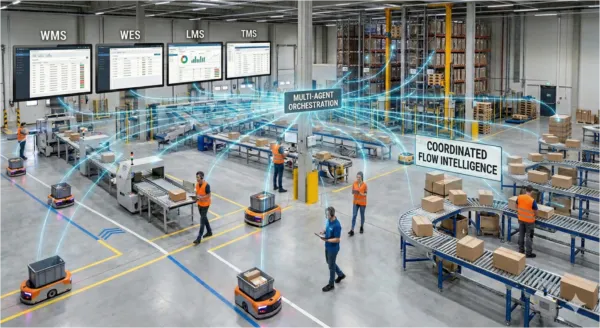
Large-scale goods-to-person warehouse automation systems only perform as well as the software that drives it. While the hardware may be the most visible part of the project, the real complexity—and the real performance potential—comes from aligning the new automation with the customer’s existing fulfillment ecosystem.
Every GTP system operates with unique algorithms for tote delivery, pod sequencing, slotting logic, and decision-making. That requires a warehouse execution system (WES) capable of translating all those parameters into clean, reliable communication across platforms. The WES must also be able to parse inventory rules, task orchestration, and the nonstop flow of system messages that keep orders moving.
Because DCS is equipment-agnostic, every automated warehouse design incorporates the optimal technology for the operation—regardless of original equipment manufacturer (OEM) or brand. Our proprietary WES, DATUM™™, serves as the intelligence layer that synchronizes robots, shuttles, controls, and software ecosystems. This ensures the entire solution functions as a single, orchestrated system.
Phased Implementation
No large-scale GTP installation succeeds with a “flip the switch” approach. Whether it’s a greenfield build or a brownfield retrofit, DCS’ mission is the same: transform the operation without disrupting it.
DCS brings delivery teams and project managers into the process early to map physical constraints, safety requirements, workflow realities, and the responsibilities on both sides of the project. Developing a step-plan that contemplates the various work streams is critical to identifying interdependencies, sequencing, integration risks, and decision gates.
These details are especially vital in brownfield environments, where facilities must continue shipping orders while equipment is being removed, shifted, or installed.
Applying a phased strategy mitigates risk while enabling the operation to maintain daily throughput targets during inventory transitioning and employee training, without sacrificing customer service. This discipline, combined with proactive communication with customer stakeholders, underscores every DCS deployment.
Realistic Timelines
While most large-scale GTP solutions fall within the nine- to 18-month deployment window, timelines depend on how early the project uncovers critical constraints. Delays almost always stem from surprises rather than complexity.
Local permitting and code compliance—including fire protection requirements, egress adjustments, and seismic considerations—can extend schedules if they surface too late. Additional risks include supplier lead times, late-stage scope changes, or new business requirements introduced midstream.
DCS minimizes these risks by involving compliance experts from the start, ensuring the team understands local codes, building requirements, and inspection timelines before drawings are finalized and equipment is ordered. Eliminating blind spots at the outset is the single most effective way to keep large-scale deployments on schedule.
Commissioning & Tuning
To ensure peak functionality, deployment testing must mirror real operational conditions—not ideal scenarios. Effective test planning includes exception handling, historical problem cases, congestion events, workstation balancing, recovery logic, and peak-hour stress testing. The small percentage of exception workflows often represents the largest potential productivity loss, which is why validating and tuning them before go-live is essential.
DCS encourages customers to assign a dedicated test lead and a cross-functional testing group that understands day-to-day operational realities. Thorough training and iterative tuning during commissioning ultimately determine whether the system reaches its promised throughput on day one and scales reliably during peak.
Measuring Success and Return on Investment (ROI)
For large-scale goods-to-person warehouse automation systems, success isn’t defined only by performance on day one—it’s defined by whether the system meets the objectives established at the very beginning of the project. For that reason, DCS encourages customers to define their long-term success metrics early and revisit them throughout design, implementation, and commissioning. Those targets become the lens through which ROI is ultimately measured.
Productivity, accuracy, and scalability remain the core quantifiable metrics. A properly designed GTP system routinely enables operators to achieve 400–1,000+ lines per hour—productivity levels manual processes cannot approach. Accuracy climbs to 99.9% or higher, significantly reducing returns and elevating the customer experience. And because capacity can grow through incremental additions—robots, shuttles, storage modules, or workstations—the system scales without wholesale redesign.
Ultimately, however, real ROI only becomes clear once the system stabilizes. No operation is 100% effective on day one. The true measure comes three to six months after go-live, once workflows settle, teams gain proficiency, and tuning refinements are complete. At that point, leaders can compare actual throughput, accuracy, and labor efficiency against the operational models created at the start of the project.
Success is achieved when the system consistently meets peak-day requirements, aligns with long-range volume projections, and demonstrates the performance levels the modeling predicted. When those conditions are met, the investment delivers exactly what large-scale GTP automation is designed to provide: predictable, repeatable, scalable fulfillment performance that positions the operation for the future.
Partner with DCS to Deploy Goods-to-Person Warehouse Automation at Scale—Without Disrupting Operations
As SKU counts grow and service-level expectations continue to rise, high-volume fulfillment operations are under constant pressure to move faster, handle more variability, and absorb peak demand without sacrificing accuracy or uptime. Large-scale goods-to-person warehouse automation has become the execution layer that makes that possible—but only when it’s deployed with discipline.
DCS helps operations move from design intent to operational reality. Through phased deployment strategies, software-first integration, and rigorous commissioning, we ensure GTP systems deliver the throughput, reliability, and scalability they were designed for—without disrupting the business in the process. Partner with DCS to deploy with confidence and build an automation platform that performs not just at go-live, but for every peak season ahead.