
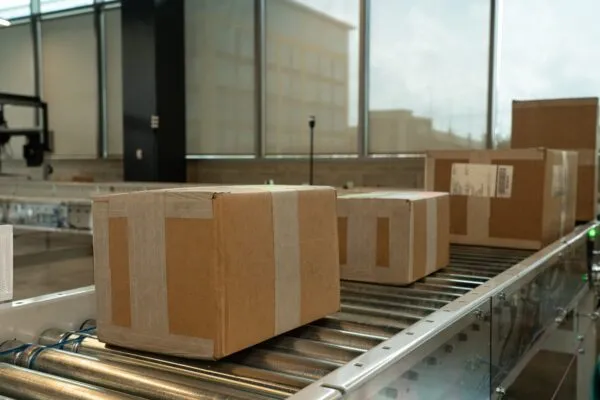
Package Handling
DCS’s design and engineering team has more than 40 years of experience creating unique parcel handling systems for diverse customer applications. With installations including semi-automated handling in small city distribution centers and fully automated, integrated hubs with advanced conveyor and sorter equipment, DCS routinely thinks outside the box.
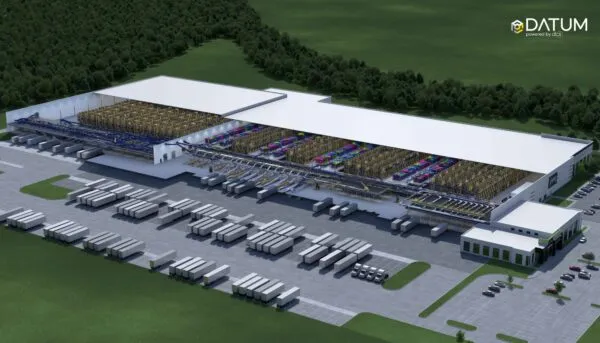
E-Commerce and Multi-Channel Fulfillment
DCS designs and implements end-to-end warehouse automation solutions for e-commerce and multi-channel retailers that address numerous workflow challenges. This includes solutions for receiving, putaway, storage, replenishment, order fulfillment, picking, packing, sortation, and outbound shipping. Our custom integrated warehouse, distribution, and fulfillment systems draw from a deep pool of conventional, semi-automated, and automated material handling technologies.
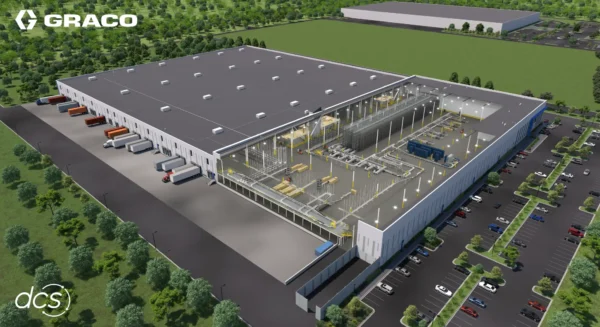
Various Distribution Applications
Whether an operation is considering the construction of a new distribution or fulfillment center, or a retrofit or expansion of an existing facility, it’s important to create a solution that fits the overarching supply chain strategy. DCS has four decades of experience designing and integrating comprehensive, end-to-end material handling solutions that meet a multitude of operational goals. Whether conventional, semi-automated, or fully automated, DCS can help your organization implement a custom solution that meets its goals while maximizing return on investment (ROI).

Supply Chain Consulting
The DCS Supply Chain Consulting team offers a range of services to help your operations address the challenges it faces. Working in partnership with you, DCS consultants analyze your business data- existing workforce, workflow processes, inventory, order data, operations, and more- to determine a strategy that addresses your unique needs. Whether you need an operations assessment, process improvement recommendations, or distribution design services, DCS consultants will help guide you to the material handling system or operational solution that best meets your current and future needs, as well as your budget.

Customer Support
Keeping your warehouse operations and material handling systems running smoothly and at the peak of productivity are the goals of DCS’ Customer Service Team. By partnering with DCS, your warehouse automation solution is supported from commissioning to end of life. You’ll receive comprehensive in-house training of your personnel, including specialized training of your designated internal system expert. Plus, DCS offers a complete package of spare parts and expert system troubleshooting support from qualified engineers dedicated to your installation.

System Design & Integration
DCS offers a broad range of material handling equipment and automated system design, installation, and integration services for a multitude of projects. These include retrofits, expansions, upgrades, and more. While every project is unique, our system design and execution processes are the same, encompassing meticulous attention to detail, frequent communication, and a dedicated partnership with our clients.

Lifecycle Services
Stop reactive repairs. Lifecycle Services provides expert preventive maintenance and 24/7 technical support to protect your automation and MHE availability.

Life Science & Healthcare
Pharmaceutical, healthcare, and life science companies face mounting pressure from evolving regulatory requirements, rising fulfillment costs, and intensifying accuracy demands. In this environment, automation isn’t optional—it’s essential. Designed Conveyor Systems (DCS) helps distributors of these critical products stay compliant and competitive.

Pet Care
Pet food distribution operations are anything but standard. From bulky kibble bags to delicate fish tanks, stock keeping unit (SKU) complexity and fulfillment pressure are always on the rise. Designed Conveyor Systems (DCS) partners with leading pet retailers to design and engineer automation, software, and material handling systems that keep operations agile, accurate, and ready for what’s next.

Home Improvement
When your distribution center handles everything from hammers to hot tubs, operational complexity isn’t a challenge—it’s your daily reality. Home improvement retailers face intense pressure to meet rising consumer expectations across multiple channels—from in-store pickups to last-mile delivery. At Designed Conveyor Systems (DCS), we specialize in engineering material handling and automation solutions that help home improvement distribution centers keep pace, reduce cost, and drive accuracy at scale.

Sporting Goods
Navigating the unique demands of the sporting goods retail industry requires a distribution strategy that’s both agile and precise. From handling seasonal surges to managing a diverse range of products—from bulky equipment to small accessories—your warehouse operations are the key to a seamless customer experience. Our expertise helps sporting goods retailers streamline their distribution warehouses, improving order accuracy, boosting productivity, and ensuring your team can efficiently move products from the receiving dock to the final customer, no matter the season.

Footwear
In the fast-paced world of footwear retail requires a distribution strategy that can handle a vast array of styles, sizes, and seasonal trends with precision and speed. From managing a high volume of SKUs to ensuring accurate order fulfillment and returns processing, your distribution center is the engine that drives customer satisfaction and brand loyalty. Our expertise helps footwear retailers streamline their distribution centers, improving inventory management, accelerating order processing, and ensuring your team can efficiently move products from the receiving dock to the final customer, no matter the season.

Wholesale & Industrial Distribution
Designed Conveyor Systems (DCS) partners with wholesale, industrial, and electronics distributors to design efficient, optimized fulfillment solutions. Every operation DCS designs streamlines end-to-end functional processes—from inbound receiving and putaway to picking, packing, and shipping. Designed Conveyor Systems (DCS) partners with wholesale, industrial, and electronics distributors to design efficient, optimized fulfillment solutions. Every operation DCS designs streamlines end-to-end functional processes—from inbound receiving and putaway to picking, packing, and shipping.



About Us
Designed Conveyor Systems (DCS) has 40 years of experience serving major clients in multiple industries by providing material handling, full-scale warehouse operations, and conveyor design solutions that are custom crafted for their needs. DCS does not sell ready-made conveyor systems but builds relationships that empower collaboration to craft custom warehouse designs together. DCS utilizes consulting, engineering design, project management, installation services, and client support to ensure our customers can keep their promises to deliver on time.
Projects
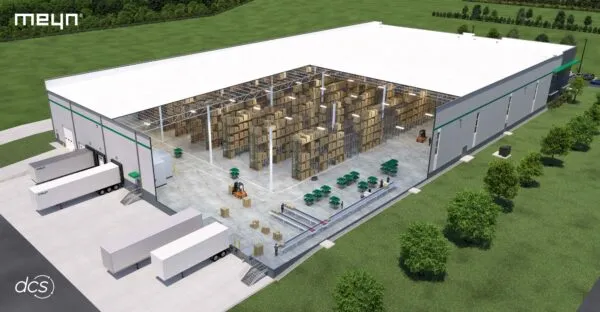
With more than 40 years of experience providing automated system design, installation, and integration services, DCS has created solutions for companies throughout the United States in a broad range of industries and markets. We’ve completed more than 1500 projects ranging from greenfield facilities with completely new systems to expansions and retrofits of existing operations.
Upcoming Events
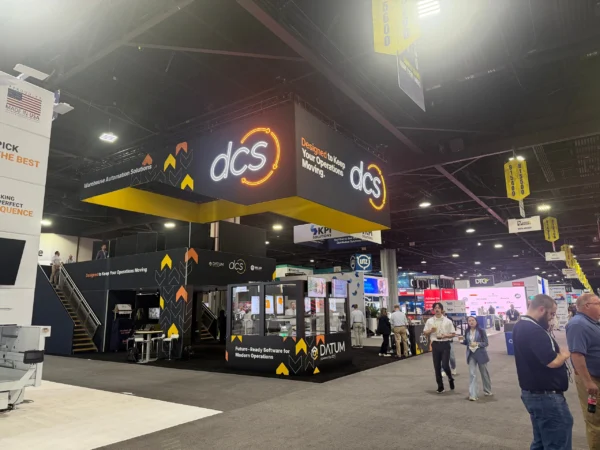
Designed Conveyor Systems values building strong relationships with our clients. Join us at our upcoming events to collaborate and discover how we can design a custom warehouse solution tailored to your unique needs.
Overcoming Wholesale Distribution Challenges with Warehouse Automation
Overcoming Wholesale Distribution Challenges with Warehouse Automation

Wholesale distribution has always required operators to balance service expectations, inventory investment, and operating costs. Today, those pressures are intensifying. Order profiles change more frequently. Customers expect faster turnaround and near-perfect accuracy. Stock keeping unit (SKU) counts continue to expand, and competition leaves little room for inefficiency.
At the same time, labor markets remain tight and supply chains face ongoing disruption. Leaders are being asked to improve performance and protect margins while managing more variability than ever before.
Thoughtful automation, applied with a clear understanding of operational realities, can help wholesale distributors meet those demands. When systems are designed to optimize a facility’s workflows, they create stability, visibility, and the flexibility required for long-term growth.
Designed Conveyor Systems (DCS) has partnered with wholesale and industrial distributors across a wide range of applications. Through those engagements, the DCS team has developed a deep understanding of where operations typically encounter strain and how integrated solutions can transform those challenges into measurable opportunity.
Here are several of the issues that wholesale distribution operations face most often — and how warehouse automation can help.
Inventory Complexity
Managing thousands of SKUs across diverse product families creates inventory complexity that challenges even well-staffed operations. Inaccurate counts, inefficient slotting, and lack of real-time visibility can lead to stockouts, overstocking, and reactive decision-making. These challenges reduce operational agility and increase cost.
Wholesale distributors benefit when inventory systems do more than record transactions. They need systems that drive execution. DCS integrates process intelligence and real-time execution through systems like DATUM™, our proprietary warehouse execution system (WES).
DATUM™ improves decision-making by coordinating inventory movement, automation assets, and labor scheduling based on actual demand and warehouse conditions. This creates visibility and control that many traditional standalone WMS platforms struggle to deliver, helping teams maintain order accuracy and reduce lifecycle inventory issues.
Storage and Flow Requirements
Wholesale product lines often require a mix of storage strategies to support varied sizes, weights, and handling requirements. Fragile parts, long items, and electrostatic-sensitive components each place unique demands on racking, pick zones, and handling systems. Without custom storage logic and dynamic slotting, replenishment and picking become slow and error prone.
To address this, DCS evaluates the storage requirements of a wholesale distribution operation within the context of real workflows. Then, the DCS engineering team designs tailored systems that reduce travel time and maximize space utilization. From goods-to-person automated storage and retrieval systems (AS/RS) and flexible racking to autonomous mobile robots (AMRs) for order consolidation and intelligent outbound sortation systems, the objective is to match storage and handling functionality with how product moves through your specific operation.
>>> CASE STUDY: Read how DCS helped Graco modernize its distribution operation to eliminate bottlenecks
through seamless integration of multiple automation technologies.
Fulfillment Speed
Today’s customers measure fulfillment performance by speed and consistency. When warehouse layouts, manual processes, and disconnected systems cannot keep pace, order cycle times lengthen and customer satisfaction drops. Operations lose advantage when work stalls in queues or travels inefficient paths.
Automation helps compress fulfillment time by removing friction and aligning activities around targeted throughput goals. High-speed conveyors, smart sortation, and connected materials handling reduce wait times and keep work moving continuously.
By improving throughput from pick to pack to ship, DCS-designed automation solutions help distributors deliver service commitments and compete with aggressive delivery expectations. Just as importantly, these systems are designed to be future-proof — flexing during seasonal surges and promotional peaks without sacrificing accuracy or flow stability.
Supply Chain Volatility
Geopolitical uncertainty, port congestion, tariff fluctuations, and changing sourcing patterns influence how distributors must plan and operate. These external pressures require a level of visibility and agility that goes beyond traditional reporting.
DCS takes a data-driven approach to analyzing operational performance, network needs, and potential disruption scenarios. By modeling key inputs such as demand seasonality, carrier constraints, and capacity limits, teams can evaluate tradeoffs, optimize flows, and make strategic improvements that strengthen resilience and adaptability.
Order Accuracy
In wholesale distribution environments where SKUs are numerous and order profiles vary widely, manual processes become error multipliers. Picking wrong SKUs, miscounts, and incorrect packing all increase downstream rework costs and customer dissatisfaction.
Automation equipped with barcode verification, inline scanning, and system-directed workflows removes many sources of human error. When software coordinates activities across zones, reliability increases and variation decreases. DCS builds these capabilities into designs that maintain accuracy while preserving operational flow.
Labor Costs and Retention
Rising labor costs and retention challenges remain among the most persistent issues for distributors. Recruiting and training staff takes time, and turnover introduces variability that hurts performance.
Automation enables teams to shift focus away from repetitive travel and high-touch tasks toward roles that require judgment and oversight. This improves ergonomics and reduces job fatigue, creating an environment where personnel can work more efficiently and safely. The result is a more stable workforce and improved productivity.
>> CASE STUDY: Read how DCS helped Meyn Americas modernize its paper-based picking process to boost throughput and cut both errors and emissions.
Specialized Handling
Value-added services such as kitting, labeling, light assembly, and returns processing are increasingly important differentiators in the wholesale distribution space. These activities bring important revenue opportunities but also introduce complexity that manual processes struggle to scale.
DCS designs these functions within an integrated system, ensuring that specialized handling contributes to — rather than disrupts — visibility and workflow continuity. Workstations receive products in a logical sequence, inventory updates in real time, and execution decisions remain coordinated across the network.
Fragmented Technology
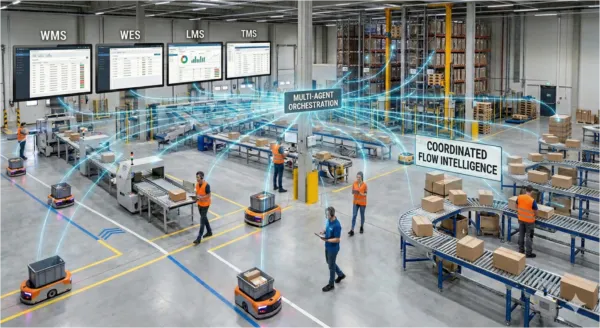
Disconnected systems create data silos, slow fulfillment, and limit operational visibility. When enterprise resource planning (ERP) systems, WMS, automation controls, robotics platforms, and labor systems operate independently, teams spend time reconciling information instead of executing work. Decisions lag reality, and bottlenecks form before anyone sees them.
DATUM™ serves as an intelligent execution layer that connects these environments through multi-agent orchestration. Rather than relying on static rules or isolated control logic, DATUM™ coordinates conveyors, sorters, robotics, and human workflows in real time. Each “agent” monitors its assigned zone or resource while continuously communicating with the broader system to protect overall flow.
This orchestration model allows work to be released based on true downstream capacity, current system health, and shifting operational priorities. If one area slows, DATUM™ dynamically adjusts routing, task assignment, and sequencing to maintain throughput and prevent congestion.
By harmonizing disparate technologies under a unified execution strategy, distributors gain more than integration. They gain adaptive control. Automation systems stop operating as separate islands and begin functioning as one coordinated, responsive network built to handle complexity — including shifting throughput demands.
>> CASE STUDY: Read how DCS implemented DATUM™ WES to help Superior Communications create a unified mix of people and automation to improve picking rates and packing efficiencies.
Building a Path Forward
In 2026 and beyond, automation is not optional for wholesale distribution — it is a central part of competitive strategy. DCS partners with distributors to understand order patterns, seasonality, SKU behavior, and capacity needs. From that foundation, the team builds customized systems that improve throughput, reduce total cost of ownership, and provide visibility from receiving through shipping.
Whether in new facilities or existing brownfield environments, DCS designs solutions that support flexibility, scalability, business continuity, and throughput requirements. When automation is joined with execution intelligence and strong design, distributors gain control over complexity and build operations that are resilient and future ready.
If you are evaluating how automation can strengthen your wholesale operation, now is the time to start the conversation. Connect with DCS to begin defining your automation roadmap.