
Package Handling
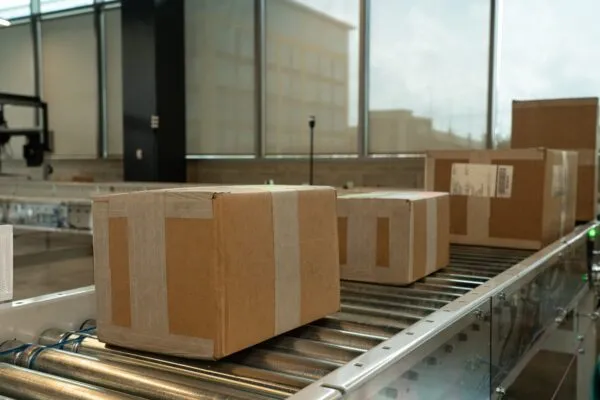
DCS’s design and engineering team has more than 40 years of experience creating unique parcel handling systems for diverse customer applications. With installations including semi-automated handling in small city distribution centers and fully automated, integrated hubs with advanced conveyor and sorter equipment, DCS routinely thinks outside the box.
E-Commerce and Multi-Channel Fulfillment
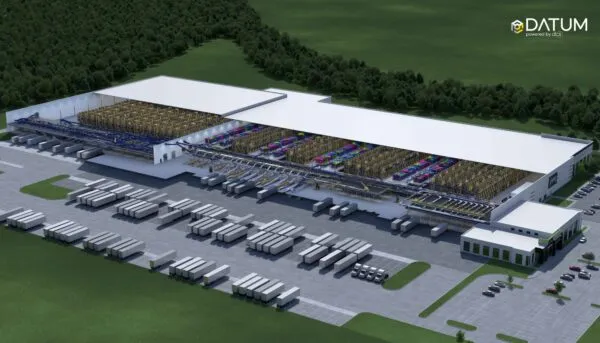
DCS designs and implements end-to-end warehouse automation solutions for e-commerce and multi-channel retailers that address numerous workflow challenges. This includes solutions for receiving, putaway, storage, replenishment, order fulfillment, picking, packing, sortation, and outbound shipping. Our custom integrated warehouse, distribution, and fulfillment systems draw from a deep pool of conventional, semi-automated, and automated material handling technologies.
Various Distribution Applications
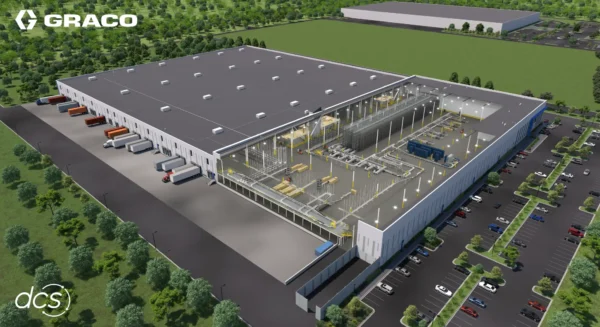
Whether an operation is considering the construction of a new distribution or fulfillment center, or a retrofit or expansion of an existing facility, it’s important to create a solution that fits the overarching supply chain strategy. DCS has four decades of experience designing and integrating comprehensive, end-to-end material handling solutions that meet a multitude of operational goals. Whether conventional, semi-automated, or fully automated, DCS can help your organization implement a custom solution that meets its goals while maximizing return on investment (ROI).

Supply Chain Consulting
The DCS Supply Chain Consulting team offers a range of services to help your operations address the challenges it faces. Working in partnership with you, DCS consultants analyze your business data- existing workforce, workflow processes, inventory, order data, operations, and more- to determine a strategy that addresses your unique needs. Whether you need an operations assessment, process improvement recommendations, or distribution design services, DCS consultants will help guide you to the material handling system or operational solution that best meets your current and future needs, as well as your budget.

Customer Support
Keeping your warehouse operations and material handling systems running smoothly and at the peak of productivity are the goals of DCS’ Customer Service Team. By partnering with DCS, your warehouse automation solution is supported from commissioning to end of life. You’ll receive comprehensive in-house training of your personnel, including specialized training of your designated internal system expert. Plus, DCS offers a complete package of spare parts and expert system troubleshooting support from qualified engineers dedicated to your installation.
System Design & Integration
DCS offers a broad range of material handling equipment and automated system design, installation, and integration services for a multitude of projects. These include retrofits, expansions, upgrades, and more. While every project is unique, our system design and execution processes are the same, encompassing meticulous attention to detail, frequent communication, and a dedicated partnership with our clients.
Lifecycle Services
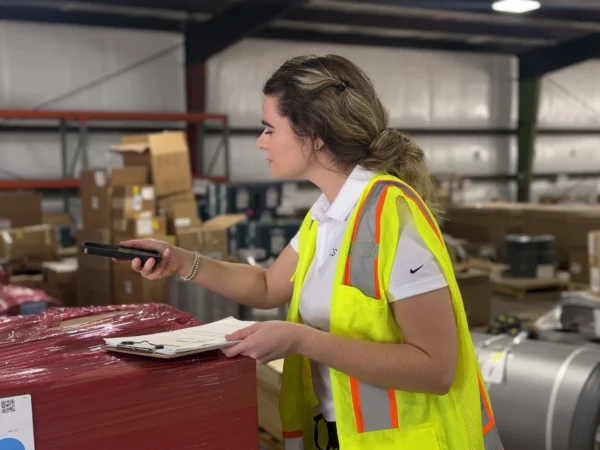
Stop reactive repairs. Lifecycle Services provides expert preventive maintenance and 24/7 technical support to protect your automation and MHE availability.

Life Science & Healthcare
Pharmaceutical, healthcare, and life science companies face mounting pressure from evolving regulatory requirements, rising fulfillment costs, and intensifying accuracy demands. In this environment, automation isn’t optional—it’s essential. Designed Conveyor Systems (DCS) helps distributors of these critical products stay compliant and competitive.

Pet Food
Pet food distribution operations are anything but standard. From bulky kibble bags to delicate fish tanks, stock keeping unit (SKU) complexity and fulfillment pressure are always on the rise. Designed Conveyor Systems (DCS) partners with leading pet retailers to design and engineer automation, software, and material handling systems that keep operations agile, accurate, and ready for what’s next.

Home Improvement
When your distribution center handles everything from hammers to hot tubs, operational complexity isn’t a challenge—it’s your daily reality. Home improvement retailers face intense pressure to meet rising consumer expectations across multiple channels—from in-store pickups to last-mile delivery. At Designed Conveyor Systems (DCS), we specialize in engineering material handling and automation solutions that help home improvement distribution centers keep pace, reduce cost, and drive accuracy at scale.

Sporting Goods
Navigating the unique demands of the sporting goods retail industry requires a distribution strategy that’s both agile and precise. From handling seasonal surges to managing a diverse range of products—from bulky equipment to small accessories—your warehouse operations are the key to a seamless customer experience. Our expertise helps sporting goods retailers streamline their distribution warehouses, improving order accuracy, boosting productivity, and ensuring your team can efficiently move products from the receiving dock to the final customer, no matter the season.
Footwear
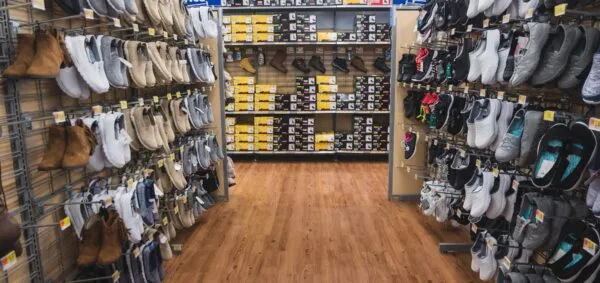
In the fast-paced world of footwear retail requires a distribution strategy that can handle a vast array of styles, sizes, and seasonal trends with precision and speed. From managing a high volume of SKUs to ensuring accurate order fulfillment and returns processing, your distribution center is the engine that drives customer satisfaction and brand loyalty. Our expertise helps footwear retailers streamline their distribution centers, improving inventory management, accelerating order processing, and ensuring your team can efficiently move products from the receiving dock to the final customer, no matter the season.

Wholesale & Industrial Distribution
Designed Conveyor Systems (DCS) partners with wholesale, industrial, and electronics distributors to design efficient, optimized fulfillment solutions. Every operation DCS designs streamlines end-to-end functional processes—from inbound receiving and putaway to picking, packing, and shipping. Designed Conveyor Systems (DCS) partners with wholesale, industrial, and electronics distributors to design efficient, optimized fulfillment solutions. Every operation DCS designs streamlines end-to-end functional processes—from inbound receiving and putaway to picking, packing, and shipping.




About Us
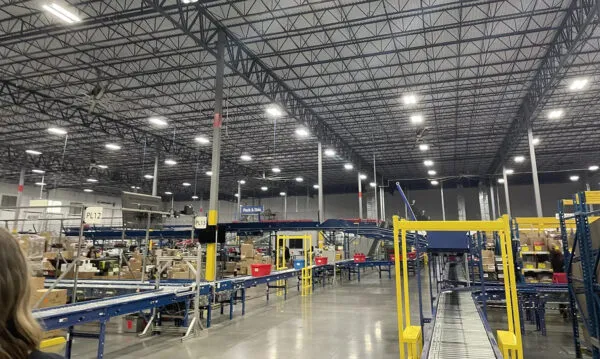
Designed Conveyor Systems (DCS) has 40 years of experience serving major clients in multiple industries by providing material handling, full-scale warehouse operations, and conveyor design solutions that are custom crafted for their needs. DCS does not sell ready-made conveyor systems but builds relationships that empower collaboration to craft custom warehouse designs together. DCS utilizes consulting, engineering design, project management, installation services, and client support to ensure our customers can keep their promises to deliver on time.
Projects
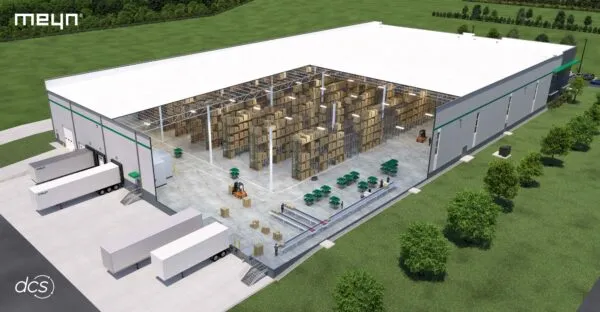
With more than 40 years of experience providing automated system design, installation, and integration services, DCS has created solutions for companies throughout the United States in a broad range of industries and markets. We’ve completed more than 1500 projects ranging from greenfield facilities with completely new systems to expansions and retrofits of existing operations.
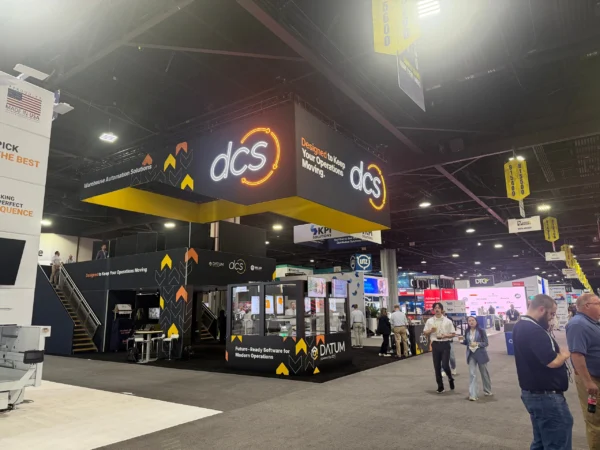
Upcoming Events
Designed Conveyor Systems values building strong relationships with our clients. Join us at our upcoming events to collaborate and discover how we can design a custom warehouse solution tailored to your unique needs.
DCS Upgrades Footwear Retailer’s Controls and Deploys DATUM WES in a Live Retrofit
DCS Upgrades Footwear Retailer’s Controls and Deploys DATUM WES in a Live Retrofit

A leading specialty footwear retailer operating a single distribution center faced a critical operational challenge. Its existing controls infrastructure had reached end-of-life and would no longer be supported. It also lacked the visibility needed for modern labor management, prompting the company to seek a retrofit of its warehouse control systems and operational processes. Adding to the project’s complexity was the need to maintain ongoing operations and minimize disruption during peak seasons.
The retailer partnered with Designed Conveyor Systems (DCS) to design and execute a phased live retrofit. DCS modernized the facility’s control hardware and deployed its proprietary DATUM warehouse execution system (WES), which introduced enhanced labor visibility and laid the foundation for further efficiency gains.

The Challenge
A specialty footwear retailer — operating more than 800 stores across the U.S., Puerto Rico, and Canada — runs a single distribution center outside of Nashville, Tenn. From there, the company replenishes its stores and fulfills approximately 50% of its e-commerce orders, shipping direct-to-consumer (its stores fill and ship other online orders).
On average, the facility handles 10,000–12,000 stock keeping units (SKUs) daily. Seasonal fluctuations drive inventory turnover 12 times a year, with roughly 40,000 SKUs passing through the operation annually. Staffing includes 200 employees working across two shifts. Inventory is picked from four picking modules equipped with two floor induction points for carts. A packing merge and sortation system incorporates taping diverts to seal cartons, which then move to a shipping sorter outfitted with diverts for trailer loading.
A History of System Updates and Expansions
The facility had undergone several system updates and expansions over the prior two decades, noted the retailer’s Vice President of Distribution. Having worked there for more than 20 years, the VP and his team increasingly found their productivity hamstrung by aging infrastructure and outdated controls.
“Our mechanical functionality hasn’t changed much over time, but the guts of the system — the controls — had become outdated. Troubleshooting required specialized knowledge, and training new staff took longer than necessary,” recalled the VP. “We were running on PC-based control systems, which had become increasingly cumbersome to maintain. Additionally, support from our original systems integrator was ending, and upgrades carried high risk for operational downtime.”
Instead, the retailer wanted to switch over to programmable logic controller (PLC)-based controls. By deploying a standardized control platform, the facility could ensure that technicians and maintenance teams — both internal and external — would have the right skill sets to support the system.
Further, the company wanted to gain real-time insight into labor productivity through better data visibility. Before the retrofit, labor planning relied heavily on warehouse management system (WMS) reporting, which offered snapshots but lacked granularity. Managers needed a system that could integrate control-level data — conveyor cycle times, scans, and carton positions — to provide a new layer of operational intelligence that would enable improved labor planning and standards.
Additionally, the specialty footwear retailer’s leadership team saw the project as an opportunity to lay the foundation for future flexibility. “While we weren’t ready to overhaul our entire system at once, we wanted to stabilize the platform now to enable future improvements like zone balancing, advanced labor management analytics, and potential automation deployments,” said the VP. “Our existing system couldn’t support any of that.”
Top Requirement: Updates Couldn’t Impede Productivity
However, the company had a strict requirement for the retrofit: It had to be performed while the facility remained live and operating. This meant avoiding major disruptions, ensuring safety, and carefully sequencing work to minimize downtime.
In evaluating prospective vendors to undertake the project, the VP emphasized that the decision was not just about technology — it was about trust and culture.
“We’ve worked with a lot of integrators over the years. For me, it’s about finding people who understand our business, are collaborative, and treat us as a partner. That’s what drew me to Designed Conveyor Systems (DCS),” he said, citing DCS’ strong track record of delivering complex retrofits and a reputation for collaboration as deciding factors in the system integrator’s selection.
The Solution
Led by Senior Account Executive Fred Rudolph, DCS proposed a controlled, phased system upgrade that aligned with the retailer’s long-term vision. “They weren’t trying to reinvent the system — they just needed a foundation they could count on,” Rudolph explained. “The goal was modernization without risk.”
Through careful phasing, modern PLC integration, standardized documentation, future-ready design, and the implementation of its proprietary DATUM warehouse execution system (WES), DCS helped the retailer achieve a more reliable, maintainable, and data-rich operation — without sacrificing uptime or flexibility.

Tight Coordination, Planning, and Communication Essential
From the outset, the project was designed as a phased retrofit. This ensured that upgrades could be completed without impacting daily operations.
Wiley Stidham, DCS’ Project Manager, emphasized the multiple steps taken to minimize operational interruptions long before any work began. First, DCS worked with the retailer to jointly map out the project timeline against the company’s volume cycles, code freezes, and operational priorities.
Because the retrofit occurred in a live facility, timing was everything. DCS kicked off the work after the retailer’s 2024 peak season, ensuring the most disruptive activities — like control panel swaps and wiring transitions — happened when order volume was lowest.
A Phased Deployment Approach
Also to reduce the impact on the operation, DCS divided the project into small, contained phases, focusing on one control zone or pick module at a time. Each of the four pick modules had its own dedicated control panels which DCS re-controlled sequentially. Some modules were handed over fully to DCS for several weeks, while others could only be accessed on weekends or off-shifts.
Stidham said DCS used weekly coordination meetings with the facility’s operations and IT teams to confirm exact dates for each pick module, adjusting in real time for unexpected volume surges. When operations projected higher-than-expected throughput, DCS flexed the schedule rather than forcing a conflict.
“We were asking the question, ‘These dates still work, right?’ first,” Stidham said, “instead of waiting for them to come to us. That proactive communication kept surprises off the table.”
The phased turnover ensured the operation could keep shipping product while DCS technicians worked in one area at a time. After each phase, DCS validated functionality, handed the module back to operations, and only then moved to the next one.
Stidham coordinated constantly with both DCS’ controls team and software engineering team, ensuring awareness on both sides when either made an update.
User Acceptance Testing Key to Smooth Transition
During commissioning, the team ran user acceptance testing (UAT) and parallel monitoring — the new DATUM WES communicated with both the legacy and new control panels in test mode before full cutover.
“We went live with the software first,” Stidham noted. “That let us see all the messaging and monitor system behavior before changing any hardware. When we finally swapped panels, we already knew communication worked.”
This strategic sequencing meant that by the time control panels were physically replaced, DCS had already verified data flow and logic integrity — reducing risk and eliminating mid-install surprises.
DATUM Deployed for Better Operational Visibility
 One of the specialty footwear retailer’s biggest challenges prior to undertaking the retrofit was the lack of real-time visibility across their fulfillment process, noted Brian Curran, Vice President of Software at DCS.
“Their legacy system could move cartons efficiently but offered little insight into where exceptions occurred or how throughput was trending during live operations,” he observed.
By implementing the DATUM WES, DCS gave the retailer a centralized view of the entire material flow, from induction to shipping. The system continuously monitors conveyor activity, order status, and performance metrics in real time — something the old PC-based system couldn’t provide.
“Now they can actually see what’s happening as it happens,” Curran said. “They have visibility into every divert, every scan, every lane. That’s powerful for operations because it lets them make adjustments on the fly.”
DATUM Reprioritizes Order Flows, Picking Waves Dynamically
DATUM’s flexible configuration allows the system to prioritize and reprioritize order flows and picking waves dynamically, based on changing business needs. For example, if e-commerce order volume spikes, DATUM can temporarily allocate more conveyor or sorter capacity to e-commerce lines without manual intervention. Conversely, during a back-to-school retail surge, resources can shift to store replenishment.
Because DATUM was deployed alongside the modernization of the control panels and PLC network, the operation now benefits from a much more stable and maintainable controls environment. Curran noted that the previous PC-based system had limited fault recovery and required manual intervention during unplanned stops.
With DATUM tied into the new PLC-based controls, the system can automatically detect, log, and respond to many issues, improving overall equipment uptime. The WES can requeue cartons, pause sortation zones, and resume automatically after faults, reducing human intervention and keeping material flowing.
“It’s a night-and-day difference in stability,” Curran said. “When something happens, the system knows what to do — it’s not waiting for a person to fix it.”
Control Panel Updates Conducted Methodically
DCS’ Controls Delivery Manager Vince Ashby and his team first audited all of the operation’s existing controls hardware to determine what could and could not be reused.
Across the facility’s 26 control panels, Ashby determined which components required updating while minimizing the risks associated with replacing or rewiring components unnecessarily. Principally, the updates were limited to swapping the outdated PC-based controls with modern PLCs and outdated input/output (I/O) communication cards with new Ethernet/IP based devices, he explained.
DCS’s controls team and electrical subcontractors prepared everything ahead of time — testing existing hardware with new PLCs, wiring diagrams, new PLC programs — so that on-site area recontrols could happen as quickly as possible.
“We built and tested everything off-site and came in ready,” Ashby said. “It was like plug-and-play compared to traditional tear-out work. Once the software team finished their takeover, that’s when the controls upgrade started. By ensuring the software was already validated, we could isolate issues to the control system upgrade if something came up.”
To avoid interfering with operations schedules, DCS often performed panel upgrades and testing on weekends, when the retailer’s production wasn’t running. “Some areas we could work in for three or four weeks straight,” added Ashby. “Others, we only had weekends available to validate the new PLC code. We tailored our approach to each zone’s operational rhythm.”
PLCs Sized to Accommodate Future System Expansions
Additionally, all the PLCs were sized to give the operation the capability to add new technologies or automation in the future without requiring additional controls upgrades, Ashby noted.
“That way, if they put in a new scan tunnel or upgrade a sorter, they won’t need to upgrade the processors or other controls,” he said. “Throughout the whole recontrol process we thought about future expansions and selected technologies that had the capacity to support new systems.”
Every control panel installation ended with a thorough commissioning and hand-back process. DCS verified that conveyors, scanners, and sorters were running under new PLC logic; confirmed system messaging between the panels and the WES; and only then released the zone back to operations.
This ensured no untested code or wiring ever entered the live environment. According to Ashby, this disciplined validation process is part of why the facility experienced minimal downtime and no unplanned outages throughout the retrofit.
The Results
By replacing the specialty footwear retailer’s PC-based controls with modern PLC-based controls, the facility is now aligned with current standards. That makes the systems easier to maintain, said the company’s VP of distribution.
“PLC is an industrial standard. If somebody comes to work on our control panels, it makes it a lot easier because that’s what they’re trained on today. It simplifies troubleshooting,” he observed.
Further Operational Refinements Continuing
Although the hardware updates and DATUM installation are complete, the collaboration between DCS and the retailer continues.
One of the retrofit’s most transformative elements is through DATUM’s ability to track conveyor times, scans, and carton positions in real time. This creates the foundation for advanced labor management and operational planning such as zone balancing — a process that redistributes work more evenly across zones to improve productivity. With DATUM’s visibility, supervisors can identify slow zones, balance workloads between modules, and reduce the need for manual workarounds.
“Right now we plan in WMS and are within about 45 minutes of the plan. By layering in real-time data from the WES, conveyor, and zone systems, we can push that gap even closer,” he noted, explaining the potential impact.
“However, we didn’t want to change too much at once. Our goal was stability first, then to add these refinements to get more efficiency. We’re now working to fine-tune standards in a way that gives us much better precision,” continued the VP.
DATUM’s additional layer of visibility also creates opportunities for real-time labor allocation adjustments, enhanced productivity analysis, and potential artificial intelligence (AI)-enabled optimization to recognize patterns and improve efficiency. It also provides better diagnostic tools, allowing maintenance and IT teams to pinpoint faults quickly and minimize downtime.
DATUM Delivers Future Scalability
Deploying DATUM didn’t just solve the operation’s existing challenges. It prepares the facility to implement automation technologies. The WES provides an open, modular interface layer that can communicate easily with future systems like autonomous mobile robots (AMRs), automated storage and retrieval systems (AS/RS), or robotic picking. As a brand- and technology-agnostic software solution, DATUM futureproofs the operation for incremental automation.
The retrofit illustrates that trust, communication, and a shared commitment to success are as important as technical capability. DCS brought not only technical expertise but aa collaborative approach that the retailer valued deeply, the VP added.
“Working with DCS is great. They have a heart for their customer. They care about what they do, and they care about solving the things we need to solve,” he said. “I can literally pick up the phone and call Brian at DCS. That’s the kind of relationship I want with my partner. They listen to ideas, support our goals, and are helping us achieve them.”
He concluded by emphasizing the cultural alignment with DCS as a major factor in the project’s success. “DCS treats us like people. It never felt like they’re just chasing the dollar. They wanted to make our lives as easy as possible and take on the burden. That makes all the difference.”