
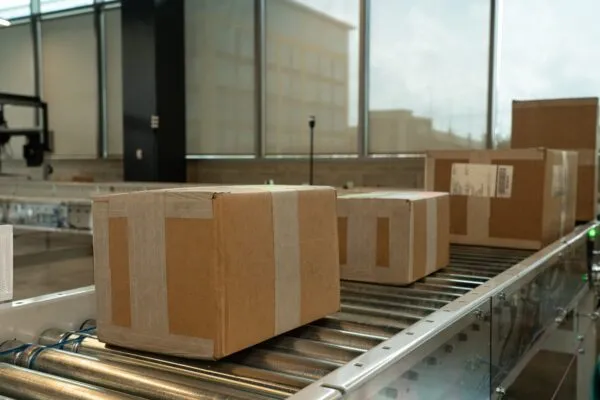
Package Handling
DCS’s design and engineering team has more than 40 years of experience creating unique parcel handling systems for diverse customer applications. With installations including semi-automated handling in small city distribution centers and fully automated, integrated hubs with advanced conveyor and sorter equipment, DCS routinely thinks outside the box.
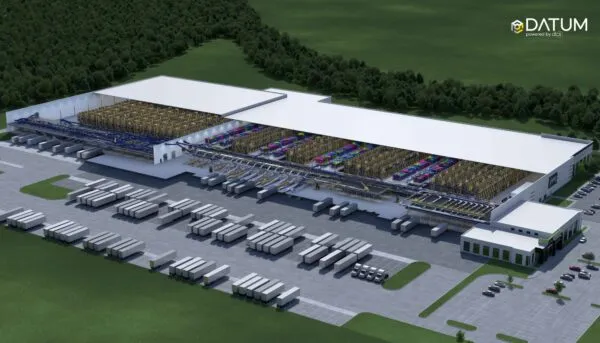
E-Commerce and Multi-Channel Fulfillment
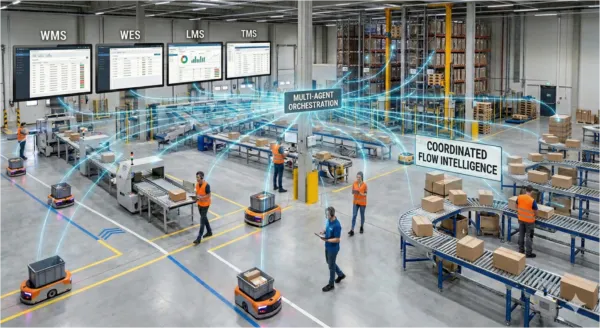
DCS designs and implements end-to-end warehouse automation solutions for e-commerce and multi-channel retailers that address numerous workflow challenges. This includes solutions for receiving, putaway, storage, replenishment, order fulfillment, picking, packing, sortation, and outbound shipping. Our custom integrated warehouse, distribution, and fulfillment systems draw from a deep pool of conventional, semi-automated, and automated material handling technologies.
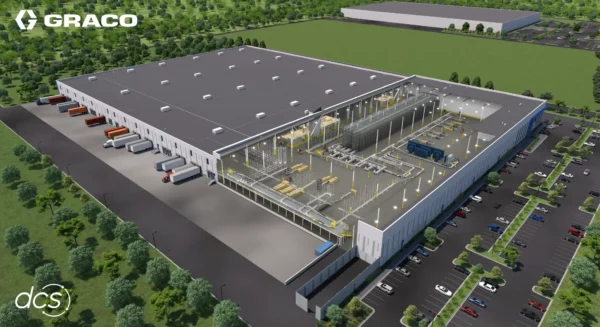
Various Distribution Applications
Whether an operation is considering the construction of a new distribution or fulfillment center, or a retrofit or expansion of an existing facility, it’s important to create a solution that fits the overarching supply chain strategy. DCS has four decades of experience designing and integrating comprehensive, end-to-end material handling solutions that meet a multitude of operational goals. Whether conventional, semi-automated, or fully automated, DCS can help your organization implement a custom solution that meets its goals while maximizing return on investment (ROI).

Supply Chain Consulting
The DCS Supply Chain Consulting team offers a range of services to help your operations address the challenges it faces. Working in partnership with you, DCS consultants analyze your business data- existing workforce, workflow processes, inventory, order data, operations, and more- to determine a strategy that addresses your unique needs. Whether you need an operations assessment, process improvement recommendations, or distribution design services, DCS consultants will help guide you to the material handling system or operational solution that best meets your current and future needs, as well as your budget.

Customer Support
Keeping your warehouse operations and material handling systems running smoothly and at the peak of productivity are the goals of DCS’ Customer Service Team. By partnering with DCS, your warehouse automation solution is supported from commissioning to end of life. You’ll receive comprehensive in-house training of your personnel, including specialized training of your designated internal system expert. Plus, DCS offers a complete package of spare parts and expert system troubleshooting support from qualified engineers dedicated to your installation.

System Design & Integration
DCS offers a broad range of material handling equipment and automated system design, installation, and integration services for a multitude of projects. These include retrofits, expansions, upgrades, and more. While every project is unique, our system design and execution processes are the same, encompassing meticulous attention to detail, frequent communication, and a dedicated partnership with our clients.
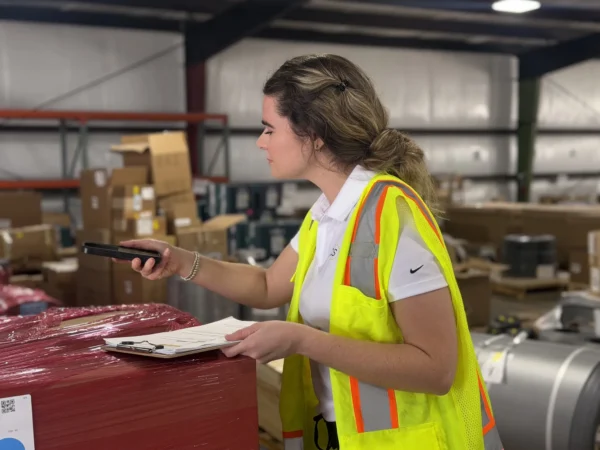
Lifecycle Services
Stop reactive repairs. Lifecycle Services provides expert preventive maintenance and 24/7 technical support to protect your automation and MHE availability.

Life Science & Healthcare
Pharmaceutical, healthcare, and life science companies face mounting pressure from evolving regulatory requirements, rising fulfillment costs, and intensifying accuracy demands. In this environment, automation isn’t optional—it’s essential. Designed Conveyor Systems (DCS) helps distributors of these critical products stay compliant and competitive.

Pet Care
Pet food distribution operations are anything but standard. From bulky kibble bags to delicate fish tanks, stock keeping unit (SKU) complexity and fulfillment pressure are always on the rise. Designed Conveyor Systems (DCS) partners with leading pet retailers to design and engineer automation, software, and material handling systems that keep operations agile, accurate, and ready for what’s next.

Home Improvement
When your distribution center handles everything from hammers to hot tubs, operational complexity isn’t a challenge—it’s your daily reality. Home improvement retailers face intense pressure to meet rising consumer expectations across multiple channels—from in-store pickups to last-mile delivery. At Designed Conveyor Systems (DCS), we specialize in engineering material handling and automation solutions that help home improvement distribution centers keep pace, reduce cost, and drive accuracy at scale.

Sporting Goods
Navigating the unique demands of the sporting goods retail industry requires a distribution strategy that’s both agile and precise. From handling seasonal surges to managing a diverse range of products—from bulky equipment to small accessories—your warehouse operations are the key to a seamless customer experience. Our expertise helps sporting goods retailers streamline their distribution warehouses, improving order accuracy, boosting productivity, and ensuring your team can efficiently move products from the receiving dock to the final customer, no matter the season.
Footwear
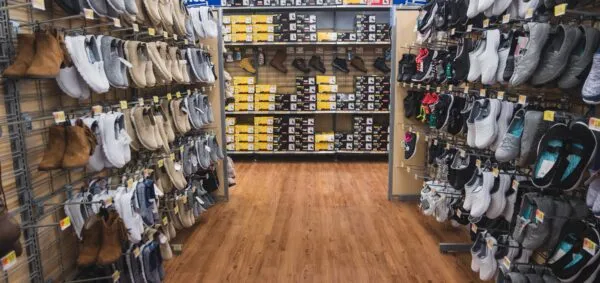
In the fast-paced world of footwear retail requires a distribution strategy that can handle a vast array of styles, sizes, and seasonal trends with precision and speed. From managing a high volume of SKUs to ensuring accurate order fulfillment and returns processing, your distribution center is the engine that drives customer satisfaction and brand loyalty. Our expertise helps footwear retailers streamline their distribution centers, improving inventory management, accelerating order processing, and ensuring your team can efficiently move products from the receiving dock to the final customer, no matter the season.
Wholesale & Industrial Distribution
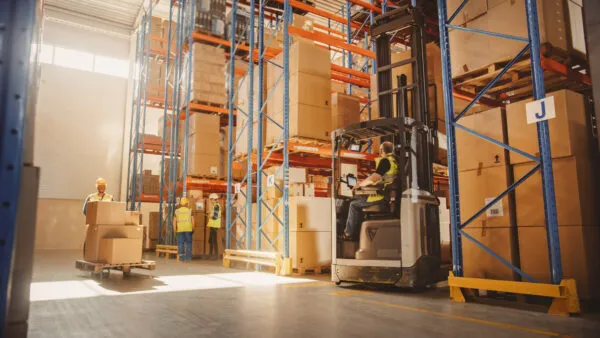
Designed Conveyor Systems (DCS) partners with wholesale, industrial, and electronics distributors to design efficient, optimized fulfillment solutions. Every operation DCS designs streamlines end-to-end functional processes—from inbound receiving and putaway to picking, packing, and shipping. Designed Conveyor Systems (DCS) partners with wholesale, industrial, and electronics distributors to design efficient, optimized fulfillment solutions. Every operation DCS designs streamlines end-to-end functional processes—from inbound receiving and putaway to picking, packing, and shipping.



About Us
Designed Conveyor Systems (DCS) has 40 years of experience serving major clients in multiple industries by providing material handling, full-scale warehouse operations, and conveyor design solutions that are custom crafted for their needs. DCS does not sell ready-made conveyor systems but builds relationships that empower collaboration to craft custom warehouse designs together. DCS utilizes consulting, engineering design, project management, installation services, and client support to ensure our customers can keep their promises to deliver on time.
Projects
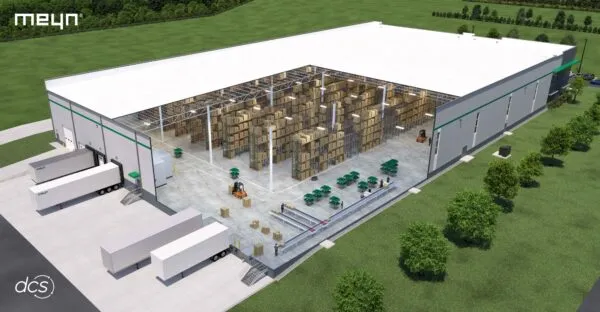
With more than 40 years of experience providing automated system design, installation, and integration services, DCS has created solutions for companies throughout the United States in a broad range of industries and markets. We’ve completed more than 1500 projects ranging from greenfield facilities with completely new systems to expansions and retrofits of existing operations.
Upcoming Events
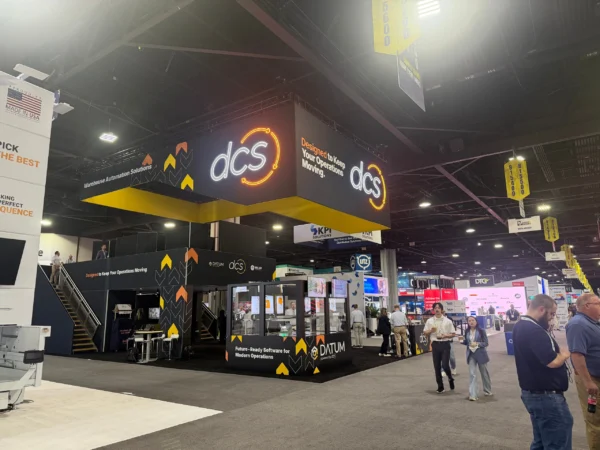
Designed Conveyor Systems values building strong relationships with our clients. Join us at our upcoming events to collaborate and discover how we can design a custom warehouse solution tailored to your unique needs.
Pallet Automation Growth: DCS’ Justin Willbanks Contributes to New STIQ Report
Pallet Automation Growth: DCS’ Justin Willbanks Contributes to New STIQ Report
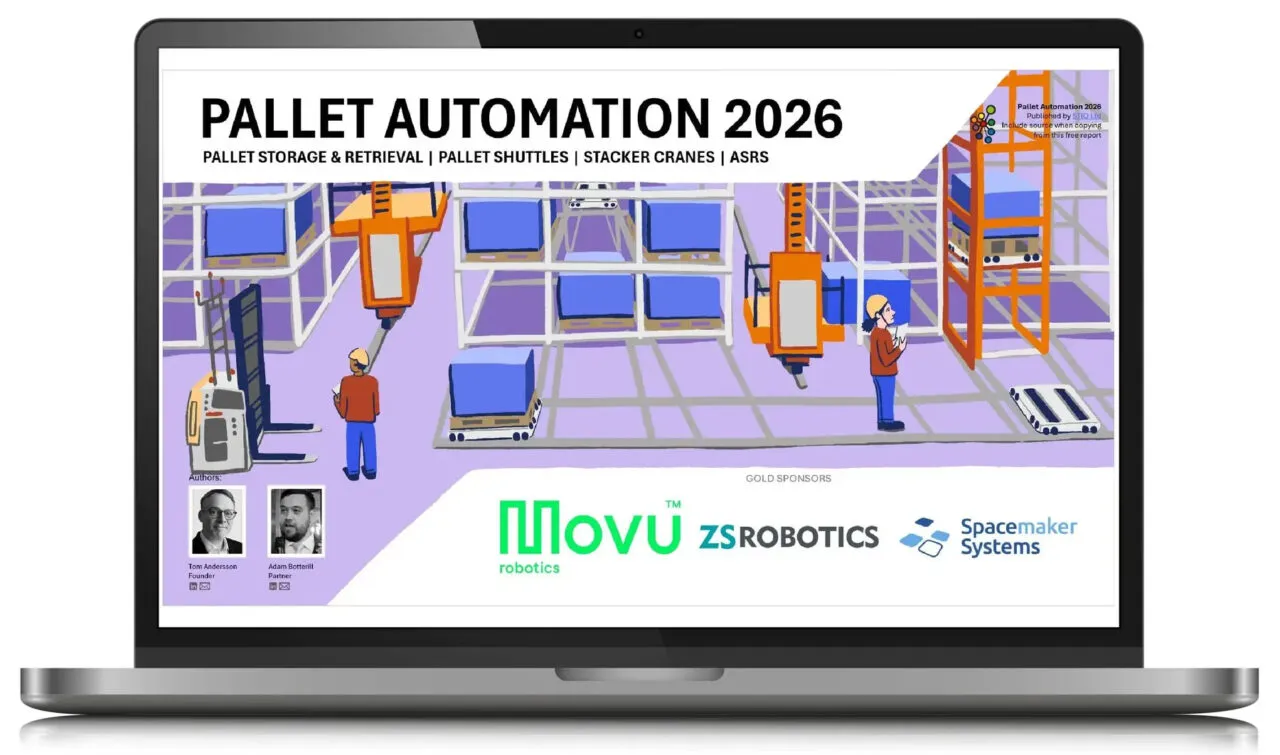

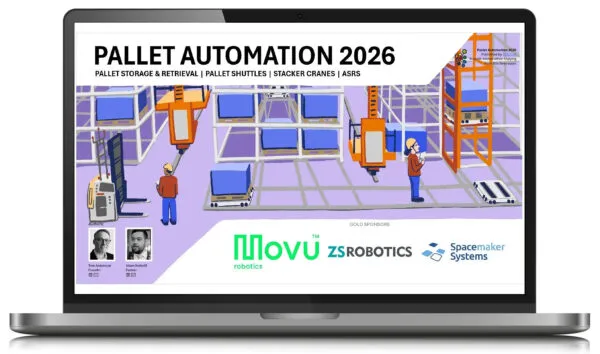
 STIQ Ltd’s recently released its Pallet Automation 2026 market report. The publication draws on more than 40 interviews with system integrators, original equipment manufacturers (OEMs), racking suppliers, and consultants. Contributors represent expertise from across the global pallet automation market, including with equipment such as automated storage and retrieval systems (AS/RS) such as stacker cranes and pallet shuttles.
Justin Willbanks, Principal of Solutions at DCS (pictured at right), was among the participants providing commentary. Willbanks offered perspective on the rise of 2D (four-way) pallet shuttles, where stacker cranes still fit, how DCS vets shuttle partners, and why pallet quality matters.
2D Pallet Shuttles Are Driving Pallet Automation Growth
STIQ’s report finds that 2D pallet shuttles have opened up new space in pallet automation. The technology is increasingly winning projects that once defaulted to stacker cranes. Willbanks confirmed that customer interest has accelerated sharply.
“2D pallet shuttles have been around for a few years, but they definitely are increasing in popularity pretty, pretty rapidly in the last year or two, for sure,” he said.
He also pointed to the flexibility that sets the technology apart from traditional crane solutions. Crane-based AS/RS, said Willbanks, is primarily storage-focused.
“The flexibility of the 2D shuttle… we have a lift that connects us to 100% of the inventory. You’ve just got a lot more options in how you could potentially design a solution,” he explained. “We’ll continue to look for unique ways to use these solutions in the coming years.”
Pallet Automation for Brownfield Facilities
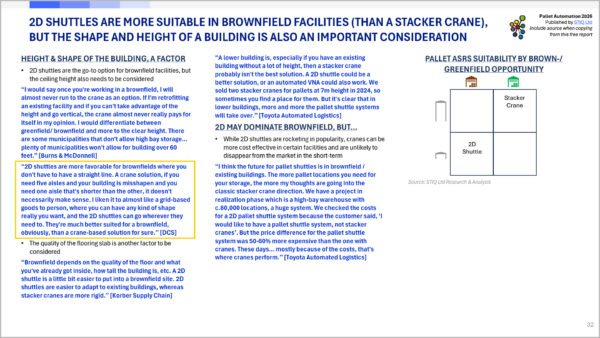
On where 2D shuttles fit best, Willbanks pointed to existing buildings with irregular footprints. In these situations, a crane’s straight-aisle requirement can work against the layout.
“2D shuttles are more favorable for brownfields where you don’t have to have a straight line. A crane solution, if you need five aisles and your building is misshapen and you need one aisle that’s shorter than the other, it doesn’t necessarily make sense,” he explained. “I liken it to almost like a grid-based goods to person, where you can have any kind of shape really you want, and the 2D shuttles can go wherever they need to.”
He added that system redundancy weighs on customers as well.
“I think the crane can still make sense. But I don’t know that I’ve experienced a situation where I’m strongly considering a crane in this day and age,” he said. “If the crane goes down, then you’re stuck until it gets up and running… As we move into the future, I would envision cranes kind of falling out of favor and being replaced with the 2D shuttles.”
Reference Sites Separate Vendors
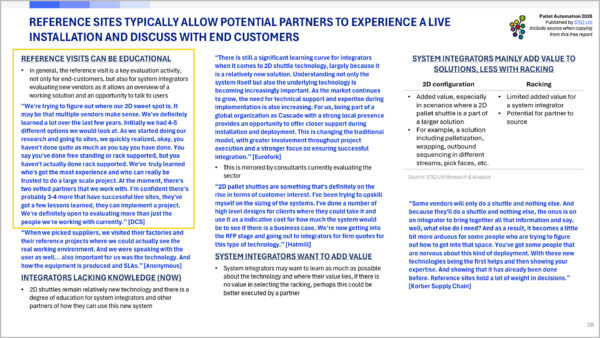
With a growing field of 2D shuttle vendors on the market, STIQ’s report notes that evaluating pallet automation partners has become harder for integrators. Willbanks said the hardware itself rarely sets one vendor apart.
“The 2D technology is important, but we haven’t seen truly any kind of groundbreaking differences from one shuttle to the next,” he noted. “A lot of it is really the experience with a rack supported application, for example.”
That is why DCS puts weight on site visits before committing to a partner.
“Initially we had 4-5 different options we would look at. As we started doing our research and going to sites, we quickly realized, okay, you haven’t done quite as much as you say you have done,” Willbanks explained. “We’ve truly learned who’s got the most experience and who can really be trusted to do a large scale project. At the moment, there’s two vetted partners that we work with.”
He added that DCS remains open to more.
“I’m confident there’s probably 3-4 more that have successful live sites…,” continued Willbanks. “We’re definitely open to evaluating more than just the people we’re working with currently.”
Shuttle-Racking Experience Matters More Than Single Sourcing
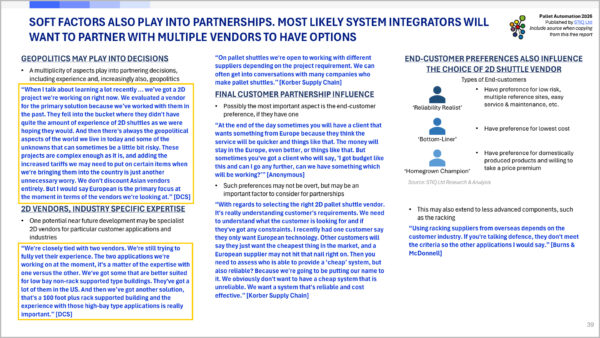
Racking often accounts for 50–70% of a 2D shuttle project, according to STIQ. Therefore, the relationship between the shuttle vendor and the racking supplier is critical. Willbanks said a vendor that also manufactures racking is not automatically the better choice.
“I don’t see being part of a rack manufacturer as particularly positive. The way I treat that is, essentially, it’s two separate entities,” he said. “The relationship between a 2D shuttle vendor and the racking vendor would be the advantage. Not from a price perspective, but the fact that they’ve worked multiple projects together… The more familiar you are with that, it just causes less issues or potential for issues down the road.”
Letting the Shuttle Software Do Its Job
Willbanks also described how DCS divides software responsibilities with its shuttle partners. DCS prefers to keep order logic at the integrator level while the shuttle vendor manages storage.
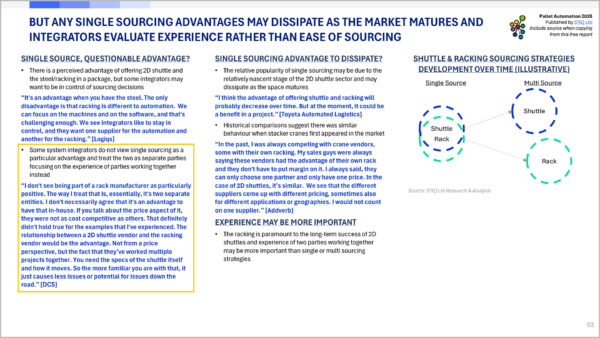
“We don’t want to try to figure out how to optimize a 2D shuttle, that’s not our expertise. We want the vendor partner to manage that. How to group orders and bring product out would be in our wheelhouse,” he explained. “But in terms of how it’s being stored, and where it’s being selected, we let the shuttle system provide all that information and handle that.”
Pallet Consistency Protects Future Flexibility
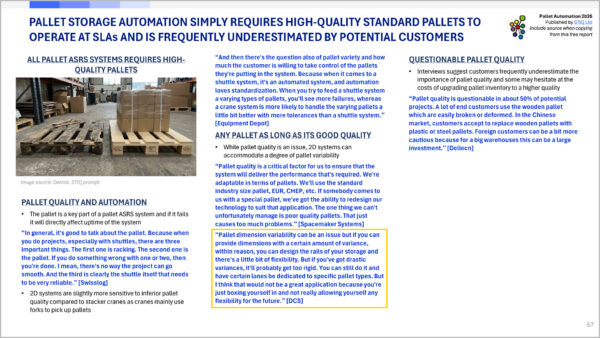
STIQ’s report identifies pallet quality as the most common cause of pallet automation system failures. Willbanks noted that design can accommodate some dimensional variance. However, extreme variance limits a system’s long-term value.
“If you can provide dimensions with a certain amount of variance, within reason, you can design the rails of your storage and there’s a little bit of flexibility. But if you’ve got drastic variances, it’ll probably get too rigid,” he said. “You can still do it and have certain lanes be dedicated to specific pallet types. But I think that would not be a great application because you’re just boxing yourself in and not really allowing yourself any flexibility for the future.”
Quotes and data referenced from STIQ Ltd’s Pallet Automation 2026 report.
Source: STIQ Ltd, Pallet Automation 2026 Market Report.