
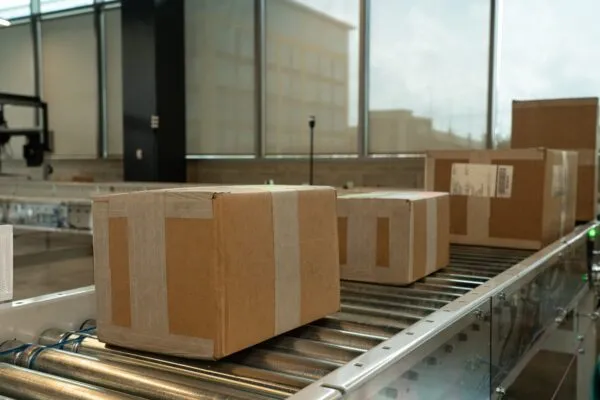
Package Handling
DCS’s design and engineering team has more than 40 years of experience creating unique parcel handling systems for diverse customer applications. With installations including semi-automated handling in small city distribution centers and fully automated, integrated hubs with advanced conveyor and sorter equipment, DCS routinely thinks outside the box.
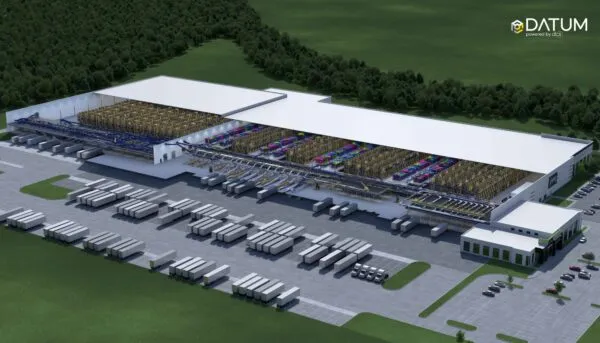
E-Commerce and Multi-Channel Fulfillment
DCS designs and implements end-to-end warehouse automation solutions for e-commerce and multi-channel retailers that address numerous workflow challenges. This includes solutions for receiving, putaway, storage, replenishment, order fulfillment, picking, packing, sortation, and outbound shipping. Our custom integrated warehouse, distribution, and fulfillment systems draw from a deep pool of conventional, semi-automated, and automated material handling technologies.
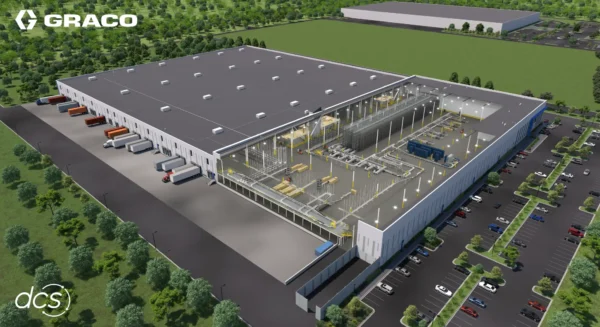
Various Distribution Applications
Whether an operation is considering the construction of a new distribution or fulfillment center, or a retrofit or expansion of an existing facility, it’s important to create a solution that fits the overarching supply chain strategy. DCS has four decades of experience designing and integrating comprehensive, end-to-end material handling solutions that meet a multitude of operational goals. Whether conventional, semi-automated, or fully automated, DCS can help your organization implement a custom solution that meets its goals while maximizing return on investment (ROI).

Supply Chain Consulting
The DCS Supply Chain Consulting team offers a range of services to help your operations address the challenges it faces. Working in partnership with you, DCS consultants analyze your business data- existing workforce, workflow processes, inventory, order data, operations, and more- to determine a strategy that addresses your unique needs. Whether you need an operations assessment, process improvement recommendations, or distribution design services, DCS consultants will help guide you to the material handling system or operational solution that best meets your current and future needs, as well as your budget.

Customer Support
Keeping your warehouse operations and material handling systems running smoothly and at the peak of productivity are the goals of DCS’ Customer Service Team. By partnering with DCS, your warehouse automation solution is supported from commissioning to end of life. You’ll receive comprehensive in-house training of your personnel, including specialized training of your designated internal system expert. Plus, DCS offers a complete package of spare parts and expert system troubleshooting support from qualified engineers dedicated to your installation.

System Design & Integration
DCS offers a broad range of material handling equipment and automated system design, installation, and integration services for a multitude of projects. These include retrofits, expansions, upgrades, and more. While every project is unique, our system design and execution processes are the same, encompassing meticulous attention to detail, frequent communication, and a dedicated partnership with our clients.
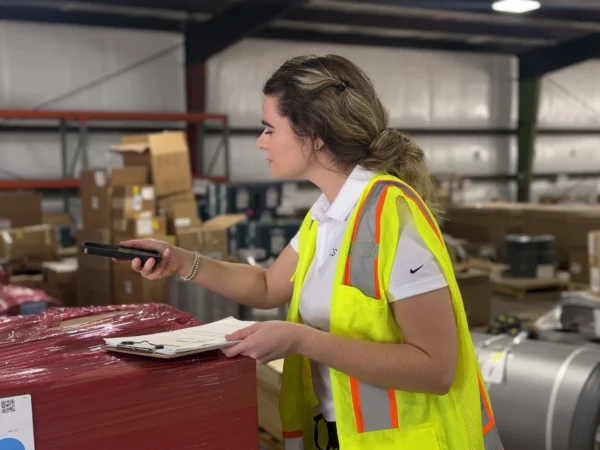
Lifecycle Services
Stop reactive repairs. Lifecycle Services provides expert preventive maintenance and 24/7 technical support to protect your automation and MHE availability.

Life Science & Healthcare
Pharmaceutical, healthcare, and life science companies face mounting pressure from evolving regulatory requirements, rising fulfillment costs, and intensifying accuracy demands. In this environment, automation isn’t optional—it’s essential. Designed Conveyor Systems (DCS) helps distributors of these critical products stay compliant and competitive.

Pet Food
Pet food distribution operations are anything but standard. From bulky kibble bags to delicate fish tanks, stock keeping unit (SKU) complexity and fulfillment pressure are always on the rise. Designed Conveyor Systems (DCS) partners with leading pet retailers to design and engineer automation, software, and material handling systems that keep operations agile, accurate, and ready for what’s next.

Home Improvement
When your distribution center handles everything from hammers to hot tubs, operational complexity isn’t a challenge—it’s your daily reality. Home improvement retailers face intense pressure to meet rising consumer expectations across multiple channels—from in-store pickups to last-mile delivery. At Designed Conveyor Systems (DCS), we specialize in engineering material handling and automation solutions that help home improvement distribution centers keep pace, reduce cost, and drive accuracy at scale.

Sporting Goods
Navigating the unique demands of the sporting goods retail industry requires a distribution strategy that’s both agile and precise. From handling seasonal surges to managing a diverse range of products—from bulky equipment to small accessories—your warehouse operations are the key to a seamless customer experience. Our expertise helps sporting goods retailers streamline their distribution warehouses, improving order accuracy, boosting productivity, and ensuring your team can efficiently move products from the receiving dock to the final customer, no matter the season.
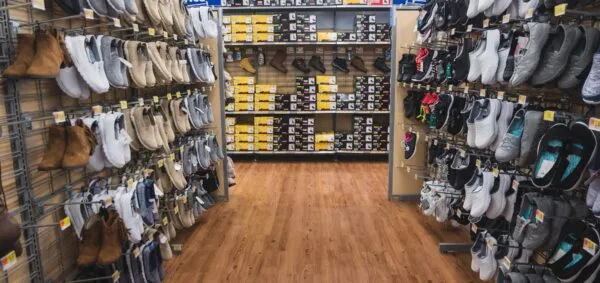
Footwear
In the fast-paced world of footwear retail requires a distribution strategy that can handle a vast array of styles, sizes, and seasonal trends with precision and speed. From managing a high volume of SKUs to ensuring accurate order fulfillment and returns processing, your distribution center is the engine that drives customer satisfaction and brand loyalty. Our expertise helps footwear retailers streamline their distribution centers, improving inventory management, accelerating order processing, and ensuring your team can efficiently move products from the receiving dock to the final customer, no matter the season.
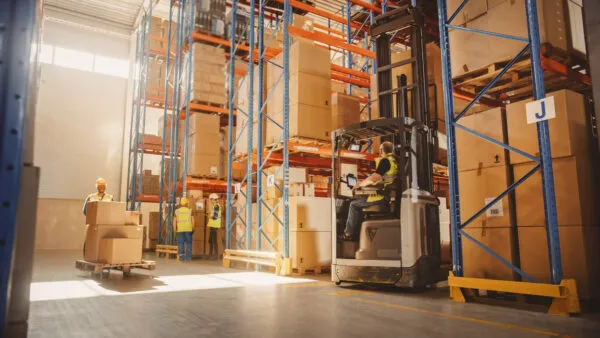
Wholesale & Industrial Distribution
Designed Conveyor Systems (DCS) partners with wholesale, industrial, and electronics distributors to design efficient, optimized fulfillment solutions. Every operation DCS designs streamlines end-to-end functional processes—from inbound receiving and putaway to picking, packing, and shipping. Designed Conveyor Systems (DCS) partners with wholesale, industrial, and electronics distributors to design efficient, optimized fulfillment solutions. Every operation DCS designs streamlines end-to-end functional processes—from inbound receiving and putaway to picking, packing, and shipping.



About Us
Designed Conveyor Systems (DCS) has 40 years of experience serving major clients in multiple industries by providing material handling, full-scale warehouse operations, and conveyor design solutions that are custom crafted for their needs. DCS does not sell ready-made conveyor systems but builds relationships that empower collaboration to craft custom warehouse designs together. DCS utilizes consulting, engineering design, project management, installation services, and client support to ensure our customers can keep their promises to deliver on time.
Projects
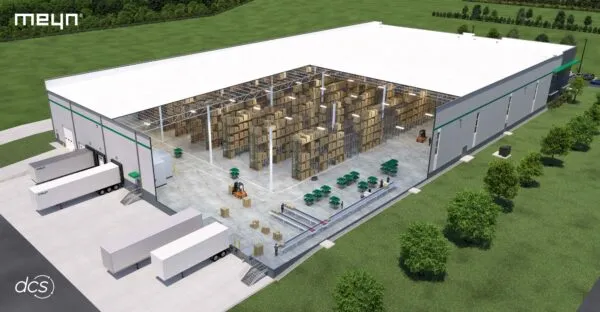
With more than 40 years of experience providing automated system design, installation, and integration services, DCS has created solutions for companies throughout the United States in a broad range of industries and markets. We’ve completed more than 1500 projects ranging from greenfield facilities with completely new systems to expansions and retrofits of existing operations.
Upcoming Events
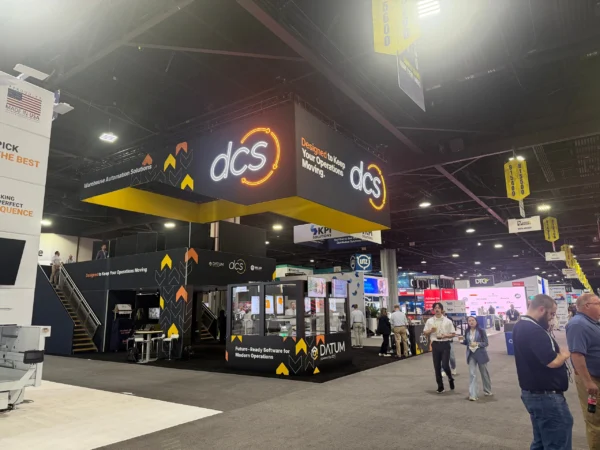
Designed Conveyor Systems values building strong relationships with our clients. Join us at our upcoming events to collaborate and discover how we can design a custom warehouse solution tailored to your unique needs.
20 Types of Conveyor Systems for Your Warehouse
20 Types of Conveyor Systems for Your Warehouse
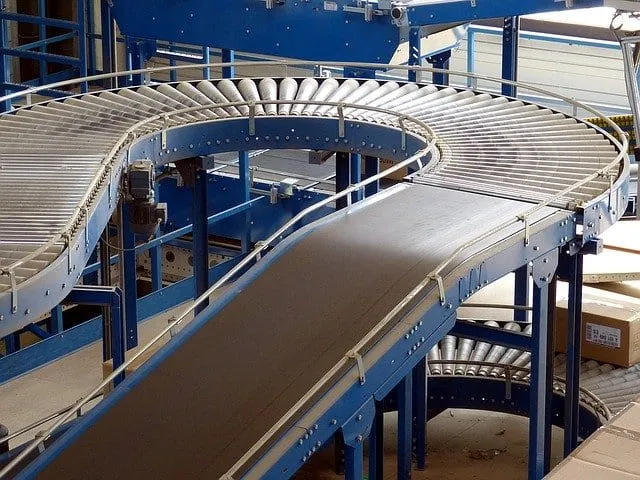
Efficient material handling is the backbone of any successful warehouse, distribution center, or fulfillment operation. However, as no two facilities have the exact same operational needs, using the wrong transport system can lead to costly bottlenecks, product damage, or unnecessary downtime. Whether you are building a greenfield facility or retrofitting an existing layout, exploring these 20 types of warehouse conveyor systems will help you identify the right technology to optimize your workflow and maximize throughput in your facility.
Conveyor Systems Most Frequently Found in Warehousing
These nine conveyors most commonly transport materials through warehouses and distribution centers. If you need help choosing conveyor systems for your warehouse, contact DCS.
1. Belt Conveyor
This is probably what you picture when you think of a conveyor. At its core, a belt conveyor is a simple device — a continuous loop of belting stretched between two or more pulleys. A motor is used to turn the pulleys, thus moving the belt. Belting can be made from fabric, rubber, plastic, leather, or metal depending on what’s being transported. Common configurations include roller belt, slider belt, and telescoping belt styles. A telescoping version extends and retracts so it can reach directly into a trailer for loading and unloading. Because they carry product along a smooth, continuous surface, belt conveyors are a workhorse for assembly lines, transportation runs, and order fulfillment operations alike.
2. Powered Roller Conveyor
Similar to a gravity roller conveyor, except an integrated chain, belt, or line shaft makes the rollers turn on their own. This means powered roller conveyors (also known as motorized they don’t have to be built on a decline. Sometimes they can even go uphill. Also called motor driven roller (MDR) conveyor, this powered style is the most common conveyor used in warehousing. The rollers are mounted in a frame and driven by belt-driven or line-shaft-driven systems. Many powered roller lines also include accumulation sections, which hold and release loads using non-contact, minimum-pressure, or zero-pressure methods. That ensures the product doesn’t collide with or damage the item ahead of it while queued.
3. Chute Conveyor
Picture a slide for your packages. Chute conveyors are the simplest style of gravity conveyor. They feature a solid surface, typically metal or plastic, angled downward. Typically built in either a straight or spiral configuration, their construction allows packages to slide down to a lower level under their own weight. They are less expensive to install than mechanized conveyors. However, because packages travel freely along the surface, using them can increase the odds of packages bumping into each other and getting damaged.
4. Gravity Roller Conveyor
Instead of a belt, this conveyor system uses cylindrical rollers with internal ball bearing rings mounted on axles at fixed intervals along a frame. It is built at a slight decline so parts slide downward on their own, with no motor or power source required. Gravity roller conveyor sections can be arranged straight, curved, or as spurs and merges. That makes it one of the most flexible and inexpensive ways to connect different areas of a facility.
5. Skatewheel Conveyor
These are similar to a roller conveyor, except they use a series of small, individual skatewheels mounted on a shaft in a frame instead of long, cylindrical rollers. Also known as gravity wheel conveyors, they are ideal for light-duty handling of loads with flat, smooth bottoms. Their sections can be built as a fixed frame or as a flexible, expandable accordion frame that’s easy to reconfigure around a facility.
6. Sortation Conveyor Systems
Sortation conveyors merge, identify, induct, and separate products to be conveyed to specific destinations. Working alongside fixed conveyors, automatic identification systems, and controls, a sortation system transfers items off the main conveyor line and onto spur tracks using a range of specialized equipment. Thanks to their smart software and controls, sortation systems give facilities flexibility to handle different item mixes and volumes efficiently. Simultaneously, they reduce labor and the collision risk that comes with manual product movement.
7. Vertical Conveyor
These are like elevators for packages and material. They lift loads up to a different level of the warehouse, though they are not big enough to lift people. The most common style is the vertical reciprocating conveyor (VRC), which uses a carrier that moves up and down to transfer loads from one belt or roller conveyor to another. VRCs can be power or gravity actuated and can operate automatically or manually. They generally come in three styles: two-post cantilever lifts, guided and supported by two masts on the same side for three-sided accessibility; two-post straddle lifts, guided by and suspended between two masts on opposite sides; and four-post lifts, which use two sets of two masts on opposite sides for higher capacities. A related style — sometimes called a paternoster, platform conveyor, or lifting station — uses multiple, equally spaced load-carrying units fixed to chains that move continuously in an endless loop. This permits automatic loading and unloading.
8. Chain Conveyor
These are exactly what they sound like. Instead of having rollers or a belt, chain conveyors use a single or double moving chain that provides the driving force to pull the load forward. They are usually low to the ground and are built to carry heavy unit loads such as pallets or containers.
9. Ball Transfer Conveyor
Ball transfer conveyors (sometimes called ball transfer tables) incorporate a series of mounted ball casters to allow for unpowered, multi-directional conveyance of the product. Essentially, imagine rows of metal balls on a table that can turn and rotate in any direction. This allows material to be pushed in different directions (as opposed to rollers which can only go forwards and back). These tables are typically built from 1-inch ball casters mounted in modular frame sections that can be joined together to create a custom-sized work surface. The balls sit just above the frame so loads can transition smoothly onto adjoining roller or skatewheel conveyor. Because they give operators 360-degree access to a product, ball transfer tables are frequently used at assembly, packing, and inspection stations where a load needs to be rotated or repositioned by hand. They are also useful anywhere multiple conveyor lines converge.
Conveyors for Manufacturing Operations
Manufacturing and assembly operations typically use one or more of these six conveyor types in their plants.
1. Slat Conveyor
A slat conveyor is basically a two-strand chain conveyor with slats connected to the chain and a guiding system for the slats. In practice, this means one or more endless chains carry a series of non-overlapping, non-interlocking slats spaced along their length. The load rides directly on top of those slats. This creates a smooth surface to which tooling details or fixtures can be mounted to hold parts in the desired position.
2. Trolley Conveyor
There is a whole family of conveyors that carry their load beneath them instead of on top of them. Sometimes the load is hung from an overhead beam and pushed along. Other times they are motorized. Sometimes, as with the power-and-free Conveyor, they have two tracks — one motorized and one not motorized. The upper track carries a powered chain fitted with mechanical pushers. Trolleys carrying the actual load ride on the unpowered lower track. The pushers engage and disengage with each trolley through cam action. This holds products in place while others catch up for subsequent release in whatever sequence production requires. That asynchronous control makes trolley conveyors especially good at merging, diverting, and accumulating loads. For that reason, they’re frequently used in automotive assembly lines for painting, washing, or oven processes where parts need to move through different stages independently.
3. Inverted Monorail Conveyor
Turn a trolley conveyor upside down, attach it to the floor instead of the ceiling, and you’ve got an inverted monorail. This rail carries material from underneath. Because the track and drive components sit beneath the load rather than overhead, the design helps keep the product clean. Nothing is hanging above it to shed dust or drips. It also gives workers and robots 360-degree access to the top and sides of the load. That combination makes inverted monorail conveyors a popular choice for paint finishing lines, robotic welding and assembly cells, and other precision operations where cleanliness and easy access matter.
4. Magnetic Conveyor
Magnetic conveyors use moving magnets mounted beneath stationary plates, tables, or other kinds of non-magnetic slider beds. They move magnetic (ferrous) materials, often in the form of machining scrap. In these conveyors, permanent ceramic or rare-earth magnets are mounted on a continuous chain that runs beneath a stationary stainless-steel slider bed. As the chain circulates, the magnetic field grips ferrous chips or parts and carries them toward the discharge end. It releases them cleanly once the chain curves away from the bed. Because all of the moving parts stay enclosed beneath the slider bed, magnetic conveyors avoid the exposed pinch points of belt or chain systems. They are especially popular for clearing steel or iron chips, grinding swarf, and stamping slugs from machining and metal fabrication operations.
5. Walking Beam Conveyor
Walking beam conveyors move material incrementally along the conveyor using moving and static supports. They are useful if you need material to be in an exact place. In practice, stationary supports hold a workpiece while a moving beam lifts it, advances it to the next position, and sets it back down. The system repeats that indexing motion, station by station, along the length of the line. Each cycle delivers the product to a precise, repeatable location. For that reason, walking beam conveyors are frequently used in automated manufacturing and assembly cells. They ensure parts stop in a precise position for robotic welding, machining, or inspection before moving on to the next step.
6. Tow Conveyor
A tow conveyor is a cable or towline — often embedded right in the floor — that pulls wheeled carriers positioned beneath the load across the floor. Because the towline does the work of pulling, tow conveyors are ideal for manufacturing and materials-processing environments where heavy objects need to travel long distances between workstations. They also work great for long distances. Additionally, there are other related devices that use a chain to drag items, such as a tubular drag conveyor.
Conveyors Used in Bulk Material Processing
These five conveyors are frequently found in applications that handle, transport, and process bulk materials, such as powders and other ingredients.
1. Bucket Conveyor
Bucket conveyor systems — also called bucket elevators — are used to move material vertically by scooping it with a series of buckets attached to a belt or chain. Material enters at the bottom, in what’s known as the boot section, and the buckets carry it up and over the head pulley before dumping it out. There are a few common styles. Centrifugal bucket conveyors run at higher speeds and fling material out using centrifugal force, making them well suited to fine, free-flowing material like grain or sugar. Continuous bucket conveyors move more slowly with buckets spaced back-to-back, which helps prevent damage to fragile material. Positive discharge conveyors use pivoting buckets that tip completely at the top, preserving delicate items like cereal or nuts. Bucket conveyors are common in mining, cement, and food and grain processing operations.
2. Vibrating Conveyor
This conveyor vibrates slightly to move bulk material along it. It can be a tube, a flat top, or a trough. A motor-driven mechanism — typically a crank-and-spring assembly, a rotating eccentric weight, or an electromagnet — creates a controlled oscillating motion that causes material to advance with each cycle. Standard-duty units handle lighter loads for food, chemical, and plastics applications. Heavy-duty versions move hundreds of tons per hour in mining and foundry settings. Because the gentle vibrating motion doesn’t agitate the product the way a belt or chain might, these conveyors are also a common choice anywhere contamination-free, low-damage handling is a priority, such as pharmaceutical and food processing lines.
3. Troughed Belt Conveyor
A belt conveyor with the sides tilted upward, forming a U-shape. This trough shape cradles material toward the centerline of the belt, making it less likely material will fall off during transport.
4. Screw Conveyor
A screw conveyor consists of a tube with a spiral-shaped device inside that turns to move material. It’s also referred to as an auger conveyor. A drive motor turns the helical screw, or flight, inside a trough or tube, and material is pushed forward roughly one pitch of the screw with each rotation until it reaches the discharge point. Most screw conveyors run horizontally. However, inclined and vertical versions are available for elevating material. Additionally, shaftless designs allow sticky or high-moisture products to pass through without clogging a center shaft. Screw conveyors are a common choice for transporting bulk materials like grain, powders, aggregates, and wastewater solids.
5. Pneumatic/Vacuum Conveyor
These conveyors use a vacuum or air pressure to move material through an enclosed pipeline. This keeps dusty or sensitive products contained. There are two main designs. Dilute phase conveying uses high air velocity and low pressure to keep material fully suspended in the airstream. That makes it a fast, simple, and cost-effective option for free-flowing materials like grains, powders, and pellets. Alternately, dense phase conveying moves material more slowly, in compact plugs, at higher pressure. This is a gentler approach for fragile or abrasive products that also reduces wear on the system. Because the material never touches an open conveying surface, pneumatic and vacuum conveyors are popular in food, pharmaceutical, and chemical operations where contamination control matters.
How to Choose the Right Conveyor Systems
If you need help choosing or designing a conveyor system, let us know and we can help sort through the types of conveyors systems and identify one suited for your needs. DCS has nearly 45 years of experience designing, engineering, and integrating automated material handling systems for companies in a broad range of industries.