
This site is protected by reCAPTCHA and the Google Privacy Policy and Terms of Service apply.
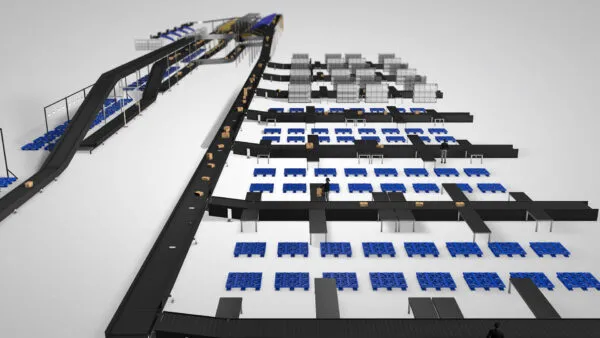
Package Handling
DCS’s design and engineering team has more than 40 years of experience creating unique parcel handling systems for diverse customer applications. With installations including semi-automated handling in small city distribution centers and fully automated, integrated hubs with advanced conveyor and sorter equipment, DCS routinely thinks outside the box.
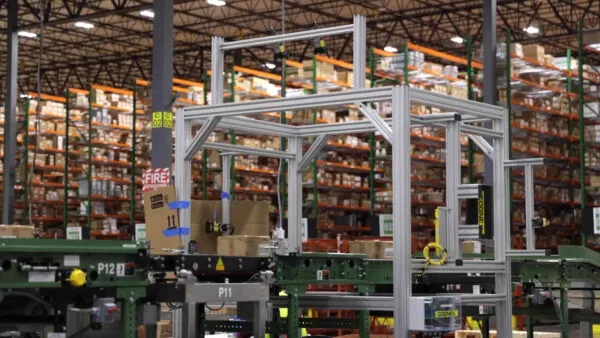
E-Commerce and Multi-Channel Fulfillment
DCS designs and implements end-to-end warehouse automation solutions for e-commerce and multi-channel retailers that address numerous workflow challenges. This includes solutions for receiving, putaway, storage, replenishment, order fulfillment, picking, packing, sortation, and outbound shipping. Our custom integrated warehouse, distribution, and fulfillment systems draw from a deep pool of conventional, semi-automated, and automated material handling technologies.
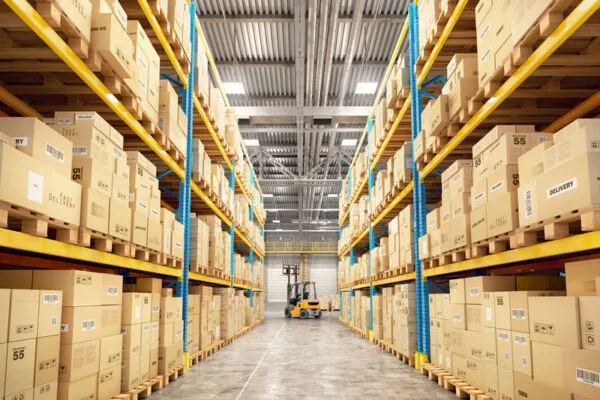
Various Distribution Applications
Whether an operation is considering the construction of a new distribution or fulfillment center, or a retrofit or expansion of an existing facility, it’s important to create a solution that fits the overarching supply chain strategy. DCS has four decades of experience designing and integrating comprehensive, end-to-end material handling solutions that meet a multitude of operational goals. Whether conventional, semi-automated, or fully automated, DCS can help your organization implement a custom solution that meets its goals while maximizing return on investment (ROI).

Supply Chain Consulting
The DCS Supply Chain Consulting team offers a range of services to help your operations address the challenges it faces. Working in partnership with you, DCS consultants analyze your business data- existing workforce, workflow processes, inventory, order data, operations, and more- to determine a strategy that addresses your unique needs. Whether you need an operations assessment, process improvement recommendations, or distribution design services, DCS consultants will help guide you to the material handling system or operational solution that best meets your current and future needs, as well as your budget.

Customer Support
Keeping your warehouse operations and material handling systems running smoothly and at the peak of productivity are the goals of DCS’ Customer Service Team. By partnering with DCS, your warehouse automation solution is supported from commissioning to end of life. You’ll receive comprehensive in-house training of your personnel, including specialized training of your designated internal system expert. Plus, DCS offers a complete package of spare parts and expert system troubleshooting support from qualified engineers dedicated to your installation.

System Design & Integration
DCS offers a broad range of material handling equipment and automated system design, installation, and integration services for a multitude of projects. These include retrofits, expansions, upgrades, and more. While every project is unique, our system design and execution processes are the same, encompassing meticulous attention to detail, frequent communication, and a dedicated partnership with our clients.

Life Science & Healthcare
Pharmaceutical, healthcare, and life science companies face mounting pressure from evolving regulatory requirements, rising fulfillment costs, and intensifying accuracy demands. In this environment, automation isn’t optional—it’s essential. Designed Conveyor Systems (DCS) helps distributors of these critical products stay compliant and competitive.

Pet Food
Pet food distribution operations are anything but standard. From bulky kibble bags to delicate fish tanks, stock keeping unit (SKU) complexity and fulfillment pressure are always on the rise. Designed Conveyor Systems (DCS) partners with leading pet retailers to design and engineer automation, software, and material handling systems that keep operations agile, accurate, and ready for what’s next.

Home Improvement
When your distribution center handles everything from hammers to hot tubs, operational complexity isn’t a challenge—it’s your daily reality. Home improvement retailers face intense pressure to meet rising consumer expectations across multiple channels—from in-store pickups to last-mile delivery. At Designed Conveyor Systems (DCS), we specialize in engineering material handling and automation solutions that help home improvement distribution centers keep pace, reduce cost, and drive accuracy at scale.

Sporting Goods
Navigating the unique demands of the sporting goods retail industry requires a distribution strategy that’s both agile and precise. From handling seasonal surges to managing a diverse range of products—from bulky equipment to small accessories—your warehouse operations are the key to a seamless customer experience. Our expertise helps sporting goods retailers streamline their distribution warehouses, improving order accuracy, boosting productivity, and ensuring your team can efficiently move products from the receiving dock to the final customer, no matter the season.
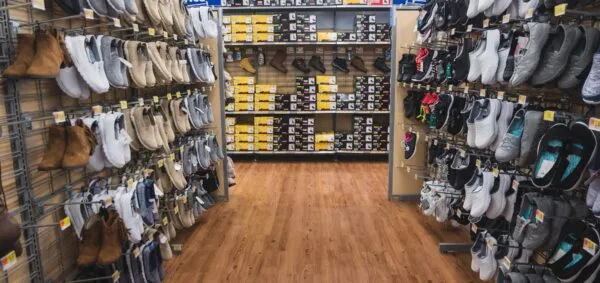
Footwear
In the fast-paced world of footwear retail requires a distribution strategy that can handle a vast array of styles, sizes, and seasonal trends with precision and speed. From managing a high volume of SKUs to ensuring accurate order fulfillment and returns processing, your distribution center is the engine that drives customer satisfaction and brand loyalty. Our expertise helps footwear retailers streamline their distribution centers, improving inventory management, accelerating order processing, and ensuring your team can efficiently move products from the receiving dock to the final customer, no matter the season.

Wholesale & Industrial Distribution
Designed Conveyor Systems (DCS) partners with wholesale, industrial, and electronics distributors to design efficient, optimized fulfillment solutions. Every operation DCS designs streamlines end-to-end functional processes—from inbound receiving and putaway to picking, packing, and shipping. Designed Conveyor Systems (DCS) partners with wholesale, industrial, and electronics distributors to design efficient, optimized fulfillment solutions. Every operation DCS designs streamlines end-to-end functional processes—from inbound receiving and putaway to picking, packing, and shipping.

About Us
Designed Conveyor Systems (DCS) has 40 years of experience serving major clients in multiple industries by providing material handling, full-scale warehouse operations, and conveyor design solutions that are custom crafted for their needs. DCS does not sell ready-made conveyor systems but builds relationships that empower collaboration to craft custom warehouse designs together. DCS utilizes consulting, engineering design, project management, installation services, and client support to ensure our customers can keep their promises to deliver on time.
Projects
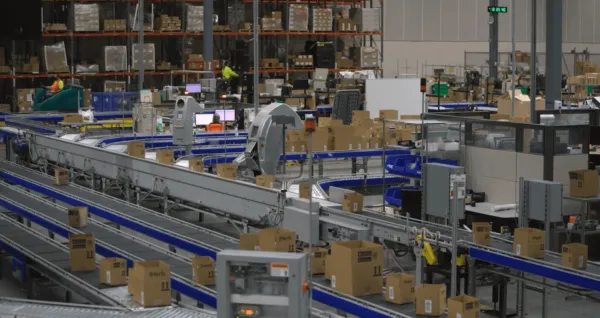
With more than 40 years of experience providing automated system design, installation, and integration services, DCS has created solutions for companies throughout the United States in a broad range of industries and markets. We’ve completed more than 1500 projects ranging from greenfield facilities with completely new systems to expansions and retrofits of existing operations.
Upcoming Events
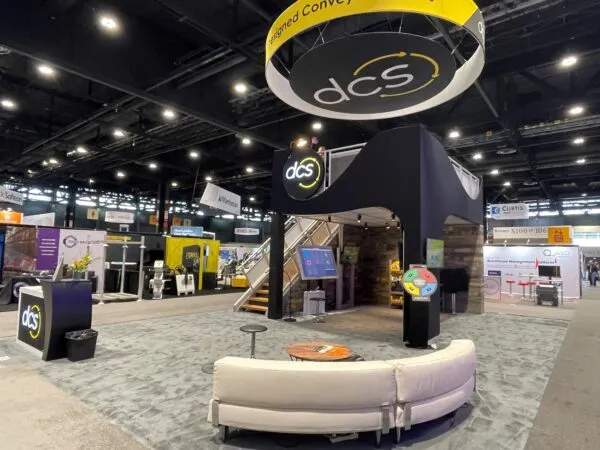
Designed Conveyor Systems values building strong relationships with our clients. Join us at our upcoming events to collaborate and discover how we can design a custom warehouse solution tailored to your unique needs.
Cybersecurity and Your Material Handling System: What You Need to Know in the IoT Era
Cybersecurity and Your Material Handling System: What You Need to Know in the IoT Era

According to recent findings from Research and Markets, the global material handling equipment market is projected to reach $156 billion by 2026, a compound annual growth rate (CAGR) of 4.7%. That uptick in investment has been driven by operations replacing outdated material handling equipment, software, and processes as they embark on a digital transformation intended to help them be more responsive and efficient in meeting customer demands.
Enabling that digital transformation are innovations such as the Internet of Things (IoT), which connects devices — including industrial controls, sensors, conveyors, sorters, automated storage and retrieval systems (AS/RS), robotics, and a multitude of other automated and semi-automated material handling systems — and allows them to share data over the Internet and other communication networks, such as cloud-based services. The increased connectivity enables an operation to collect and analyze information about equipment function and product movement through a facility. This, in turn, increases visibility to enable managers to quickly adapt to changing conditions and maintain productivity.
With anticipated automation investment as high as it is, chances are your organization is among those considering investing in a greenfield facility with a brand-new automated material handling, distribution, or parcel handling system. Or, it might be planning a brownfield expansion, upgrade, or retrofit of an existing operation. Either way, part of the benefit you’re likely expecting to receive is increased connectivity and operational visibility from IoT-enabled technologies.
However, with that connectivity also comes a greater risk for a cybersecurity incident, such as a virus, malware, or ransomware attack. In the United States, ransomware targeted 14 out of 16 critical infrastructure sectors last year, according to a report from the Cybersecurity and Infrastructure Security Agency (CISA), Federal Bureau of Investigation (FBI), and the National Security Agency (NSA). Further, the agencies note that while organizations of all sizes were targeted, ransomware operators were increasingly moving away from large, high-profile companies. Instead, they’ve shifted focus to mid- and smaller-sized operations that tend to have fewer resources to protect against and mitigate cyberattacks.
For all these reasons, it’s therefore become that much more important to formulate your material handling systems cybersecurity practices sooner than later, regardless of your organization’s size or the scope of your operational investment.
Several best practices in cybersecurity for automated material handling, distribution, or parcel handling systems exist. They include:
- Keep up with updates. Whether you’re upgrading or expanding an existing system or implementing an entirely new one, routinely checking for and applying patches and updates as they are released — for all of your software and firmware systems — should be an integral part of your ongoing preventive maintenance program. Don’t be the operation that falls into the “set it and forget it” trap. The vendors and suppliers of your material handling and automation systems are continuously updating their software to defend against the latest security breaches and close previously undetected points of unauthorized access.
Some operations avoid updates out of fear that they might disrupt current operations. While it is true that does happen on occasion, if you are continuously backing up your data (encrypted and stored offsite in the Cloud), recovery is assured with minimal downtime. In contrast, the prolonged downtime associated with a cybersecurity breach that renders your operation completely incapacitated is exponentially harmful to the bottom line.
- Involve the Information Technology (IT) department. Every system design concept today — whether greenfield or retrofit — should be vetted by the IT department prior to signing off on the project. IT can help operations find the optimal balance between security and usability, often assigning specific IP addresses for different devices and helping to define the appropriate segregation points between equipment within a network.
For example, there’s no need for the controls of a transport conveyor to be connected to order or customer data stored in a database accessible via your warehouse management system (WMS). Correctly applying network segregation and monitoring all points of information ingress and egress typically falls into the realm of IT; leverage their expertise to ensure the data flow is appropriate and adequately secure.
- Routinely assess the age of your systems and devices. Not only does this include the large pieces of automated equipment, but also — and often more importantly — the small devices that are integrated into your system. These include Automatic Identification and Data Capture (AIDC) technologies, such as sensors, bar code readers, photo eyes, and laser scanners, as well as controls like programmable logic controllers (PLCs), drives, and more. All of these transmit real-time data for IoT monitoring and communications. They may or may not be running embedded firmware that also requires updates. Or they may be so old they are no longer supported by their original equipment manufacturer (OEM). Either scenario can increase an operation’s vulnerability to a cyberattack.
- Vet your software provider’s security protocols. Any software provided with the new or updated system — such as Warehouse Control Systems (WCS) or Warehouse Execution Systems (WES) — should be assessed for its security capabilities. Ask the supplier about security testing, penetration testing, and security protocols that verify the software’s hardening. Also inquire about patch analysis and distribution cycle frequency, how the software will be securely integrated with any existing operational software already in place, and what degree of support will be provided both during the installation and post-commissioning. Some software providers also offer ongoing maintenance and support contracts with different pricing models (annual fee versus pay-per-incident). All of these factors should be considered through a cybersecurity lens prior to signing any contracts.
- Train your personnel to be cognizant of threats. As phishing schemes continue to become more sophisticated and personalized, anyone with an email address in your operation can fall victim to inadvertently downloading or opening a file with malicious content. Alternately, in some instances hackers have gained control of a network by planting an unmarked thumb drive on the ground or floor of an office. An unsuspecting employee who assumes it was dropped by a colleague will likely plug it into the nearest computer to see if they can determine who it belongs to — unleashing a virus, malware, or ransomware into the network. In addition to firewalls and spam filters, regularly training your personnel to be aware of potential threats to network security such as these will help reduce the risk of a compromising incident.
Looking for more insight into cybersecurity for your new or upgraded material handling system? Connect with us; we’re happy to offer more personalized guidance specific to your operation.
Author
Eric Kershner, Systems Consultant, eric@designedconveyor.com