
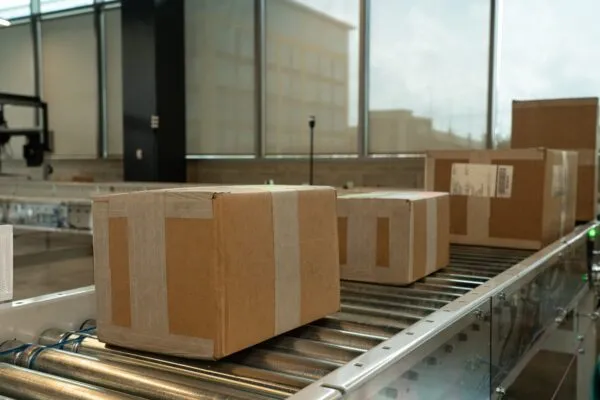
Package Handling
DCS’s design and engineering team has more than 40 years of experience creating unique parcel handling systems for diverse customer applications. With installations including semi-automated handling in small city distribution centers and fully automated, integrated hubs with advanced conveyor and sorter equipment, DCS routinely thinks outside the box.
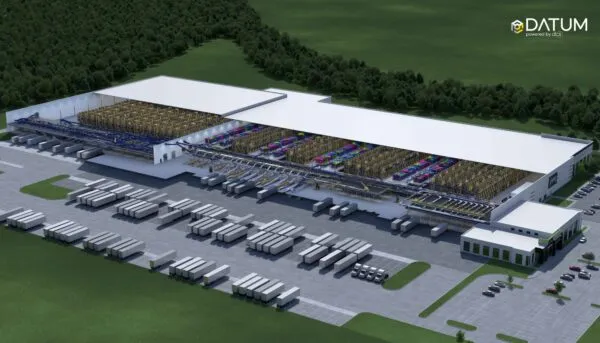
E-Commerce and Multi-Channel Fulfillment
DCS designs and implements end-to-end warehouse automation solutions for e-commerce and multi-channel retailers that address numerous workflow challenges. This includes solutions for receiving, putaway, storage, replenishment, order fulfillment, picking, packing, sortation, and outbound shipping. Our custom integrated warehouse, distribution, and fulfillment systems draw from a deep pool of conventional, semi-automated, and automated material handling technologies.
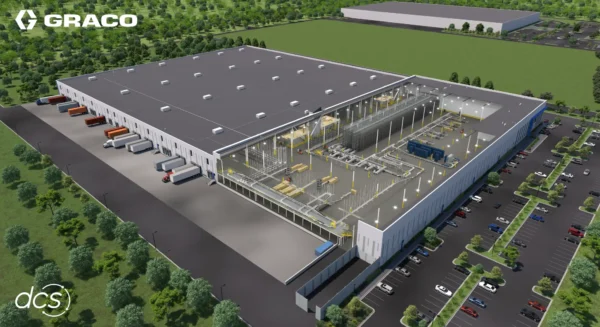
Various Distribution Applications
Whether an operation is considering the construction of a new distribution or fulfillment center, or a retrofit or expansion of an existing facility, it’s important to create a solution that fits the overarching supply chain strategy. DCS has four decades of experience designing and integrating comprehensive, end-to-end material handling solutions that meet a multitude of operational goals. Whether conventional, semi-automated, or fully automated, DCS can help your organization implement a custom solution that meets its goals while maximizing return on investment (ROI).

Supply Chain Consulting
The DCS Supply Chain Consulting team offers a range of services to help your operations address the challenges it faces. Working in partnership with you, DCS consultants analyze your business data- existing workforce, workflow processes, inventory, order data, operations, and more- to determine a strategy that addresses your unique needs. Whether you need an operations assessment, process improvement recommendations, or distribution design services, DCS consultants will help guide you to the material handling system or operational solution that best meets your current and future needs, as well as your budget.

Customer Support
Keeping your warehouse operations and material handling systems running smoothly and at the peak of productivity are the goals of DCS’ Customer Service Team. By partnering with DCS, your warehouse automation solution is supported from commissioning to end of life. You’ll receive comprehensive in-house training of your personnel, including specialized training of your designated internal system expert. Plus, DCS offers a complete package of spare parts and expert system troubleshooting support from qualified engineers dedicated to your installation.

System Design & Integration
DCS offers a broad range of material handling equipment and automated system design, installation, and integration services for a multitude of projects. These include retrofits, expansions, upgrades, and more. While every project is unique, our system design and execution processes are the same, encompassing meticulous attention to detail, frequent communication, and a dedicated partnership with our clients.
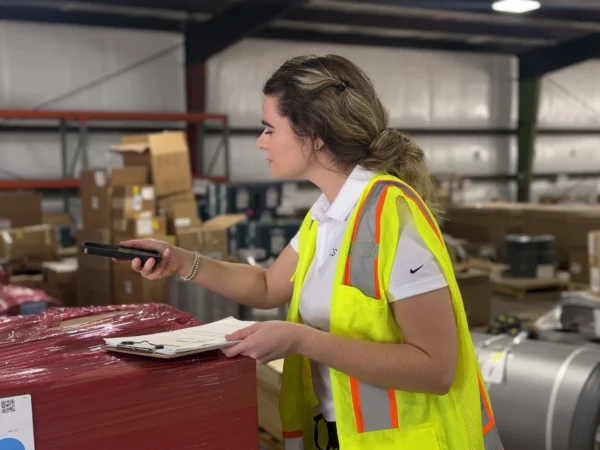
Lifecycle Services
Stop reactive repairs. Lifecycle Services provides expert preventive maintenance and 24/7 technical support to protect your automation and MHE availability.

Life Science & Healthcare
Pharmaceutical, healthcare, and life science companies face mounting pressure from evolving regulatory requirements, rising fulfillment costs, and intensifying accuracy demands. In this environment, automation isn’t optional—it’s essential. Designed Conveyor Systems (DCS) helps distributors of these critical products stay compliant and competitive.

Pet Food
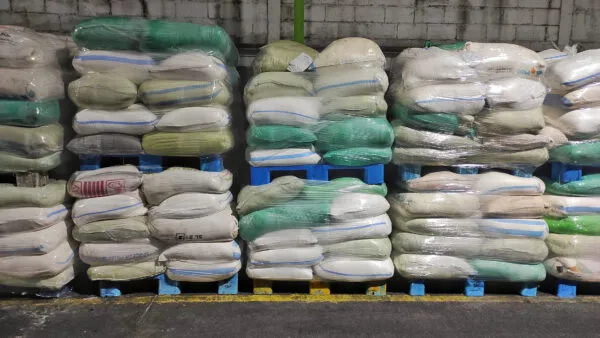
Pet food distribution operations are anything but standard. From bulky kibble bags to delicate fish tanks, stock keeping unit (SKU) complexity and fulfillment pressure are always on the rise. Designed Conveyor Systems (DCS) partners with leading pet retailers to design and engineer automation, software, and material handling systems that keep operations agile, accurate, and ready for what’s next.
Home Improvement
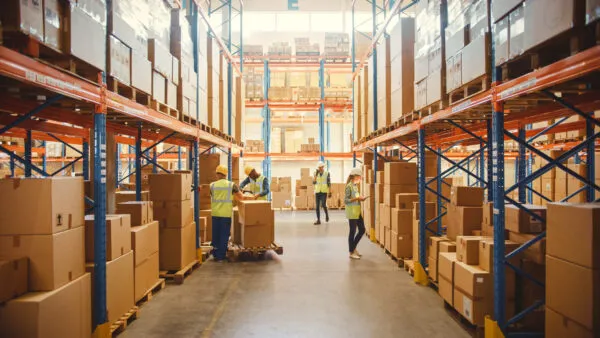
When your distribution center handles everything from hammers to hot tubs, operational complexity isn’t a challenge—it’s your daily reality. Home improvement retailers face intense pressure to meet rising consumer expectations across multiple channels—from in-store pickups to last-mile delivery. At Designed Conveyor Systems (DCS), we specialize in engineering material handling and automation solutions that help home improvement distribution centers keep pace, reduce cost, and drive accuracy at scale.

Sporting Goods
Navigating the unique demands of the sporting goods retail industry requires a distribution strategy that’s both agile and precise. From handling seasonal surges to managing a diverse range of products—from bulky equipment to small accessories—your warehouse operations are the key to a seamless customer experience. Our expertise helps sporting goods retailers streamline their distribution warehouses, improving order accuracy, boosting productivity, and ensuring your team can efficiently move products from the receiving dock to the final customer, no matter the season.
Footwear
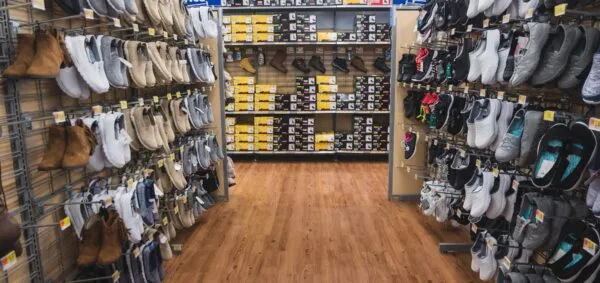
In the fast-paced world of footwear retail requires a distribution strategy that can handle a vast array of styles, sizes, and seasonal trends with precision and speed. From managing a high volume of SKUs to ensuring accurate order fulfillment and returns processing, your distribution center is the engine that drives customer satisfaction and brand loyalty. Our expertise helps footwear retailers streamline their distribution centers, improving inventory management, accelerating order processing, and ensuring your team can efficiently move products from the receiving dock to the final customer, no matter the season.
Wholesale & Industrial Distribution
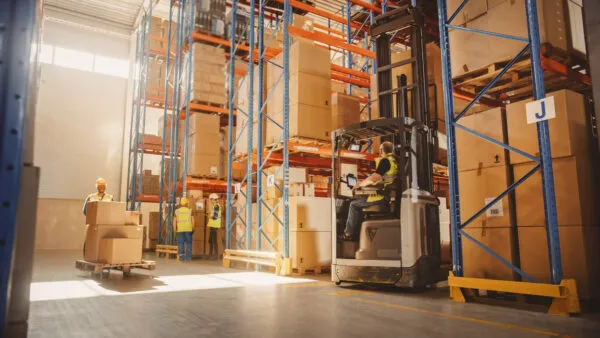
Designed Conveyor Systems (DCS) partners with wholesale, industrial, and electronics distributors to design efficient, optimized fulfillment solutions. Every operation DCS designs streamlines end-to-end functional processes—from inbound receiving and putaway to picking, packing, and shipping. Designed Conveyor Systems (DCS) partners with wholesale, industrial, and electronics distributors to design efficient, optimized fulfillment solutions. Every operation DCS designs streamlines end-to-end functional processes—from inbound receiving and putaway to picking, packing, and shipping.


About Us
Designed Conveyor Systems (DCS) has 40 years of experience serving major clients in multiple industries by providing material handling, full-scale warehouse operations, and conveyor design solutions that are custom crafted for their needs. DCS does not sell ready-made conveyor systems but builds relationships that empower collaboration to craft custom warehouse designs together. DCS utilizes consulting, engineering design, project management, installation services, and client support to ensure our customers can keep their promises to deliver on time.
Projects
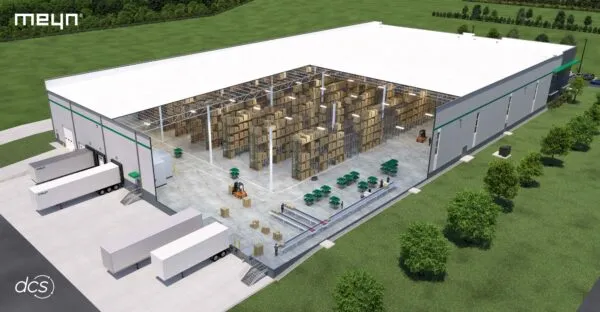
With more than 40 years of experience providing automated system design, installation, and integration services, DCS has created solutions for companies throughout the United States in a broad range of industries and markets. We’ve completed more than 1500 projects ranging from greenfield facilities with completely new systems to expansions and retrofits of existing operations.
Upcoming Events
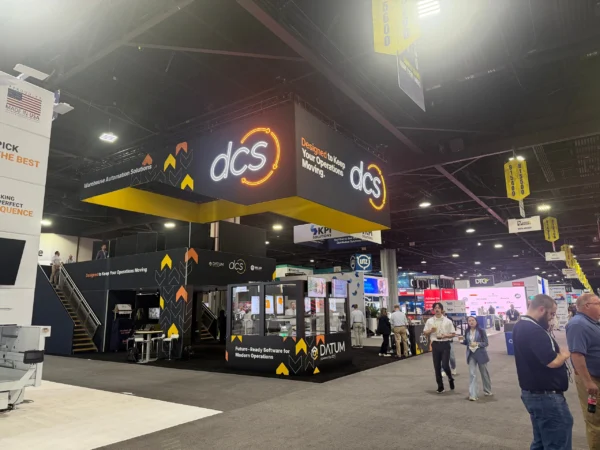
Designed Conveyor Systems values building strong relationships with our clients. Join us at our upcoming events to collaborate and discover how we can design a custom warehouse solution tailored to your unique needs.
Don’t Call It A Comeback: High-Speed Cross-Belt Sortation Systems Still A Leading High-Volume Fulfillment Solution
Don’t Call It A Comeback: High-Speed Cross-Belt Sortation Systems Still A Leading High-Volume Fulfillment Solution
By Satyen Pathak, Senior Account Executive, DCS
For much of the past decade, the spotlight in material handling has shone brightly on robotics. Flexible deployment, modular growth, and fast startup changed how organizations approach automation strategy. Many teams redesigned buildings around autonomous mobile robot (AMR) platforms and goods-to-person workflows, resulting in greater agility and labor productivity.
But inside high-volume, high-throughput distribution centers (DCs) handling e-commerce or multi-channel fulfillment and parcel sortation facilities, another reality remains. When throughput commitments are extreme, accuracy is non-negotiable, and breaking promises to customers isn’t an option, established outbound sortation systems — such as cross-belt, tilt-tray, and bomb bay sorters — never left.
Indeed, these fixed, high-speed loop sortation systems have actually evolved considerably in the past several years. In particular, today’s cross-belt sorters are intelligent, software-driven platforms engineered to deliver predictable performance in environments defined by variability. For operations pursuing scale, that distinction is critical.
What Are Cross-Belt Sorters?
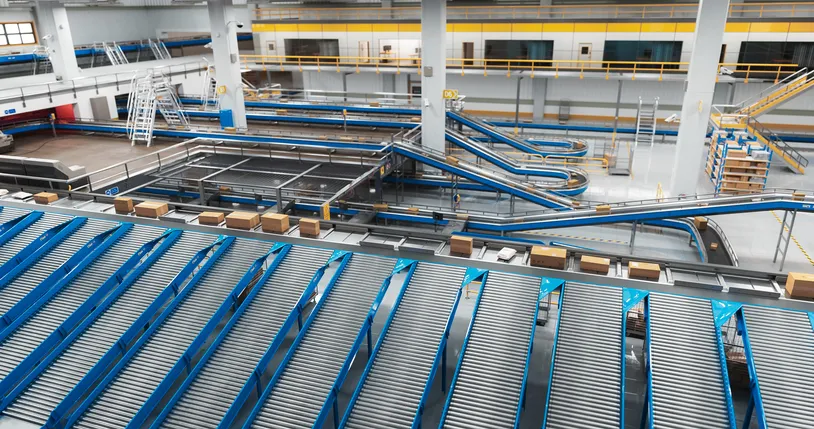
Cross-belt sorters consist of a train of carriers featuring independently powered conveyor sections that discharge product left or right on command. The design handles a wide range of sizes, weights, and packaging types while feeding many destinations configured along a sortation loop. Operators can span oversized items across multiple carriers when required. Because the platform adapts easily to irregular layouts, cross-belt sorters can even be designed for buildings with challenging footprints.
These sorting conveyor systems excel in high-throughput environments, typically moving 12,000 to 18,000 items per hour. Most installations run in a continuous loop, which keeps product circulating and available for assignment. Dividing a cross belt sortation loop into zones or quadrants can push performance even higher — up to as many as 50,000 items per hour in the fastest parcel sortation operations. Each zone supports dedicated induction and discharge activity.
Intelligent software and controls continuously evaluate position, timing, and destination availability. Integrated software routes items to specific areas to reduce travel time on the sorter. This strategy increases capacity without expanding the footprint, allowing operations to gain speed, precision, and flexibility.
Where Cross-Belt Sorters Fit Best
AMRs absolutely provide tremendous value in many applications. They support phased investment and adapt quickly to changing footprints. Operations can scale fleets as demand grows. Teams appreciate that flexibility.
But once an operation pushes toward hub-level output, small inefficiencies compound quickly at higher volumes and variability becomes expensive. Leaders’ decision criteria shift toward four fundamentals: throughput, speed, accuracy, and total capital efficiency.
At very high volumes, cross-belt sorters consistently stand apart. Large platforms can support building outputs at exceptionally high numbers per hour — up to 50,000 — while maintaining tight divert precision and stable flow across multiple destinations. The ability to sustain those rates hour after hour is what turns capacity into dependable performance.
Integrated Features Drive 99.9% Accuracy Rates in Sorting Conveyor Systems
Accuracy ultimately defines cross-belt sorter performance. Modern cross-belt platforms mitigate the risk of routing errors with layered verification, integrating in-line scan tunnels, carrier tracking, and intelligent discharge control. Software validates each item’s movement before release, monitoring and confirming identity, destination, and availability at the divert.
That elevated degree of control enables high-speed, high-throughput operations to achieve performance levels exceeding 99.9%. Thanks to a cross-belt sorter’s precision, an operation can safeguard its transportation schedules, reduce manual touches, and prevent small errors from cascading into network disruptions.
Notably, when exceptions appear — such as damaged or unreadable labels — the sortation system isolates them immediately. It routes items to pre-defined, centralized exception lanes where associates can quickly address issues and return product to flow. The operation protects service without widespread disruption.
Flexibility Means Handling the Mix
Many operations equate flexibility with mobility. In reality, however, product diversity often presents a much greater challenge. In facilities that process cartons, polybags, larger sizes, heavier weights, irregular shapes, and variable packaging types, each profile affects handling strategy. That calls for a flexible sortation solution. Enter the cross belt sorter.
Cross-belt sorters accommodate a broad range of product and package characteristics. Integrated features allow a cross-belt sorter to adapt to each item it handles. Sensors document item position on the carrier, allowing the software to coordinate belt adjustment to center the item and divert it precisely in the middle of an outbound lane. Multiple carriers can be employed to transport a single larger or heavier item when need. A single cross belt sorter can even discharge across multiple destination configurations, including to powered straight chutes, gravity fed spiral chutes, or into gaylord bulk boxes — further increasing item handling flexibility.
This versatility allows an operation to consolidate workflows. Instead of dividing items across separate subsystems, many facilities can consolidate movement on the cross-belt sortation loop. Utilization improves, and control becomes simpler.
Cross-Belt Sorters with Virtualization Increase Throughput
Perhaps the most transformative advancement in modern sortation is virtualization. Virtualization has transformed how modern cross-belt sorters create capacity. Historically, each cross-belt carrier was assigned one job per lap. That model constrained output and inflated equipment counts. Software innovation removed that barrier.
A carrier is no longer limited to one induct and one discharge per lap. It can be reassigned repeatedly during the same revolution, effectively multiplying capacity without increasing the physical footprint of the machine. In large installations, this may occur several times in a single circuit, with a single carrier supporting inducts and discharges for multiple items per lap.
The impact of virtualization can’t be understated. With this software-driven functionality, an operation can gain higher throughput, improve capital productivity, and create new options for scaling within existing buildings.
Maintenance in the Data Age
Reliability expectations continue to rise across supply chains. Downtime during peak can erase months of planning, meaning operations need advance warnings about impending system issues. Instead of timed service or reactive repair, today’s cross-belt sorters are equipped with sensors and controls that enable predictive maintenance.
These devices capture detailed runtime information from critical components, analyzed by software that identifies patterns and highlights abnormal behavior. This allows an operation to schedule service before failures interrupt production. Maintenance becomes proactive instead of reactive.
This approach increases availability and stabilizes labor planning. Technicians spend less time firefighting. Leaders enter peak with stronger confidence. The building performs as designed.
Considering Other Sortation Approaches
Of course, cross-belt sorters aren’t the only high-speed, high-throughput sortation solution on the market. Two others — tilt-tray and bomb bay (also known as split-tray) sorters — are also highly effective options that offer attractive entry costs and rely on proven mechanics to leverage gravity.
Tilt-tray sorters are comprised of a continuous loop of carriers that tip left or right, using gravity to release each load. These systems handle a wide range of volumes and typically achieve rates between 8,000 and 15,000 items per hour. They excel at distributing items to many destinations along the sorter. Operators most often use tilt trays for envelopes and polybags, and major parcel networks rely on them in high-volume hubs. As for capital investment, tilt-tray sorters tend to be in the mid-range.
Bomb bay sorters use dual panels that open from the center, allowing items to fall straight down thanks to gravity. Product drops into a container, chute, or takeaway conveyor positioned below the track. The design works best for soft goods, especially polybagged apparel, where the drop will not cause damage. Typical throughput ranges from 6,000 to 14,000 units per hour. Bomb bay sorters are generally the least expensive loop sorter system compared to cross-belt or tilt-tray.
Because both of these gravity-based sortation systems rely on mechanical actuation, they tend to have more frequent and complex maintenance requirements than cross-belt sorters. Additionally, their straightforward drop profiles aren’t always the best fit for fragile, heavy, or irregularly shaped items. Working with an experienced systems integrator to analyze inventory profiles can help inform the optimal choice.
Cross-Belt Sorters and Robotics Aren’t an Either/Or Decision
Most advanced fulfillment environments benefit from multiple automation strategies working together. Fixed sortation platforms such as cross-belt systems and AMRs often operate side by side rather than competing for the same role.
High-speed sorters manage dense, predictable conveyable flow. Mobile robotics handle transport, replenishment, and tasks that demand flexibility. Each technology delivers value when applied where it performs best. The priority is integration, not replacement. The optimal solution is one that connects ecosystems to synchronize movement, labor, and equipment across the facility.
That coordination is where platforms like DATUM™, DCS’ proprietary warehouse execution system (WES), come into play. DATUM™ utilizes integrated multi-agent orchestration (MAO) features to communicate with conveyors, sorters, robots, and host systems in real time. Work is released based on actual downstream capacity, system health, and service objectives. This creates a unified mix of people and automation, transforming different systems and workflows into coordinated, intelligent flow.
When every technology operates from a shared operational picture, the building runs smoother. Bottlenecks decline, utilization rises, and decision-making improves at every level. When orchestration succeeds, performance follows.
Are Cross-Belt Sorters Right for Your Operation?
When evaluating cross-belt sorters and other automation solutions, start with your service commitments. What must ship each hour? How accurate must routing remain? How quickly can the operation recover from disruption?
When performance expectations rise, variability becomes unacceptable. Proven, repeatable flow becomes essential. For many high-volume environments, cross-belt sortation delivers the speed, precision, and scalability required.
Determining the right solution requires a clear view of the operation. When helping customers analyze their automation options, DCS evaluates several critical factors:
- Item characteristics – Dimensions, weights, packaging types, and the level of stock keeping unit (SKU) diversity.
- Required throughput – Whether the priority is maximum volume or balanced flexibility.
- Induction strategy – Bulk presentation versus singulated flow.
- Number and style of destinations – From dense chute arrays to line feeds or dock routing.
- Labor model – Reliance on manual processes versus the need for automated induction.
- Facility constraints – Greenfield freedom versus brownfield limitations like columns, elevation changes, or tight footprints.
When these inputs point toward high speed, high accuracy, and long-term growth, cross-belt sortation often becomes the clear choice.
DCS can translate your operational realities into engineered sortation conveyor systems that perform on day one and scale for tomorrow. If you are evaluating how to modernize sortation, let DCS help you define the path (or loop) forward. Connect with DCS to start the conversation.