
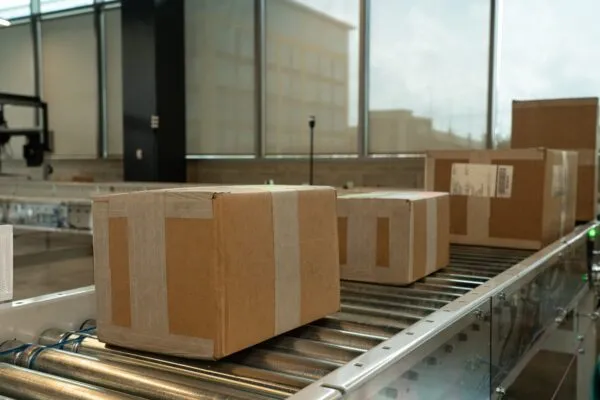
Package Handling
DCS’s design and engineering team has more than 40 years of experience creating unique parcel handling systems for diverse customer applications. With installations including semi-automated handling in small city distribution centers and fully automated, integrated hubs with advanced conveyor and sorter equipment, DCS routinely thinks outside the box.
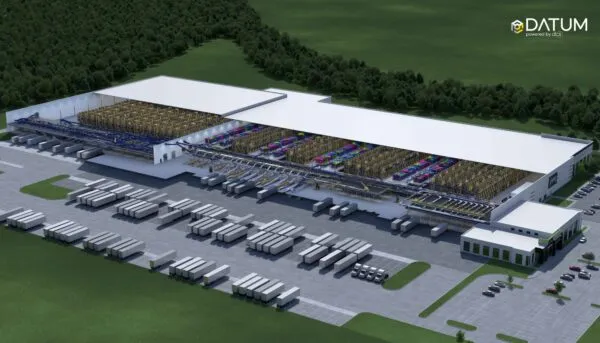
E-Commerce and Multi-Channel Fulfillment
DCS designs and implements end-to-end warehouse automation solutions for e-commerce and multi-channel retailers that address numerous workflow challenges. This includes solutions for receiving, putaway, storage, replenishment, order fulfillment, picking, packing, sortation, and outbound shipping. Our custom integrated warehouse, distribution, and fulfillment systems draw from a deep pool of conventional, semi-automated, and automated material handling technologies.
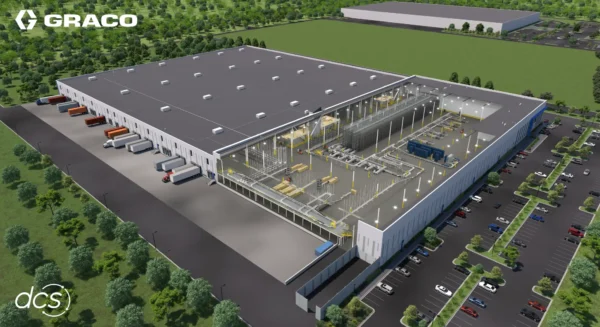
Various Distribution Applications
Whether an operation is considering the construction of a new distribution or fulfillment center, or a retrofit or expansion of an existing facility, it’s important to create a solution that fits the overarching supply chain strategy. DCS has four decades of experience designing and integrating comprehensive, end-to-end material handling solutions that meet a multitude of operational goals. Whether conventional, semi-automated, or fully automated, DCS can help your organization implement a custom solution that meets its goals while maximizing return on investment (ROI).

Supply Chain Consulting
The DCS Supply Chain Consulting team offers a range of services to help your operations address the challenges it faces. Working in partnership with you, DCS consultants analyze your business data- existing workforce, workflow processes, inventory, order data, operations, and more- to determine a strategy that addresses your unique needs. Whether you need an operations assessment, process improvement recommendations, or distribution design services, DCS consultants will help guide you to the material handling system or operational solution that best meets your current and future needs, as well as your budget.

Customer Support
Keeping your warehouse operations and material handling systems running smoothly and at the peak of productivity are the goals of DCS’ Customer Service Team. By partnering with DCS, your warehouse automation solution is supported from commissioning to end of life. You’ll receive comprehensive in-house training of your personnel, including specialized training of your designated internal system expert. Plus, DCS offers a complete package of spare parts and expert system troubleshooting support from qualified engineers dedicated to your installation.

System Design & Integration
DCS offers a broad range of material handling equipment and automated system design, installation, and integration services for a multitude of projects. These include retrofits, expansions, upgrades, and more. While every project is unique, our system design and execution processes are the same, encompassing meticulous attention to detail, frequent communication, and a dedicated partnership with our clients.

Lifecycle Services
Stop reactive repairs. Lifecycle Services provides expert preventive maintenance and 24/7 technical support to protect your automation and MHE availability.

Life Science & Healthcare
Pharmaceutical, healthcare, and life science companies face mounting pressure from evolving regulatory requirements, rising fulfillment costs, and intensifying accuracy demands. In this environment, automation isn’t optional—it’s essential. Designed Conveyor Systems (DCS) helps distributors of these critical products stay compliant and competitive.

Pet Care
Pet food distribution operations are anything but standard. From bulky kibble bags to delicate fish tanks, stock keeping unit (SKU) complexity and fulfillment pressure are always on the rise. Designed Conveyor Systems (DCS) partners with leading pet retailers to design and engineer automation, software, and material handling systems that keep operations agile, accurate, and ready for what’s next.

Home Improvement
When your distribution center handles everything from hammers to hot tubs, operational complexity isn’t a challenge—it’s your daily reality. Home improvement retailers face intense pressure to meet rising consumer expectations across multiple channels—from in-store pickups to last-mile delivery. At Designed Conveyor Systems (DCS), we specialize in engineering material handling and automation solutions that help home improvement distribution centers keep pace, reduce cost, and drive accuracy at scale.

Sporting Goods
Navigating the unique demands of the sporting goods retail industry requires a distribution strategy that’s both agile and precise. From handling seasonal surges to managing a diverse range of products—from bulky equipment to small accessories—your warehouse operations are the key to a seamless customer experience. Our expertise helps sporting goods retailers streamline their distribution warehouses, improving order accuracy, boosting productivity, and ensuring your team can efficiently move products from the receiving dock to the final customer, no matter the season.

Footwear
In the fast-paced world of footwear retail requires a distribution strategy that can handle a vast array of styles, sizes, and seasonal trends with precision and speed. From managing a high volume of SKUs to ensuring accurate order fulfillment and returns processing, your distribution center is the engine that drives customer satisfaction and brand loyalty. Our expertise helps footwear retailers streamline their distribution centers, improving inventory management, accelerating order processing, and ensuring your team can efficiently move products from the receiving dock to the final customer, no matter the season.

Wholesale & Industrial Distribution
Designed Conveyor Systems (DCS) partners with wholesale, industrial, and electronics distributors to design efficient, optimized fulfillment solutions. Every operation DCS designs streamlines end-to-end functional processes—from inbound receiving and putaway to picking, packing, and shipping. Designed Conveyor Systems (DCS) partners with wholesale, industrial, and electronics distributors to design efficient, optimized fulfillment solutions. Every operation DCS designs streamlines end-to-end functional processes—from inbound receiving and putaway to picking, packing, and shipping.



About Us
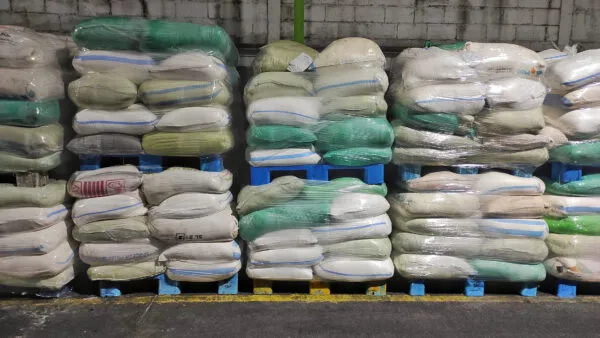
Designed Conveyor Systems (DCS) has 40 years of experience serving major clients in multiple industries by providing material handling, full-scale warehouse operations, and conveyor design solutions that are custom crafted for their needs. DCS does not sell ready-made conveyor systems but builds relationships that empower collaboration to craft custom warehouse designs together. DCS utilizes consulting, engineering design, project management, installation services, and client support to ensure our customers can keep their promises to deliver on time.
Projects
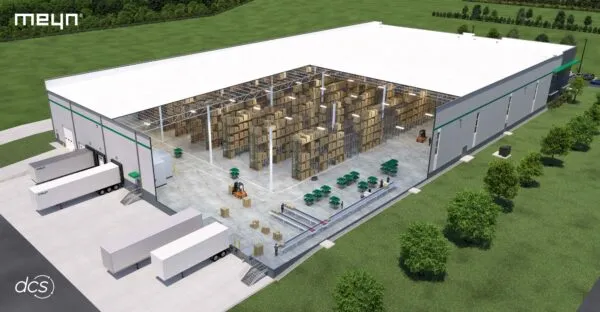
With more than 40 years of experience providing automated system design, installation, and integration services, DCS has created solutions for companies throughout the United States in a broad range of industries and markets. We’ve completed more than 1500 projects ranging from greenfield facilities with completely new systems to expansions and retrofits of existing operations.
Upcoming Events
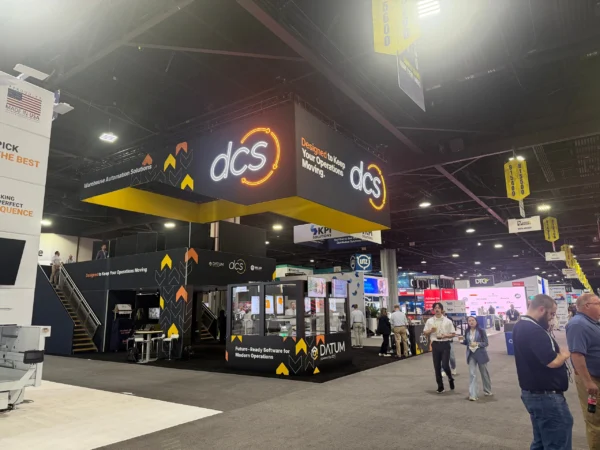
Designed Conveyor Systems values building strong relationships with our clients. Join us at our upcoming events to collaborate and discover how we can design a custom warehouse solution tailored to your unique needs.
Planning for Peak Season Logistics Starts Now: Turning Data into a Smarter Operation
Planning for Peak Season Logistics Starts Now: Turning Data into a Smarter Operation

By Matt Simmons, Project Director, DCS
Peak season logistics doesn’t start in November. It starts now.
By June, most retail distribution and fulfillment operations have already settled into their “normal” cadence. The urgency of the last peak has faded, daily fires have taken priority again, and planning for the next surge often gets pushed down the list.
But the reality is simple. The operations that perform best during peak are the ones that use this window to prepare—deliberately and strategically.
Every distribution center has limits. Storage, throughput, and other factors are all finite. There is no such thing as distribution center utopia, where everything flows exactly as planned within a design that never needs to evolve.
The goal, however, is not absolute perfection, but rather to optimize for what can be reasonably expected. Understanding how your operations perform under stress compared to your customers’ requirements is the first step. Step two is implementing targeted improvements to fill any gaps between measured performance and desired outcomes.
Your Distribution Center Is a Machine—Know How It Breaks
At its core, a distribution center functions like a machine. Product flows in, gets processed through multiple interconnected steps, and flows out. For that machine to work efficiently, every component—receiving, putaway, storage, picking, replenishment, consolidation, packing, and shipping—must operate in sync.
The annual peak is what pushes that machine to its limits.
That’s why the most important step in planning for successful peak season logistics isn’t blindly adding labor or equipment. It’s understanding what actually happened the last time your system was under pressure.
Validating and analyzing peak season data—and how it relates to operational performance—provides that clarity. Order history, throughput rates, stock keeping unit (SKU) velocity, and system utilization all tell a story. The data answers questions like:
- Where did volume spike?
- When did processing slow down?
- Which combinations of products or order profiles created strain?
- Most important: Where did the system break?
In truth, every system breaks somewhere under enough pressure. The challenge is that fixing one constraint without understanding the full system often just shifts the bottleneck somewhere else. Increasing capacity in picking, for example, may overwhelm packing or shipping if those areas’ chokepoints are not addressed at the same time.
Effective peak planning requires a holistic view. A thorough understanding of how all functional areas interact is crucial to ensuring they can work together in balance.
From Insight to Action: Warehouse Layout Optimization and Flow
Once the data helps to reveal where the operation struggled, the next step is prescription. Specifically, what needs to change to remove friction and improve flow?
This is where facility design and warehouse layout optimization come into focus. Slotting strategies, pick paths, buffer zones, and storage density shouldn’t be static decisions. Instead, they should evolve based on real performance data.
Peak season exposes whether products are in the right locations, whether travel paths are efficient, and whether buffer capacity is sufficient to absorb variability. It also highlights underutilized areas—spaces or processes with more capacity than they need—and creates opportunities to rebalance the operation.
At the end of the day, effective fulfillment comes down to a simple principle: having the right product, in the right place, at the right time. Achieving that consistently requires aligning storage, movement, and processing in a way that supports both peak and everyday operations.
Planning for the Reality of Variability
One of the biggest challenges in peak season logistics is unpredictability. Promotions, seasonality, and even external factors like social media can cause sudden spikes in demand for specific products. A single SKU can go from average velocity to overwhelming volume almost overnight, disrupting established workflows and creating congestion across the system.
Operations that succeed during peak are designed to respond to this variability. That might mean creating flexible processes to isolate high-velocity items, establishing dedicated workflows for fast-moving products, or implementing scalable solutions—like automated fulfillment systems—that can adapt in real time.
Planning for peak isn’t just about handling known demand—it’s about building the agility to respond when demand behaves differently than expected.
Two Approaches to Peak Capacity
When it comes to scaling your peak season logistics, most operations fall into one of two strategies:
- Building capacity to handle maximum demand at all times. This approach is often referred to as “building the church for Easter Sunday.” While this ensures the system can handle peak volume, it frequently results in underutilized capacity during the rest of the year.
- Focusing on flexibility by designing an operation that runs efficiently at baseline and scales during peak. Through a combination of labor, process adjustments, and technology, the system can flex to handle shifting throughput demands. This might include adding shifts, reallocating resources, or leveraging automation to increase throughput without permanently overbuilding capacity.
Which strategy is best for your operation? There’s no one-size-fits-all answer.
Ultimately, the right approach depends on business goals, growth projections, and financial strategy. But in every case, the decision should be driven by data. It’s essential to understand not just current demand, but also to anticipate where the operation will be in the next three to five years.
Why Planning Often Doesn’t Happen—And How to Solve It
Most operations teams understand the importance of peak planning. The challenge is finding the time and bandwidth to do it.
Day-to-day execution takes priority. Teams are focused on keeping product moving, managing labor, and hitting service levels. Stepping back to analyze data, evaluate capacity, and redesign workflows can feel overwhelming. This is particularly true when the next peak still feels far away.
This is where bringing in external expertise can make a meaningful difference.
An experienced partner—like the consulting and systems integration teams at DCS—provides both the bandwidth and the perspective to analyze operations objectively, identify root causes, and develop actionable recommendations. Instead of adding more to an already full plate, partnering with DCS allows your internal operations managers to stay focused on execution while we handle the heavy lifting of analysis and planning.
More importantly, recommendations are grounded in real data. This ensures that operational improvements connect to measurable business outcomes, not just theoretical gains.
Don’t Wait Until You Hit the Limit
The most challenging situations occur when operations wait too long to act. Facilities that are already maxed out—running at full capacity with no room for additional labor, storage, or throughput—have limited options. At that point, short-term fixes often come at a high cost and with increased risk.
The better approach is proactive planning.
By evaluating current performance and modeling future growth, operations can identify when they will reach capacity limits and take action before constraints impact service levels. Whether that means optimizing existing processes, reconfiguring layout, or investing in new capabilities, earlier decisions create more flexibility and better outcomes.
Turning This Peak into Next Year’s Advantage
Peak season will always be a stress test. The difference is whether it becomes a recurring challenge or a catalyst for improvement.
The operations that gain a competitive edge are the ones that treat peak as a learning opportunity. They use real performance data to refine processes, improve flow, justify targeted investments, and build more resilient systems to better service their customers.
Planning for peak isn’t about eliminating pressure. It’s about designing an operation that can handle it. And the time to start is now. If you are seeing signs that your operation is out of storage space, reaching throughput limits, or just isn’t working how it should, now is the time to act—not when limitations are negatively affecting your customer’s experience.
DCS partners with organizations to design and implement conveyor modernization strategies that improve flow, increase throughput, and support long-term growth. Combined with DCS’ data-driven operational expertise, you gain a comprehensive approach… from identifying constraints to engineering scalable solutions.
Connect with the team today to evaluate your current system, uncover opportunities for improvement, and build a more resilient, future-ready operation.