
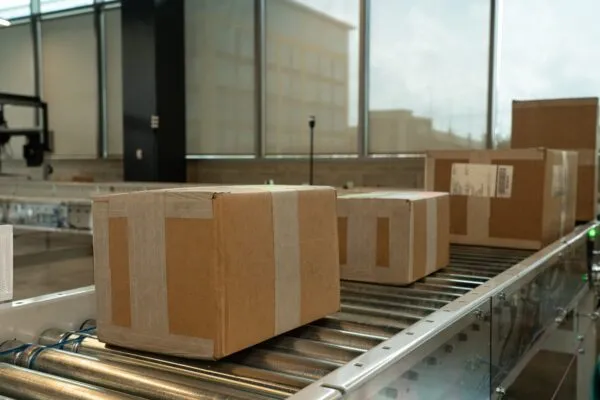
Package Handling
DCS’s design and engineering team has more than 40 years of experience creating unique parcel handling systems for diverse customer applications. With installations including semi-automated handling in small city distribution centers and fully automated, integrated hubs with advanced conveyor and sorter equipment, DCS routinely thinks outside the box.
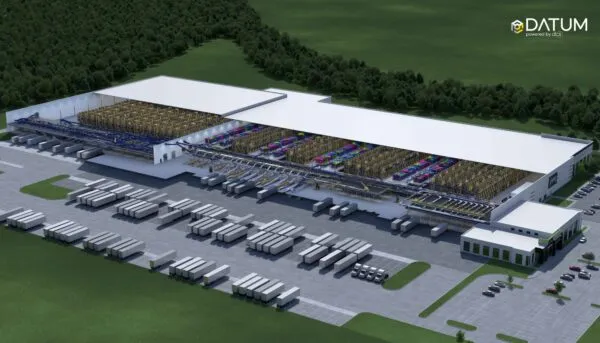
E-Commerce and Multi-Channel Fulfillment
DCS designs and implements end-to-end warehouse automation solutions for e-commerce and multi-channel retailers that address numerous workflow challenges. This includes solutions for receiving, putaway, storage, replenishment, order fulfillment, picking, packing, sortation, and outbound shipping. Our custom integrated warehouse, distribution, and fulfillment systems draw from a deep pool of conventional, semi-automated, and automated material handling technologies.
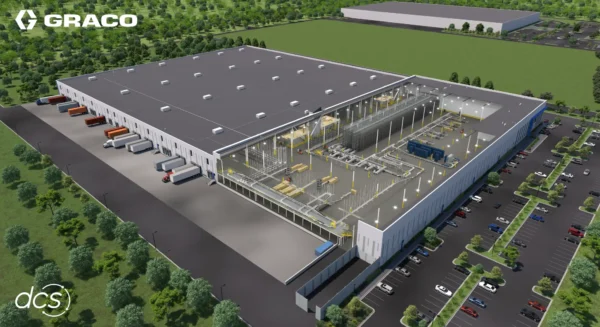
Various Distribution Applications
Whether an operation is considering the construction of a new distribution or fulfillment center, or a retrofit or expansion of an existing facility, it’s important to create a solution that fits the overarching supply chain strategy. DCS has four decades of experience designing and integrating comprehensive, end-to-end material handling solutions that meet a multitude of operational goals. Whether conventional, semi-automated, or fully automated, DCS can help your organization implement a custom solution that meets its goals while maximizing return on investment (ROI).

Supply Chain Consulting
The DCS Supply Chain Consulting team offers a range of services to help your operations address the challenges it faces. Working in partnership with you, DCS consultants analyze your business data- existing workforce, workflow processes, inventory, order data, operations, and more- to determine a strategy that addresses your unique needs. Whether you need an operations assessment, process improvement recommendations, or distribution design services, DCS consultants will help guide you to the material handling system or operational solution that best meets your current and future needs, as well as your budget.

Customer Support
Keeping your warehouse operations and material handling systems running smoothly and at the peak of productivity are the goals of DCS’ Customer Service Team. By partnering with DCS, your warehouse automation solution is supported from commissioning to end of life. You’ll receive comprehensive in-house training of your personnel, including specialized training of your designated internal system expert. Plus, DCS offers a complete package of spare parts and expert system troubleshooting support from qualified engineers dedicated to your installation.

System Design & Integration
DCS offers a broad range of material handling equipment and automated system design, installation, and integration services for a multitude of projects. These include retrofits, expansions, upgrades, and more. While every project is unique, our system design and execution processes are the same, encompassing meticulous attention to detail, frequent communication, and a dedicated partnership with our clients.

Life Science & Healthcare
Pharmaceutical, healthcare, and life science companies face mounting pressure from evolving regulatory requirements, rising fulfillment costs, and intensifying accuracy demands. In this environment, automation isn’t optional—it’s essential. Designed Conveyor Systems (DCS) helps distributors of these critical products stay compliant and competitive.

Pet Food
Pet food distribution operations are anything but standard. From bulky kibble bags to delicate fish tanks, stock keeping unit (SKU) complexity and fulfillment pressure are always on the rise. Designed Conveyor Systems (DCS) partners with leading pet retailers to design and engineer automation, software, and material handling systems that keep operations agile, accurate, and ready for what’s next.

Home Improvement
When your distribution center handles everything from hammers to hot tubs, operational complexity isn’t a challenge—it’s your daily reality. Home improvement retailers face intense pressure to meet rising consumer expectations across multiple channels—from in-store pickups to last-mile delivery. At Designed Conveyor Systems (DCS), we specialize in engineering material handling and automation solutions that help home improvement distribution centers keep pace, reduce cost, and drive accuracy at scale.

Sporting Goods
Navigating the unique demands of the sporting goods retail industry requires a distribution strategy that’s both agile and precise. From handling seasonal surges to managing a diverse range of products—from bulky equipment to small accessories—your warehouse operations are the key to a seamless customer experience. Our expertise helps sporting goods retailers streamline their distribution warehouses, improving order accuracy, boosting productivity, and ensuring your team can efficiently move products from the receiving dock to the final customer, no matter the season.
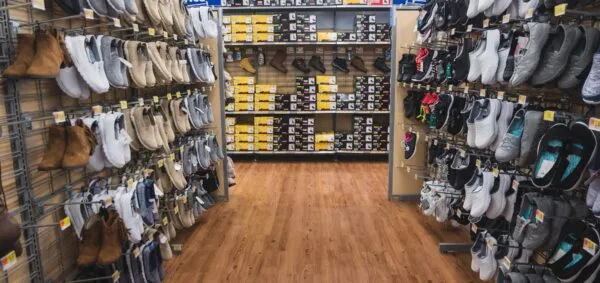
Footwear
In the fast-paced world of footwear retail requires a distribution strategy that can handle a vast array of styles, sizes, and seasonal trends with precision and speed. From managing a high volume of SKUs to ensuring accurate order fulfillment and returns processing, your distribution center is the engine that drives customer satisfaction and brand loyalty. Our expertise helps footwear retailers streamline their distribution centers, improving inventory management, accelerating order processing, and ensuring your team can efficiently move products from the receiving dock to the final customer, no matter the season.
Wholesale & Industrial Distribution
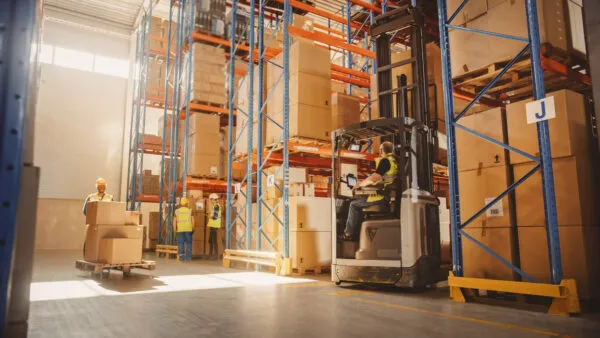
Designed Conveyor Systems (DCS) partners with wholesale, industrial, and electronics distributors to design efficient, optimized fulfillment solutions. Every operation DCS designs streamlines end-to-end functional processes—from inbound receiving and putaway to picking, packing, and shipping. Designed Conveyor Systems (DCS) partners with wholesale, industrial, and electronics distributors to design efficient, optimized fulfillment solutions. Every operation DCS designs streamlines end-to-end functional processes—from inbound receiving and putaway to picking, packing, and shipping.


About Us
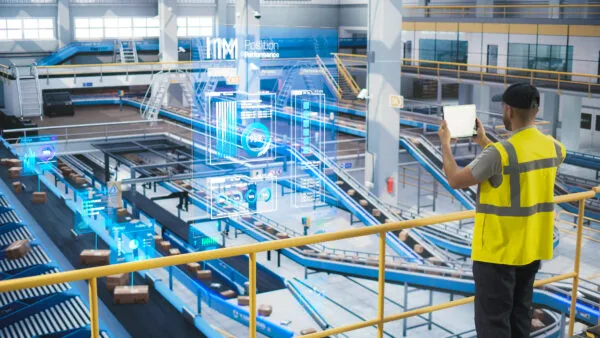
Designed Conveyor Systems (DCS) has 40 years of experience serving major clients in multiple industries by providing material handling, full-scale warehouse operations, and conveyor design solutions that are custom crafted for their needs. DCS does not sell ready-made conveyor systems but builds relationships that empower collaboration to craft custom warehouse designs together. DCS utilizes consulting, engineering design, project management, installation services, and client support to ensure our customers can keep their promises to deliver on time.
Projects
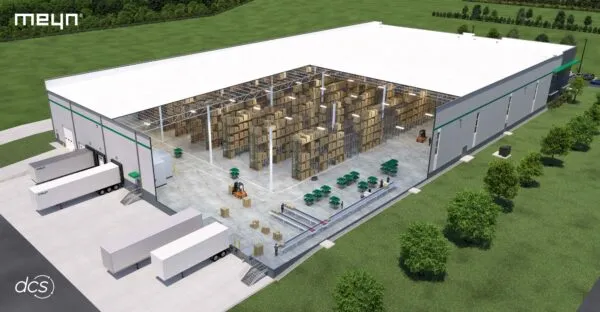
With more than 40 years of experience providing automated system design, installation, and integration services, DCS has created solutions for companies throughout the United States in a broad range of industries and markets. We’ve completed more than 1500 projects ranging from greenfield facilities with completely new systems to expansions and retrofits of existing operations.
Upcoming Events
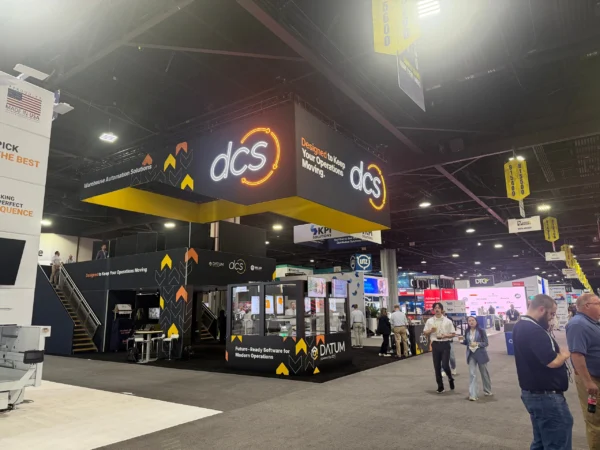
Designed Conveyor Systems values building strong relationships with our clients. Join us at our upcoming events to collaborate and discover how we can design a custom warehouse solution tailored to your unique needs.
Preventing the Most Common Risks to Warehouse Employee Safety
Preventing the Most Common Risks to Warehouse Employee Safety

According to the Occupational Safety and Health Administration (OSHA), the fatal injury rate for warehouse workers is higher than the national average for all industries. Among the most common safety risks are being struck by a forklift or a falling object, falls off unguarded surfaces, electrical shocks, entrapment in unguarded machinery or equipment, and poor ergonomics.
Here are a few recommendations for how to prevent those potential injuries.
- Impact Avoidance. To reduce the risk of employees being struck by a forklift as they walk through a facility, be sure forklift operators are trained to observe all traffic regulations and requirements. That includes ensuring they maintain a clear line of sight as they drive either forward or backwards, they honk when approaching intersections, and they run their vehicles at a safe speed that will enable them to stop safely.There are a variety of safety accessories available for industrial storage rack – such as netting and steel mesh guarding panels – that can be added to catch any items that may fall from their overhead storage position and potentially strike a pedestrian below. Further, ensuring that every load stored overhead in a pallet rack (above floor level position) is unitized with banding or stretchwrap will also significantly reduce the chance that a product or case will fall. Loads should also be placed evenly and straight, with heavier pallets on lower or middle shelves. Finally, storage rack aisles should be kept clear to ensure forklift operators can both safely maneuver through them, as well as can see the path (and personnel) ahead with no obstructions.
- Fall Prevention. Shipping and receiving docks, with elevated openings that allow trailers to be parked and accessed at floor level for loading and unloading, should be guarded with a device that obstructs the opening – or the door closed – when no trailer is present. Otherwise, the unprotected opening poses the potential for a fall. Additionally, visual warnings should be added to dock doors to alert pedestrians (and forklift operators) of the edge.Other potential areas for warehouse falls are elevated work platforms and pick modules. The edges of, and stairs for access to, these internal structures should be protected with secure guardrails and foot plates that prevent people or products from toppling over the side. Any elevation of 4-feet or higher should be secured. Personnel working at heights should be equipped with safety harnesses, as well as trained on their proper use. In general, any trip hazards within the building should also be marked with highly visible safety tape or other protective barrier.
- Avoiding Electrical Shocks. All electrical access panels should be enclosed, guarded, and secured to prevent unauthorized access. Additionally, signage should be posted that indicates a warning, such as Danger/High Voltage/Keep Out. Electrical equipment should be properly grounded to prevent the build-up of voltages, and circuit protection devices should be in place to limit or stop the flow of current should a ground fault, overload or short circuit in the wiring system occur. Most shocks can be prevented by shutting off the power prior to inspecting or repairing the equipment, wearing appropriate protective gear when working on electrical components, and being cautious and aware of the danger.
- Entrapment Prevention. Lock-out/tag-out procedures to ensure that automated or mechanical equipment is rendered completely functionless (no power) prior to repair and maintenance activities is a critical aspect of preventing serious injury from entrapment. Likewise, warehouse workers should be trained to be aware of and avoid pinch points in equipment such as conveyors or racking – particularly push-back and carton flow systems that utilize mechanical movement in load storage. Train employees on how to safely remove an item stuck in a conveyor or rack, including removing the system from service in order to do so without risking injury.
- Better Ergonomics. Workers should be trained on using proper lifting techniques to reduce the risk of injuries related to overexertion. These include strains, sprains, or other musculoskeletal damage caused from reaching, stretching, bending, twisting, stooping or other potentially harmful motion. For workers who are picking items to fill orders, products that are accessed most often should be stored in what’s known as the Golden Zone, or waist heigh. Additionally, there are a variety of ergonomic lift assist devices available – such as lift tables, workstation cranes, vacuum lifters, and more – to help workers handle heavy items while minimizing the effects of strenuous or repetitive tasks.
Looking for more information about the types of solutions DCS can implement in your operation that enhance worker safety? Connect with us.
_

Author
Danny Krause, Senior Site Manager,danny@designedconveyor.com
Danny Krause serves as the Senior Site Manager of Designed Conveyor Systems and has 15+ years of experience in leadership roles with complex integrated conveyance systems for MHE, DC operations, and baggage handling operations. He is a forward-thinking safety specialist with a positive record managing crew, materials, and site activities. In his free time, he enjoys being on the water and spending time with his wife, daughter, and granddaughter.