
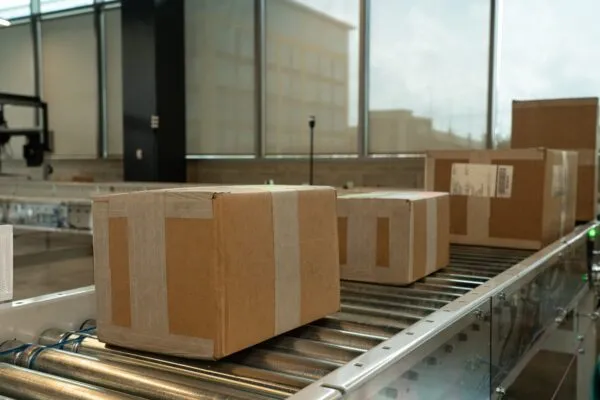
Package Handling
DCS’s design and engineering team has more than 40 years of experience creating unique parcel handling systems for diverse customer applications. With installations including semi-automated handling in small city distribution centers and fully automated, integrated hubs with advanced conveyor and sorter equipment, DCS routinely thinks outside the box.
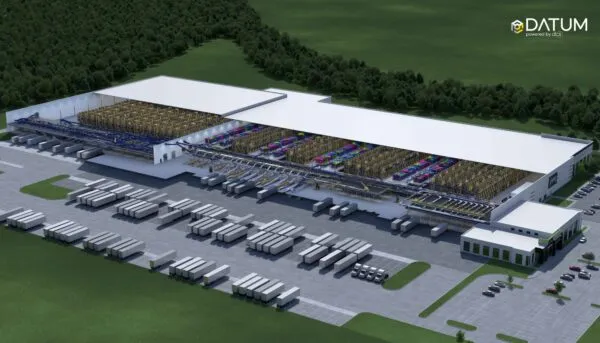
E-Commerce and Multi-Channel Fulfillment
DCS designs and implements end-to-end warehouse automation solutions for e-commerce and multi-channel retailers that address numerous workflow challenges. This includes solutions for receiving, putaway, storage, replenishment, order fulfillment, picking, packing, sortation, and outbound shipping. Our custom integrated warehouse, distribution, and fulfillment systems draw from a deep pool of conventional, semi-automated, and automated material handling technologies.
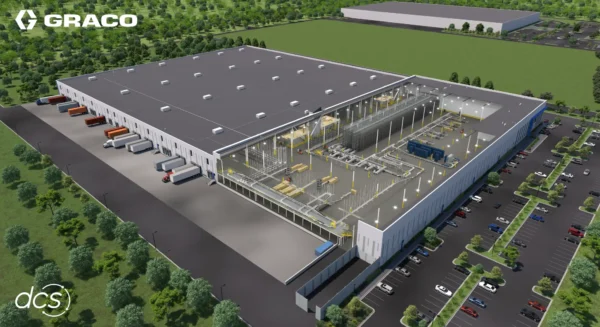
Various Distribution Applications
Whether an operation is considering the construction of a new distribution or fulfillment center, or a retrofit or expansion of an existing facility, it’s important to create a solution that fits the overarching supply chain strategy. DCS has four decades of experience designing and integrating comprehensive, end-to-end material handling solutions that meet a multitude of operational goals. Whether conventional, semi-automated, or fully automated, DCS can help your organization implement a custom solution that meets its goals while maximizing return on investment (ROI).

Supply Chain Consulting
The DCS Supply Chain Consulting team offers a range of services to help your operations address the challenges it faces. Working in partnership with you, DCS consultants analyze your business data- existing workforce, workflow processes, inventory, order data, operations, and more- to determine a strategy that addresses your unique needs. Whether you need an operations assessment, process improvement recommendations, or distribution design services, DCS consultants will help guide you to the material handling system or operational solution that best meets your current and future needs, as well as your budget.

Customer Support
Keeping your warehouse operations and material handling systems running smoothly and at the peak of productivity are the goals of DCS’ Customer Service Team. By partnering with DCS, your warehouse automation solution is supported from commissioning to end of life. You’ll receive comprehensive in-house training of your personnel, including specialized training of your designated internal system expert. Plus, DCS offers a complete package of spare parts and expert system troubleshooting support from qualified engineers dedicated to your installation.
System Design & Integration
DCS offers a broad range of material handling equipment and automated system design, installation, and integration services for a multitude of projects. These include retrofits, expansions, upgrades, and more. While every project is unique, our system design and execution processes are the same, encompassing meticulous attention to detail, frequent communication, and a dedicated partnership with our clients.
Lifecycle Services
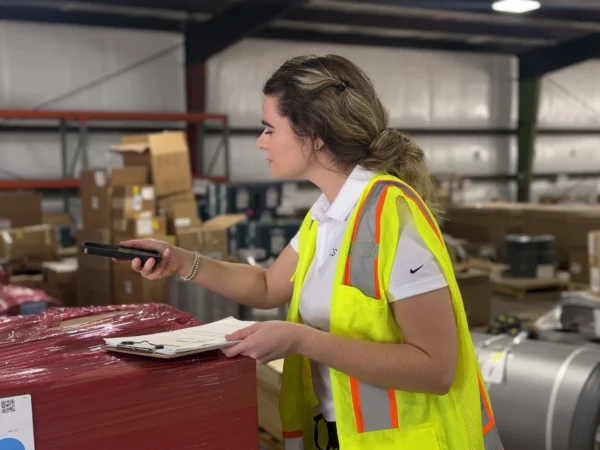
Stop reactive repairs. Lifecycle Services provides expert preventive maintenance and 24/7 technical support to protect your automation and MHE availability.

Life Science & Healthcare
Pharmaceutical, healthcare, and life science companies face mounting pressure from evolving regulatory requirements, rising fulfillment costs, and intensifying accuracy demands. In this environment, automation isn’t optional—it’s essential. Designed Conveyor Systems (DCS) helps distributors of these critical products stay compliant and competitive.

Pet Food
Pet food distribution operations are anything but standard. From bulky kibble bags to delicate fish tanks, stock keeping unit (SKU) complexity and fulfillment pressure are always on the rise. Designed Conveyor Systems (DCS) partners with leading pet retailers to design and engineer automation, software, and material handling systems that keep operations agile, accurate, and ready for what’s next.

Home Improvement
When your distribution center handles everything from hammers to hot tubs, operational complexity isn’t a challenge—it’s your daily reality. Home improvement retailers face intense pressure to meet rising consumer expectations across multiple channels—from in-store pickups to last-mile delivery. At Designed Conveyor Systems (DCS), we specialize in engineering material handling and automation solutions that help home improvement distribution centers keep pace, reduce cost, and drive accuracy at scale.

Sporting Goods
Navigating the unique demands of the sporting goods retail industry requires a distribution strategy that’s both agile and precise. From handling seasonal surges to managing a diverse range of products—from bulky equipment to small accessories—your warehouse operations are the key to a seamless customer experience. Our expertise helps sporting goods retailers streamline their distribution warehouses, improving order accuracy, boosting productivity, and ensuring your team can efficiently move products from the receiving dock to the final customer, no matter the season.
Footwear
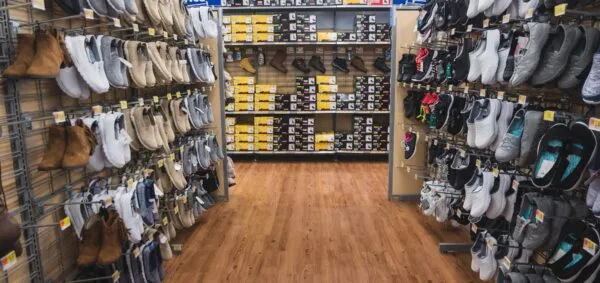
In the fast-paced world of footwear retail requires a distribution strategy that can handle a vast array of styles, sizes, and seasonal trends with precision and speed. From managing a high volume of SKUs to ensuring accurate order fulfillment and returns processing, your distribution center is the engine that drives customer satisfaction and brand loyalty. Our expertise helps footwear retailers streamline their distribution centers, improving inventory management, accelerating order processing, and ensuring your team can efficiently move products from the receiving dock to the final customer, no matter the season.
Wholesale & Industrial Distribution
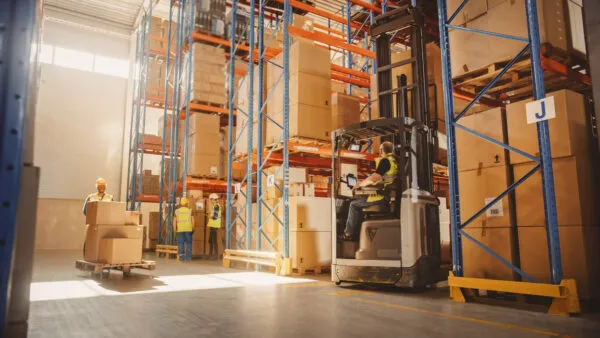
Designed Conveyor Systems (DCS) partners with wholesale, industrial, and electronics distributors to design efficient, optimized fulfillment solutions. Every operation DCS designs streamlines end-to-end functional processes—from inbound receiving and putaway to picking, packing, and shipping. Designed Conveyor Systems (DCS) partners with wholesale, industrial, and electronics distributors to design efficient, optimized fulfillment solutions. Every operation DCS designs streamlines end-to-end functional processes—from inbound receiving and putaway to picking, packing, and shipping.



About Us
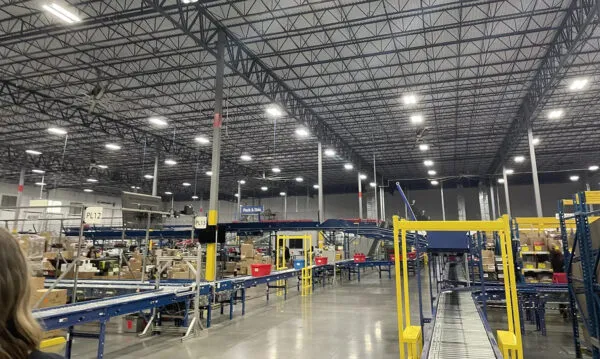
Designed Conveyor Systems (DCS) has 40 years of experience serving major clients in multiple industries by providing material handling, full-scale warehouse operations, and conveyor design solutions that are custom crafted for their needs. DCS does not sell ready-made conveyor systems but builds relationships that empower collaboration to craft custom warehouse designs together. DCS utilizes consulting, engineering design, project management, installation services, and client support to ensure our customers can keep their promises to deliver on time.
Projects
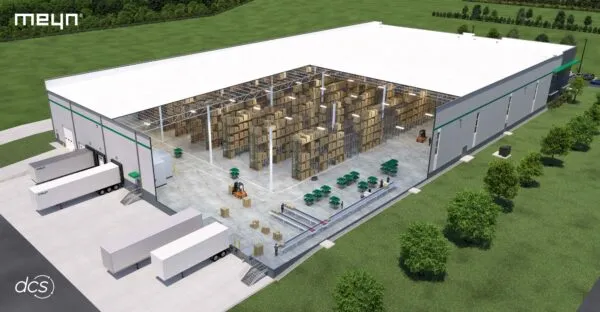
With more than 40 years of experience providing automated system design, installation, and integration services, DCS has created solutions for companies throughout the United States in a broad range of industries and markets. We’ve completed more than 1500 projects ranging from greenfield facilities with completely new systems to expansions and retrofits of existing operations.
Upcoming Events
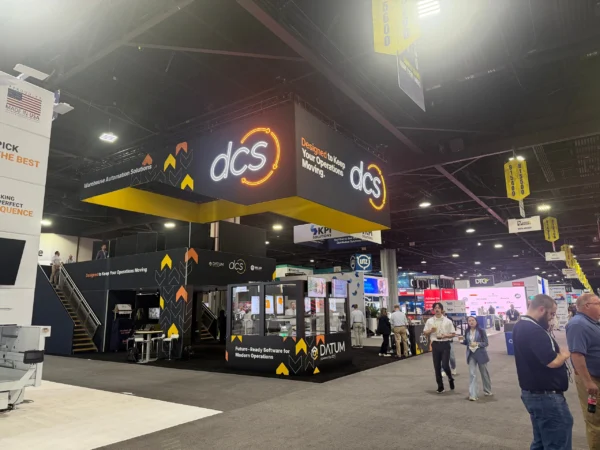
Designed Conveyor Systems values building strong relationships with our clients. Join us at our upcoming events to collaborate and discover how we can design a custom warehouse solution tailored to your unique needs.
Types of Sortation Systems: How to Choose the Right Technology for Your Warehouse
Types of Sortation Systems: How to Choose the Right Technology for Your Warehouse
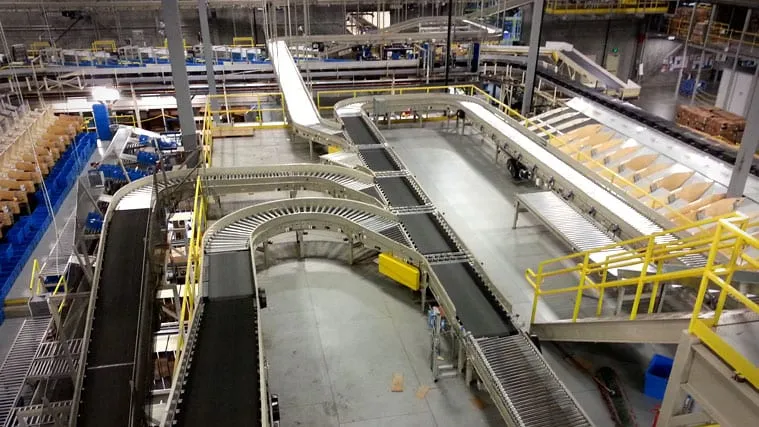
Sortation systems are key automated material handling solutions in modern distribution, e-commerce, parcel, and manufacturing operations. Therefore, the right sorter keeps products moving efficiently, supports throughput during peak demand, and ensures orders reach the correct destination every time.
But selecting the right sorter involves much more than comparing equipment speeds. Throughput, product characteristics, induction design, and future operational requirements all play a role in determining which material handling system is best for a given facility.
Below, we explore the most common types of sortation technologies. Further, we’ll explain the key factors operations leaders should consider when selecting among these automated material handling solutions.
What Are the Main Types of Sortation Systems?
The most common warehouse sortation technologies include:
- Pusher sorters
- Swing arm diverts
- Pop-up wheel or roller sorters
- Narrow-belt sorters
- Sliding shoe sorters
- Bomb bay sorters
- Tilt-tray sorters
- Cross belt sorters
Each type supports different throughput levels, package characteristics, and operational objectives. Therefore, choosing the right technology depends on product sizes, required sort rates, number of destinations, and how the facility operates during peak demand.
Why Sortation Speed Alone Doesn’t Tell the Whole Story
In many conversations about sortation systems, the first metric discussed is cases per minute (CPM). While useful, this number rarely reflects the full operational picture. Actual throughput depends on several important variables. These include:
Case Length and Product Variability
Most facilities handle cartons and packages of varying sizes. The average case length directly affects how many items can physically occupy the sorter at one time. Additionally, longer cases reduce the number of items the equipment can sort per minute.
Induction and Merge Efficiency
Even the fastest sorter cannot achieve peak throughput if it isn’t consistently supplied with product. For that reason, upstream systems—such as merges, conveyors, and induction stations—play a critical role in maintaining sorter utilization.
In many operations, the design of the induction system is just as important as the sorter itself. Without efficient item induction, the sorter may spend valuable time running below capacity.
How to Select the Right Sortation Technology
As with any custom material handling systems, selecting the right sorter begins with high-quality operational data. Important inputs include:
- Package dimensions and weights
- Packaging types and variability
- Required throughput rates
- Number and type of sort destinations
- Facility space constraints
Equally important is understanding future operational changes. Businesses often experience shifts in order profiles, stock keeping unit (SKU) counts, and shipping volumes. Designing custom material handling systems that can adapt to these changes helps protect the investment over time.
Peak periods also influence system design. Many distribution centers experience seasonal surges where demand far exceeds average daily volumes. In these environments, sortation systems are typically engineered to support peak throughput requirements rather than average demand.
Common Types of Sortation Systems
The following sorter technologies are widely used across retail distribution, e-commerce fulfillment, parcel handling, and manufacturing environments.
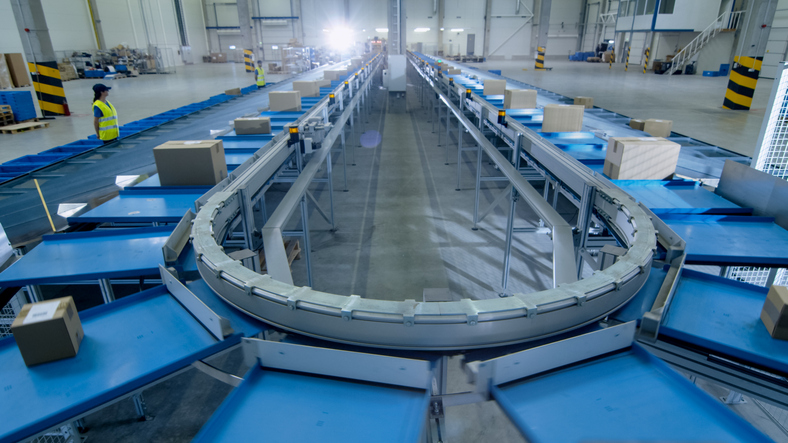
Pusher Sorters (40–60 CPM)
Pusher sorters provide a simple and reliable solution for low-rate sortation applications. Mechanical pushers divert cartons or totes from the main conveyor into designated lanes. These systems are often used when throughput requirements are moderate and product characteristics are relatively consistent. Moreover, they are commonly found in smaller distribution operations or facilities with limited sort destinations.
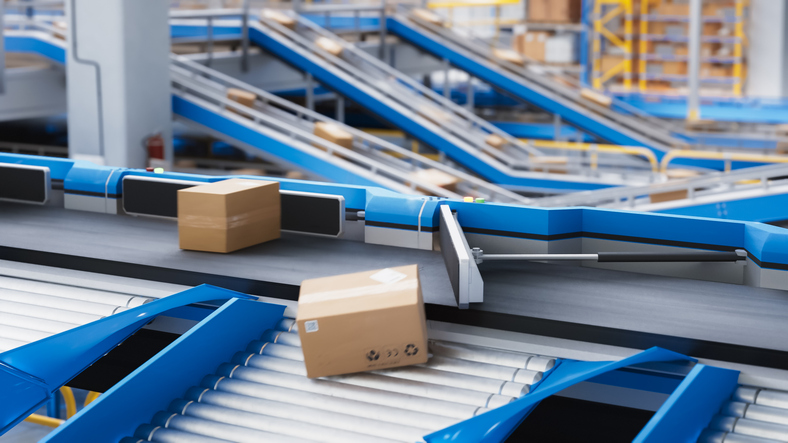
Swing Arm Diverts (20–60 CPM)
Swing arm diverts are frequently used when groups of items must be routed together to a particular location. For example, products may be directed toward packaging lines, value-added service areas, or secondary processing stations. Because they move groups of items rather than individual pieces, swing arm systems work well in operations where batching is common.
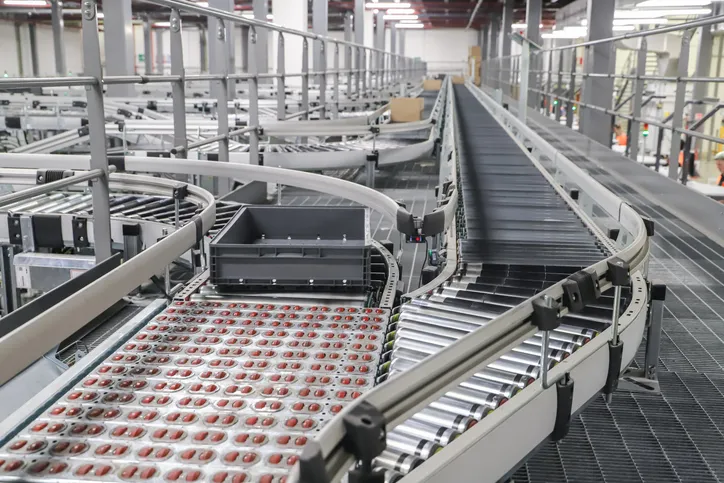
Pop-Up Wheel and Pop-Up Roller Sorters (40–100 CPM)
Pop-up wheel and roller sorters offer a cost-effective solution for low- to mid-speed carton and tote sorting. In these systems, angled wheels or rollers rise between conveyor rollers to divert products into outbound lanes. Their relatively simple design makes them a popular option for medium-volume distribution environments.
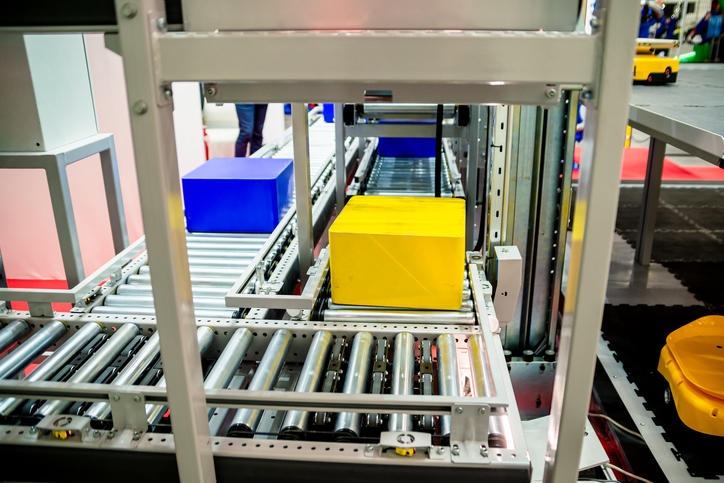
Narrow-Belt Sorters (Up to 100 CPM)
Narrow-belt sorters are commonly used to feed pack stations, quality assurance areas, or shipping lanes. These systems can support right-angle or angled divert configurations. Frequently, manufacturing, warehouse, and distribution facilities that require moderate throughput with flexible routing will deploy this technology.
Sliding Shoe Sorters (60–400 CPM)
Sliding shoe sorters are widely used in high-volume distribution centers. Small sliding shoes move along slats on the sorter surface and gently guide cartons or totes into the correct destination lane. Because they provide smooth and controlled diversion, shoe sorters are well suited for environments that require high accuracy and consistent throughput.
Bomb Bay Sorters (100–280 CPM)
Bomb bay sorters—sometimes called split-tray sorters—use trays with two hinged panels that open from the center to release items. When the tray reaches its assigned destination, the panels swing downward like trap doors, allowing the item to drop into a chute, container, or takeaway conveyor below. This design is well suited for soft, lightweight items such as polybagged apparel, small parcels, and other products that can tolerate a short drop. Bomb bay systems are often used in e-commerce and retail fulfillment operations where large volumes of individual items must be sorted quickly into order consolidation points.
Tilt-Tray Sorters (100–375 CPM)
Tilt-tray systems are automated material handling solutions designed for high-capacity piece sortation. Individual trays carry products along the sorter before tilting to discharge items into the correct chute. Further, they can sort items to both sides. Frequently, order fulfillment operations that sort batch-picked items into individual customer orders often deploy this technology.
Cross Belt Sorters (Up to 500 CPM)
Cross belt sorters are among the most versatile sortation technologies available. Each carrier features a small belt that moves items left or right into designated sort locations. These systems commonly handle soft goods, parcels, books, and small items in high-speed fulfillment environments. They are capable of sorting items to both sides of the system.
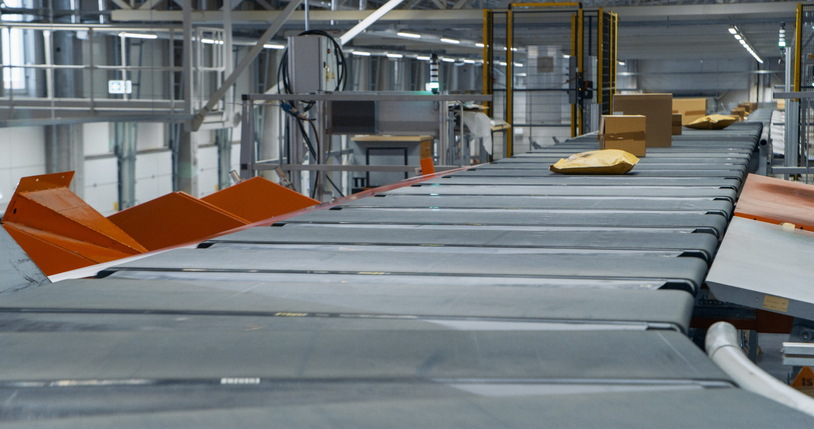
The Role of Material Handling Systems Integrators in Sortation Design
Selecting the right sorter is only part of the process. A successful solution requires thoughtful integration with upstream and downstream systems, including:
- Conveyor and transport systems
- Induction stations
- Warehouse execution software
- Pack stations and shipping lanes
By analyzing product flow across the entire facility, material handling systems integrators can design solutions that maintain high throughput while remaining adaptable as operations evolve.
Designing a Sortation System That Scales With Your Business
No single sortation technology fits every operation. The right solution depends on the products being handled, the required throughput, and the long-term growth of the business.
When designed correctly, sorters help organizations:
- Improve order accuracy
- Increase throughput capacity
- Reduce manual handling
- Support peak demand without disruption
Ready to Evaluate the Right Sortation System for Your Operation?
Choosing the right sortation technology requires careful analysis of product characteristics, operational data, and future growth plans. Working with an experienced system integrator helps ensure the solution aligns with both current needs and long-term performance goals.
If you’re exploring automation options for your distribution or fulfillment operation, the DCS team of material handling systems integrators can help evaluate your requirements and recommend the most effective approach.
Connect with DCS to discuss your sortation strategy or explore additional resources on warehouse automation and system design.