
Package Handling
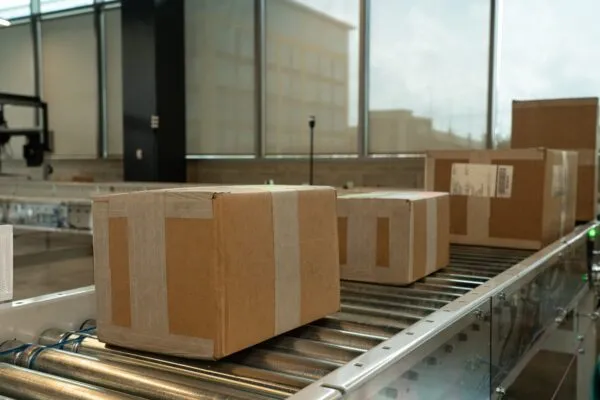
DCS’s design and engineering team has more than 40 years of experience creating unique parcel handling systems for diverse customer applications. With installations including semi-automated handling in small city distribution centers and fully automated, integrated hubs with advanced conveyor and sorter equipment, DCS routinely thinks outside the box.
E-Commerce and Multi-Channel Fulfillment
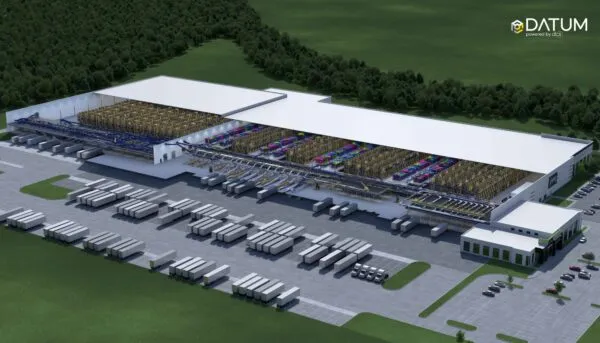
DCS designs and implements end-to-end warehouse automation solutions for e-commerce and multi-channel retailers that address numerous workflow challenges. This includes solutions for receiving, putaway, storage, replenishment, order fulfillment, picking, packing, sortation, and outbound shipping. Our custom integrated warehouse, distribution, and fulfillment systems draw from a deep pool of conventional, semi-automated, and automated material handling technologies.
Various Distribution Applications
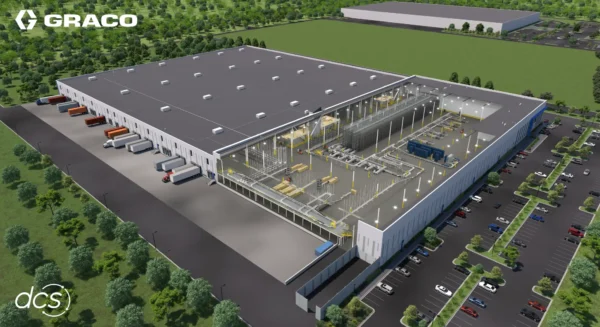
Whether an operation is considering the construction of a new distribution or fulfillment center, or a retrofit or expansion of an existing facility, it’s important to create a solution that fits the overarching supply chain strategy. DCS has four decades of experience designing and integrating comprehensive, end-to-end material handling solutions that meet a multitude of operational goals. Whether conventional, semi-automated, or fully automated, DCS can help your organization implement a custom solution that meets its goals while maximizing return on investment (ROI).

Supply Chain Consulting
The DCS Supply Chain Consulting team offers a range of services to help your operations address the challenges it faces. Working in partnership with you, DCS consultants analyze your business data- existing workforce, workflow processes, inventory, order data, operations, and more- to determine a strategy that addresses your unique needs. Whether you need an operations assessment, process improvement recommendations, or distribution design services, DCS consultants will help guide you to the material handling system or operational solution that best meets your current and future needs, as well as your budget.

Customer Support
Keeping your warehouse operations and material handling systems running smoothly and at the peak of productivity are the goals of DCS’ Customer Service Team. By partnering with DCS, your warehouse automation solution is supported from commissioning to end of life. You’ll receive comprehensive in-house training of your personnel, including specialized training of your designated internal system expert. Plus, DCS offers a complete package of spare parts and expert system troubleshooting support from qualified engineers dedicated to your installation.
System Design & Integration
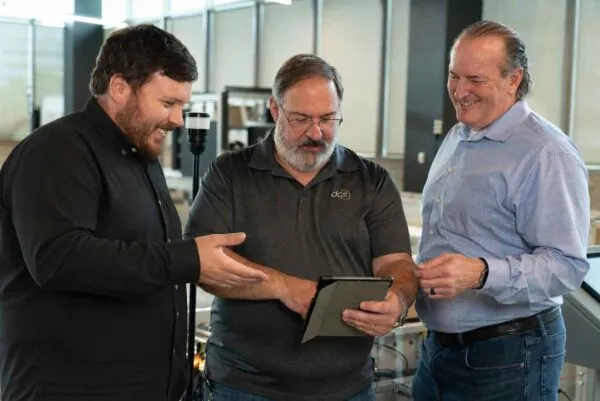
DCS offers a broad range of material handling equipment and automated system design, installation, and integration services for a multitude of projects. These include retrofits, expansions, upgrades, and more. While every project is unique, our system design and execution processes are the same, encompassing meticulous attention to detail, frequent communication, and a dedicated partnership with our clients.
Lifecycle Services
Stop reactive repairs. Lifecycle Services provides expert preventive maintenance and 24/7 technical support to protect your automation and MHE availability.

Life Science & Healthcare
Pharmaceutical, healthcare, and life science companies face mounting pressure from evolving regulatory requirements, rising fulfillment costs, and intensifying accuracy demands. In this environment, automation isn’t optional—it’s essential. Designed Conveyor Systems (DCS) helps distributors of these critical products stay compliant and competitive.

Pet Care
Pet food distribution operations are anything but standard. From bulky kibble bags to delicate fish tanks, stock keeping unit (SKU) complexity and fulfillment pressure are always on the rise. Designed Conveyor Systems (DCS) partners with leading pet retailers to design and engineer automation, software, and material handling systems that keep operations agile, accurate, and ready for what’s next.

Home Improvement
When your distribution center handles everything from hammers to hot tubs, operational complexity isn’t a challenge—it’s your daily reality. Home improvement retailers face intense pressure to meet rising consumer expectations across multiple channels—from in-store pickups to last-mile delivery. At Designed Conveyor Systems (DCS), we specialize in engineering material handling and automation solutions that help home improvement distribution centers keep pace, reduce cost, and drive accuracy at scale.

Sporting Goods
Navigating the unique demands of the sporting goods retail industry requires a distribution strategy that’s both agile and precise. From handling seasonal surges to managing a diverse range of products—from bulky equipment to small accessories—your warehouse operations are the key to a seamless customer experience. Our expertise helps sporting goods retailers streamline their distribution warehouses, improving order accuracy, boosting productivity, and ensuring your team can efficiently move products from the receiving dock to the final customer, no matter the season.
Footwear
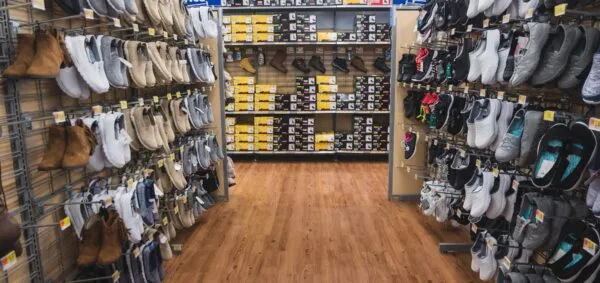
In the fast-paced world of footwear retail requires a distribution strategy that can handle a vast array of styles, sizes, and seasonal trends with precision and speed. From managing a high volume of SKUs to ensuring accurate order fulfillment and returns processing, your distribution center is the engine that drives customer satisfaction and brand loyalty. Our expertise helps footwear retailers streamline their distribution centers, improving inventory management, accelerating order processing, and ensuring your team can efficiently move products from the receiving dock to the final customer, no matter the season.
Wholesale & Industrial Distribution
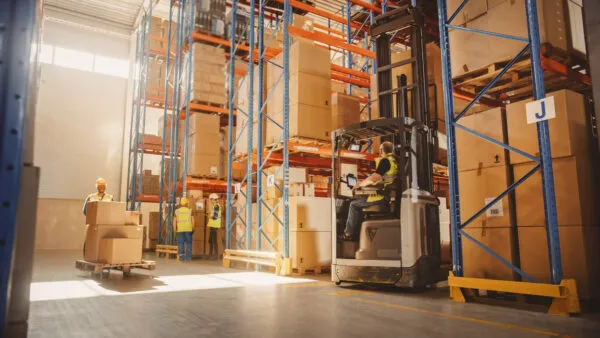
Designed Conveyor Systems (DCS) partners with wholesale, industrial, and electronics distributors to design efficient, optimized fulfillment solutions. Every operation DCS designs streamlines end-to-end functional processes—from inbound receiving and putaway to picking, packing, and shipping. Designed Conveyor Systems (DCS) partners with wholesale, industrial, and electronics distributors to design efficient, optimized fulfillment solutions. Every operation DCS designs streamlines end-to-end functional processes—from inbound receiving and putaway to picking, packing, and shipping.



About Us
Designed Conveyor Systems (DCS) has 40 years of experience serving major clients in multiple industries by providing material handling, full-scale warehouse operations, and conveyor design solutions that are custom crafted for their needs. DCS does not sell ready-made conveyor systems but builds relationships that empower collaboration to craft custom warehouse designs together. DCS utilizes consulting, engineering design, project management, installation services, and client support to ensure our customers can keep their promises to deliver on time.
Projects
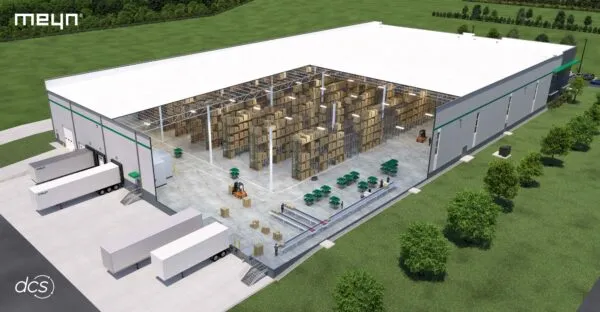
With more than 40 years of experience providing automated system design, installation, and integration services, DCS has created solutions for companies throughout the United States in a broad range of industries and markets. We’ve completed more than 1500 projects ranging from greenfield facilities with completely new systems to expansions and retrofits of existing operations.
Upcoming Events
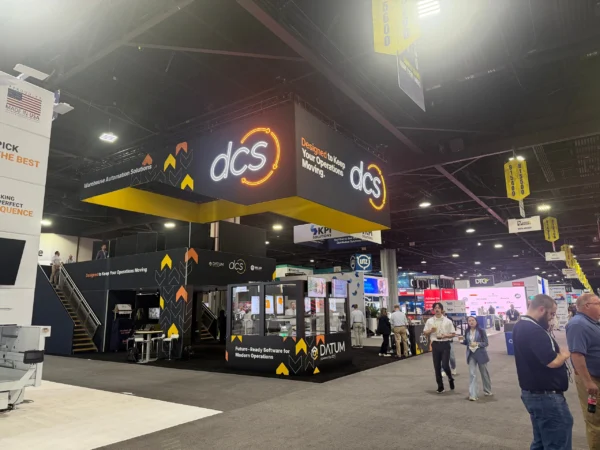
Designed Conveyor Systems values building strong relationships with our clients. Join us at our upcoming events to collaborate and discover how we can design a custom warehouse solution tailored to your unique needs.
What MODEX 2026 Revealed About the Future of Fulfillment
What MODEX 2026 Revealed About the Future of Fulfillment
By Justin Ray, Principal, Software, DCS
Every trade show tells a story. Some years, it’s about breakthrough innovation—new technologies that promise to redefine how warehouses operate. Other years, it’s about refinement—taking what already exists and making it faster, smarter, or more efficient.
MODEX 2026 told a different story.
This year’s show wasn’t defined by flashy new concepts or headline-grabbing robotics. Instead, it reflected a broader shift happening across the industry, one driven by operational reality. After years of rapid investment, experimentation, and disruption, supply chain leaders are recalibrating. The focus is no longer on what could work in a controlled environment, but on what will work consistently at scale.
Walking the show floor, that shift was evident. Conversations weren’t centered on hypothetical capabilities or future-state visions. They were grounded in practical questions about reducing risk, making existing systems perform better, and ensuring automation investments deliver on their promises. In other words, the industry is moving from exploration to execution.
Likewise, MODEX 2026 made it clear that the future of fulfillment won’t be defined by a single breakthrough technology. Instead, it will be defined by how well proven technologies are implemented, integrated, and optimized to work together.
A Shift Away from Flashy Innovation
In recent years at other material handling industry trade shows, there has been significant buzz around emerging technologies, such as humanoid robotics. The narrative suggested a near-term transformation of warehouse operations through these bi-pedal, AI-driven machines.
At MODEX 2026, those human form factor robots were notably absent. Why? Probably because they’re highly complex and extremely specialized solutions are best suited to specific use cases. These systems also struggle to handle the variability and exception management of real-world operations.
Instead, what dominated the show floor were proven, scalable technologies—solutions that have been tested, deployed, and refined. The innovation wasn’t in entirely new concepts, but in how existing systems have been improved, extended, and made more practical. The edges are getting sharper. The tools are getting better. And the focus has shifted from revolutionary to reliable.
The Rise of Risk-Aware Decision Making
This shift is being driven by the people attending MODEX. Supply chain leaders didn’t congregate in Atlanta to explore experimental ideas. They were looking to solve real operational challenges, and to do so with confidence. That meant attendees were prioritizing proven technologies over prototypes, scalable solutions over niche applications, and repeatable implementations over one-off innovations.
In many ways, the market is recalibrating after a period of rapid investment and disruption. Organizations are now stepping back and asking a different set of questions:
- What will the next 10 years look like?
- How do we build systems that can adapt?
- How do we mitigate labor constraints while maintaining performance?
DCS believes those answers are not found in isolated technologies, but rather in how those technologies work together.
Integration Has Become the Innovation
Across the show floor, one theme stood out: individual technologies are no longer the differentiator.
On the storage and picking side, technologies like cube-based systems and goods-to-person solutions continue to evolve. But the messaging has changed. The focus is no longer on peak throughput at a single station. Instead, solutions providers are acknowledging a critical truth: no subsystem operates in a vacuum, and performance depends on everything around it.
As a result, more solutions are being designed with built-in intelligence. Think integrated robotic arms, smarter software, and more adaptive control layers. These enhancements are not about replacing existing systems, but about making them more responsive to real operational conditions.
A similar trend is emerging on the packing side. The conversation has shifted toward cube optimization, material reduction, and shipping efficiency. While labor benefits are still present, they are no longer the primary selling point. Instead, the emphasis is on reducing waste, improving sustainability, and optimizing downstream logistics.
In both cases, the pattern is the same. Technologies are becoming more capable individually, but the real value comes from how they are coordinated.
Why Software Is Now the Center of Gravity
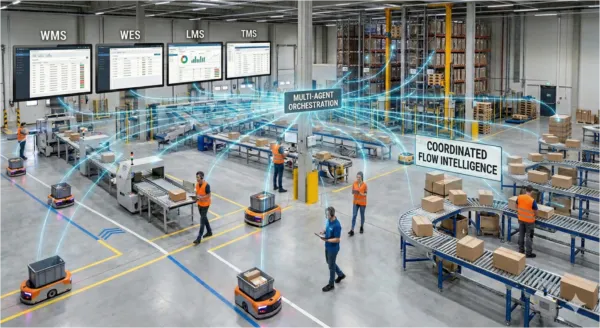
The challenge facing most operations is not a lack of technology. It is the presence of too many disconnected systems, each optimized locally, but not aligned globally. As systems become more interconnected, software is taking on a new role. This is where the next frontier of innovation lies.
At MODEX 2026, there was a noticeable increase in messaging around orchestration, optimization, and system-wide visibility. More providers are recognizing that the warehouse of the future is not defined by a single piece of equipment, but by how effectively all components work together.
However, not all vendors’ approaches are the same. Some solutions providers continue to push vertically integrated systems, where software is designed to support a specific set of hardware pushed by OEMs or margin priority. Others position themselves as more flexible but still guide customers toward preferred technologies.
The difference moving forward will come down to how truly agnostic—and how truly solution-driven—those approaches are.
A Different Approach on the Show Floor
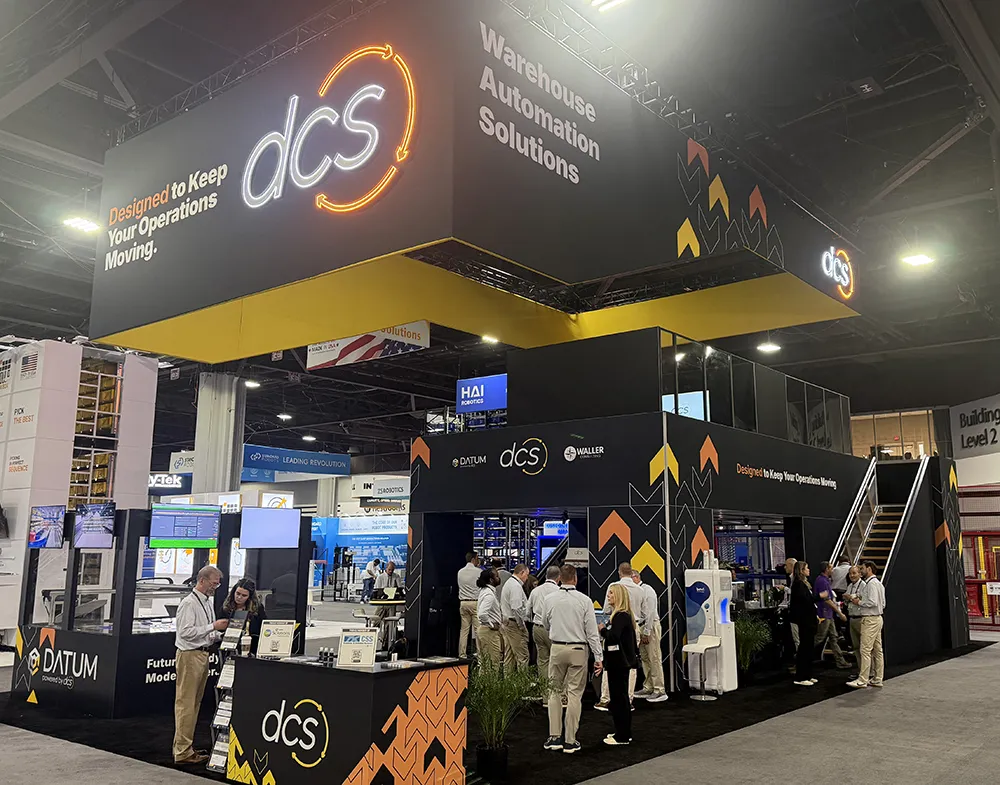
At DCS, the approach at MODEX 2026 was intentionally different. Rather than showcasing a specific piece of hardware, our focus was on demonstrating how disparate systems can be unified and optimized through software.
The DCS booth featured a mix of unconventional components—gantry robotics, vision systems, and controls—integrated in a way that would not typically exist in a production environment. That was by design. Our goal was to prove a point: it’s not about the hardware itself. It’s about how the system thinks.
Using DATUM™, our proprietary warehouse execution system (WES), DCS demonstrated how a warehouse can be modeled end-to-end. From inbound receiving to storage and picking through outbound shipping, the DCS exhibit debuted a new DATUM™ module, Flow Intelligence, which captures real-time data, visualizes system performance, predicts future outcomes, and recommends solutions to bottlenecks before they form.
This included:
- Real-time analytics across the operation.
- Predictive throughput modeling within defined time windows via a digital system twin.
- Identification of bottlenecks before they occur.
- Scenario-based adjustments to labor, wave planning, and system configuration.
By simulating a full warehouse flow and layering in predictive intelligence, DCS’ exhibit showed how operations can move from reactive decision-making to proactive optimization. The response from visitors to our booth? “This is what the industry has been missing.”
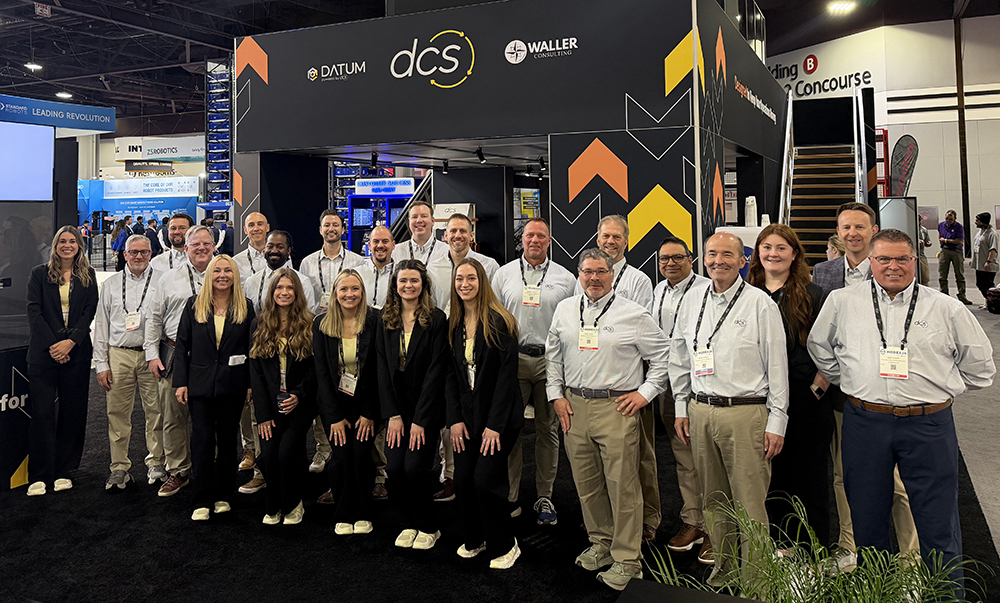
The DCS and Waller Consulting, A DCS Company, team at MODEX 2026.
From Visibility to Predictability
One of the biggest gaps in today’s operations is the inability to see what’s coming next. Many facilities rely on teams of experienced planners and supervisors to manage flow. While effective to a point, these approaches are inherently reactive. They respond to issues after they appear, rather than preventing them altogether.
What resonated most among MODEX attendees visiting the DCS exhibit was the ability to project system behavior into the future. By leveraging a digital twin and real-time data, DATUM™ can forecast where bottlenecks will occur—whether that’s two hours or six hours ahead—based on current order volume, system capacity, and labor availability.
This level of visibility changes how decisions are made. Instead of reacting to congestion, operations can prevent it. Instead of adjusting staffing after performance drops, they can align resources in advance. Instead of relying on averages, they can operate based on real conditions. Ultimately, the shift from visibility to predictability is where the greatest gains will be realized.
What This Means for the Industry
MODEX 2026 did not showcase a single breakthrough technology that will redefine the warehouse overnight. Instead, it highlighted something more important. Our industry is aligning around practical, scalable, and integrated solutions.
The winners in this next phase will not be those with the most advanced individual systems. They will be those who can bring everything together—people, processes, and technologies—into a unified, optimized operation. Because at the end of the day, fulfillment is not about how fast one system can run. It’s about how well the entire system flows.
Looking to turn disconnected systems into a unified, high-performing operation? Connect with DCS to learn how DATUM™ delivers real-time orchestration, predictive throughput, and true system-wide optimization.