

Package Handling
DCS’s design and engineering team has more than 40 years of experience creating unique parcel handling systems for diverse customer applications. With installations including semi-automated handling in small city distribution centers and fully automated, integrated hubs with advanced conveyor and sorter equipment, DCS routinely thinks outside the box.
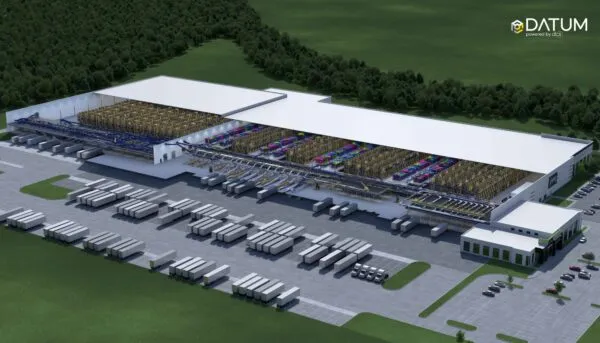
E-Commerce and Multi-Channel Fulfillment
DCS designs and implements end-to-end warehouse automation solutions for e-commerce and multi-channel retailers that address numerous workflow challenges. This includes solutions for receiving, putaway, storage, replenishment, order fulfillment, picking, packing, sortation, and outbound shipping. Our custom integrated warehouse, distribution, and fulfillment systems draw from a deep pool of conventional, semi-automated, and automated material handling technologies.
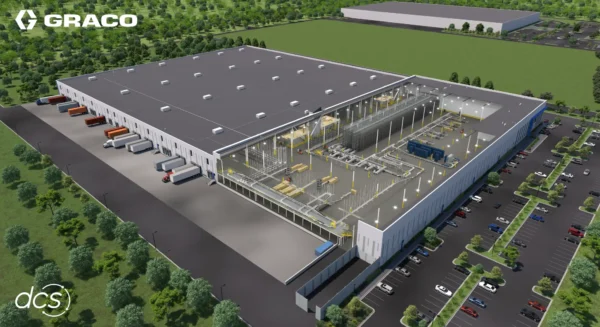
Various Distribution Applications
Whether an operation is considering the construction of a new distribution or fulfillment center, or a retrofit or expansion of an existing facility, it’s important to create a solution that fits the overarching supply chain strategy. DCS has four decades of experience designing and integrating comprehensive, end-to-end material handling solutions that meet a multitude of operational goals. Whether conventional, semi-automated, or fully automated, DCS can help your organization implement a custom solution that meets its goals while maximizing return on investment (ROI).

Supply Chain Consulting
The DCS Supply Chain Consulting team offers a range of services to help your operations address the challenges it faces. Working in partnership with you, DCS consultants analyze your business data- existing workforce, workflow processes, inventory, order data, operations, and more- to determine a strategy that addresses your unique needs. Whether you need an operations assessment, process improvement recommendations, or distribution design services, DCS consultants will help guide you to the material handling system or operational solution that best meets your current and future needs, as well as your budget.

Customer Support
Keeping your warehouse operations and material handling systems running smoothly and at the peak of productivity are the goals of DCS’ Customer Service Team. By partnering with DCS, your warehouse automation solution is supported from commissioning to end of life. You’ll receive comprehensive in-house training of your personnel, including specialized training of your designated internal system expert. Plus, DCS offers a complete package of spare parts and expert system troubleshooting support from qualified engineers dedicated to your installation.

System Design & Integration
DCS offers a broad range of material handling equipment and automated system design, installation, and integration services for a multitude of projects. These include retrofits, expansions, upgrades, and more. While every project is unique, our system design and execution processes are the same, encompassing meticulous attention to detail, frequent communication, and a dedicated partnership with our clients.

Lifecycle Services
Stop reactive repairs. Lifecycle Services provides expert preventive maintenance and 24/7 technical support to protect your automation and MHE availability.

Life Science & Healthcare
Pharmaceutical, healthcare, and life science companies face mounting pressure from evolving regulatory requirements, rising fulfillment costs, and intensifying accuracy demands. In this environment, automation isn’t optional—it’s essential. Designed Conveyor Systems (DCS) helps distributors of these critical products stay compliant and competitive.

Pet Food
Pet food distribution operations are anything but standard. From bulky kibble bags to delicate fish tanks, stock keeping unit (SKU) complexity and fulfillment pressure are always on the rise. Designed Conveyor Systems (DCS) partners with leading pet retailers to design and engineer automation, software, and material handling systems that keep operations agile, accurate, and ready for what’s next.

Home Improvement
When your distribution center handles everything from hammers to hot tubs, operational complexity isn’t a challenge—it’s your daily reality. Home improvement retailers face intense pressure to meet rising consumer expectations across multiple channels—from in-store pickups to last-mile delivery. At Designed Conveyor Systems (DCS), we specialize in engineering material handling and automation solutions that help home improvement distribution centers keep pace, reduce cost, and drive accuracy at scale.

Sporting Goods
Navigating the unique demands of the sporting goods retail industry requires a distribution strategy that’s both agile and precise. From handling seasonal surges to managing a diverse range of products—from bulky equipment to small accessories—your warehouse operations are the key to a seamless customer experience. Our expertise helps sporting goods retailers streamline their distribution warehouses, improving order accuracy, boosting productivity, and ensuring your team can efficiently move products from the receiving dock to the final customer, no matter the season.

Footwear
In the fast-paced world of footwear retail requires a distribution strategy that can handle a vast array of styles, sizes, and seasonal trends with precision and speed. From managing a high volume of SKUs to ensuring accurate order fulfillment and returns processing, your distribution center is the engine that drives customer satisfaction and brand loyalty. Our expertise helps footwear retailers streamline their distribution centers, improving inventory management, accelerating order processing, and ensuring your team can efficiently move products from the receiving dock to the final customer, no matter the season.

Wholesale & Industrial Distribution
Designed Conveyor Systems (DCS) partners with wholesale, industrial, and electronics distributors to design efficient, optimized fulfillment solutions. Every operation DCS designs streamlines end-to-end functional processes—from inbound receiving and putaway to picking, packing, and shipping. Designed Conveyor Systems (DCS) partners with wholesale, industrial, and electronics distributors to design efficient, optimized fulfillment solutions. Every operation DCS designs streamlines end-to-end functional processes—from inbound receiving and putaway to picking, packing, and shipping.




About Us
Designed Conveyor Systems (DCS) has 40 years of experience serving major clients in multiple industries by providing material handling, full-scale warehouse operations, and conveyor design solutions that are custom crafted for their needs. DCS does not sell ready-made conveyor systems but builds relationships that empower collaboration to craft custom warehouse designs together. DCS utilizes consulting, engineering design, project management, installation services, and client support to ensure our customers can keep their promises to deliver on time.
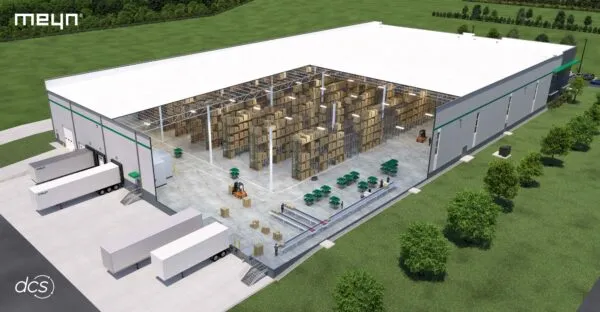
Projects
With more than 40 years of experience providing automated system design, installation, and integration services, DCS has created solutions for companies throughout the United States in a broad range of industries and markets. We’ve completed more than 1500 projects ranging from greenfield facilities with completely new systems to expansions and retrofits of existing operations.
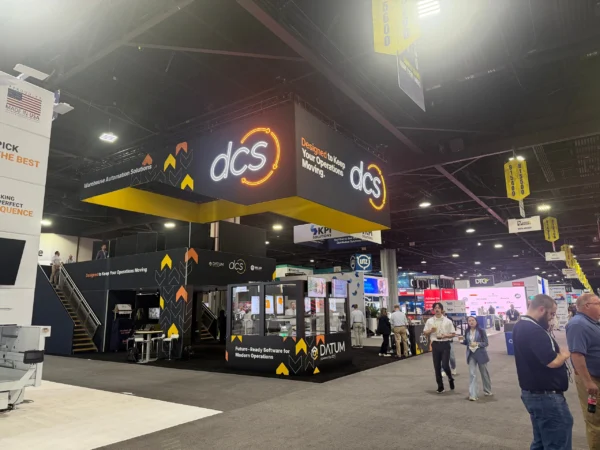
Upcoming Events
Designed Conveyor Systems values building strong relationships with our clients. Join us at our upcoming events to collaborate and discover how we can design a custom warehouse solution tailored to your unique needs.
WMS, WCS, WES: Understanding the Differences
WMS, WCS, WES: Understanding the Differences

If you’re looking into warehouse software these days, you’re probably wading through an alphabet soup of acronyms, and possibly struggling to figure out the differences. That’s because, as software vendors continue to enhance their offerings and expand the functionalities of their platforms, the distinctions between warehouse management systems (WMS), a warehouse control systems (WCS), and a warehouse execution systems (WES) have become less, well, distinct.
Here’s how I define the functional differences – and the operational benefits – of each software system:
Warehouse Management Systems (WMS). The most mature system of the three, WMS has been used in warehouses, distribution centers and fulfillment operations for roughly four decades. At its core, a WMS manages and coordinates inventory, as well as dictates the actions to be taken within the facility to handle that inventory. Utilizing a WMS streamlines and automate complex processes throughout the end-to-end operation, from receiving to shipping and all points in between.
As WMS have evolved over the years, they’ve become an increasingly robust inventory management tool. Today, as part of their evolution, WMS can be hosted online or in the Cloud instead of onsite. This limits the need for in-house information technology (IT) experts dedicated to managing and upgrading the system, as updates are automatically pushed to license holders.
Further, most of today’s WMS can be enhanced with additional functionality at the flip of an (electronic) switch with what the industry refers to as configuration management. If an operation needs a labor management system (LMS), a yard management system (YMS), or a transportation management system (TMS), these modules can be easily switched on as needed. Cloud-based delivery of a WMS has also enabled new pricing models, such as software-as-a-service (SaaS), making a powerful tool much more affordable for smaller operations who can customize their WMS functionality to get exactly what they need.
Warehouse Control Systems (WCS). With the advent of automated equipment – primarily built with programmable logic controllers (PLCs) to direct the operation of the machinery – it became necessary to develop software that could communicate the instructions of the WMS to the automation. Therein came the development of the WCS. The WCS controls the actions of conveyors, scanners, print-and-apply labelers, sorters, automated storage and retrieval systems and more, making routing decisions to execute the directions from the WMS as efficiently as possible.
Warehouse Execution Systems (WES). The newest software offering available, WES blends warehouse control with some tasks traditionally handled by a WMS. WES technology has allowed WCS vendors to add some of the less complicated functionality of a WMS, while maintaining the basic equipment control of a WCS. WES handles most order planning, intelligently releases tasks, synthesizes all the current work and continuously reprioritizes it for the optimal process flow. This solution is typically deployed in hybrid manual plus automation facilities, or in completely automated distribution centers, to help fill high-velocity orders with specific order delivery deadlines, reallocating labor to match workflows. It also integrates a variety of semi-automated solutions, such as goods-to-person technologies, pick-to-light systems, voice systems, and autonomous mobile robots (AMRs).
What’s the right software match for your operation?
One of the basic rules of thumb is to consider the complexity of your operation. Generally speaking, a less-complex operation will often find a WMS is more than adequate for warehouse operations. Examples might include a small operation, one that’s entirely manual (with no automation), or limited to one or two facilities.
Conversely, a large corporation with inventory spread across multiple warehouses, a third-party logistics (3PL) services provider, or e-commerce fulfillment operation with automation would have the level of complexity that calls for the functionality of a WMS (plus a WCS or possibly a WES). Notably, many large organizations utilize enterprise resource planning (ERP) software, some of which incorporate WMS functions as well.
A good first step to sorting out which of these three software packages is best for your operation is to create a wish list of the desired functionalities. Consider what functions you need, what level of automation you have (or anticipate adding in the near- or long-term), and what challenges you’re facing in your current system. Knowing your operations’ needs will make it easier to evaluate potential software solutions and their functionalities to determine which is the optimal fit.
Need more help figuring out if your operation should implement a WMS, WCS or WES – or which one to deploy? Connect with us; we’re happy to assist you with making those decisions.
_
Author
 Chris Smith, Senior Software Consultant, chriss@designedconveyor.com
Chris Smith brings 15 years of experience in the material handling industry. The vast majority of his experience comes from a software engineering background where he created leading WMS solutions in manual and automated warehouses. His roles have also included Solutions Architecture, managing commissioning and quality assurance, and managing pre-sales engineering efforts on large airports nationwide. He is passionate about leveraging his experience to help grow DCS as a software consultant, and he enjoys spending time with his family and golfing outside of work.