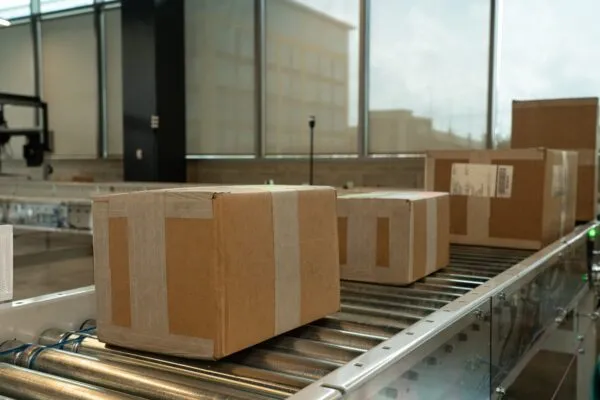
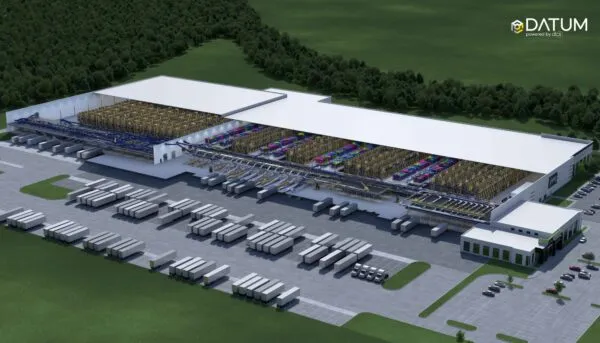
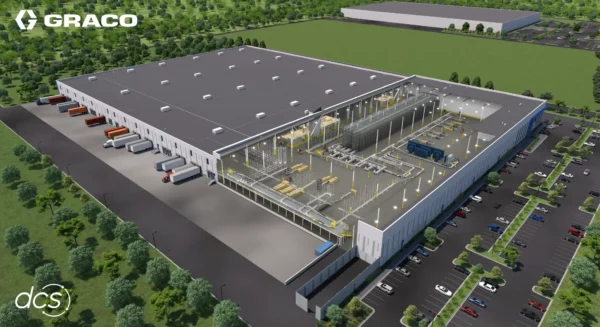
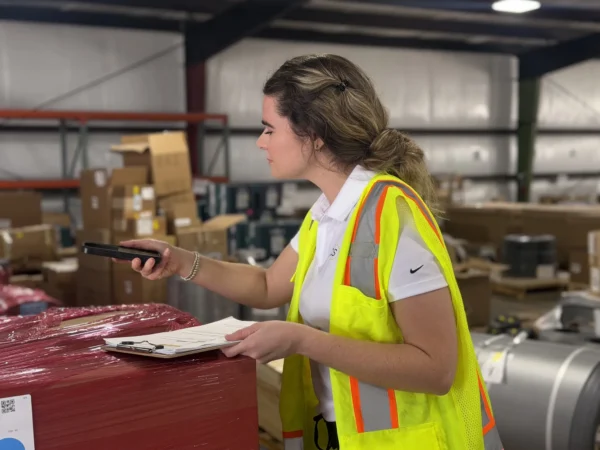
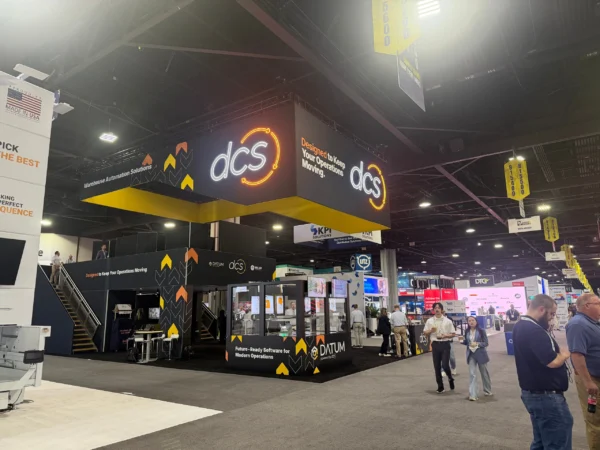
DCS’s design and engineering team has more than 40 years of experience creating unique parcel handling systems for diverse customer applications. With installations including semi-automated handling in small city distribution centers and fully automated, integrated hubs with advanced conveyor and sorter equipment, DCS routinely thinks outside the box.
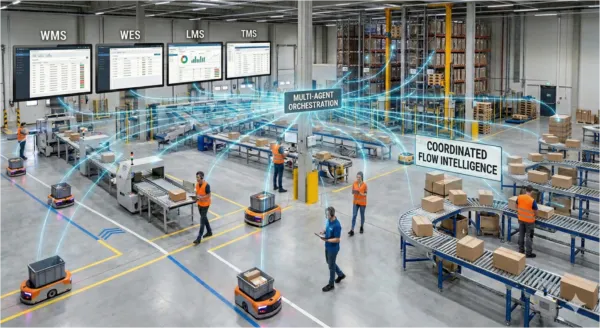
DCS designs and implements end-to-end warehouse automation solutions for e-commerce and multi-channel retailers that address numerous workflow challenges. This includes solutions for receiving, putaway, storage, replenishment, order fulfillment, picking, packing, sortation, and outbound shipping. Our custom integrated warehouse, distribution, and fulfillment systems draw from a deep pool of conventional, semi-automated, and automated material handling technologies.
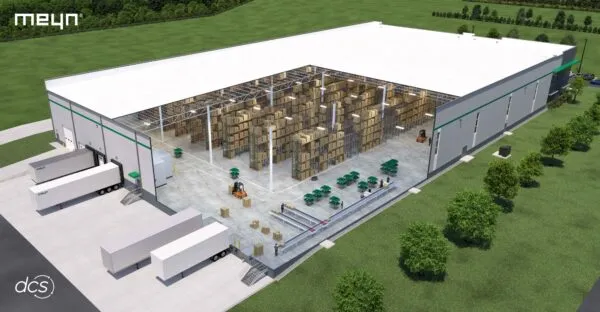
Whether an operation is considering the construction of a new distribution or fulfillment center, or a retrofit or expansion of an existing facility, it’s important to create a solution that fits the overarching supply chain strategy. DCS has four decades of experience designing and integrating comprehensive, end-to-end material handling solutions that meet a multitude of operational goals. Whether conventional, semi-automated, or fully automated, DCS can help your organization implement a custom solution that meets its goals while maximizing return on investment (ROI).
The DCS Supply Chain Consulting team offers a range of services to help your operations address the challenges it faces. Working in partnership with you, DCS consultants analyze your business data- existing workforce, workflow processes, inventory, order data, operations, and more- to determine a strategy that addresses your unique needs. Whether you need an operations assessment, process improvement recommendations, or distribution design services, DCS consultants will help guide you to the material handling system or operational solution that best meets your current and future needs, as well as your budget.
DCS provides distribution center design and warehouse design consulting for new facilities, expansions, and existing warehouse retrofits. Using operational data, the DCS consulting team develops facility layouts, processes, material handling strategies, and automation concepts based on the unique requirements of each operation.
DCS provides warehouse automation consulting to help distribution and fulfillment operations determine where automation makes sense, what level of automation is appropriate, and how potential solutions align with operational and financial goals.
DCS provides warehouse and distribution center operations with assessment and optimization consulting to help identify inefficiencies, improve productivity, and develop a clear path toward better performance.
DCS provides supply chain strategy and optimization consulting to help organizations define how their distribution operations should evolve to support broader business goals.
DCS provides warehouse technology and software consulting to help organizations assess existing systems, define requirements, and develop a technology strategy aligned with their operational needs and future goals.
DCS provides supply chain network design and optimization consulting to help organizations determine how facilities, inventory, transportation, and fulfillment should work together across their distribution network.
Keeping your warehouse operations and material handling systems running smoothly and at the peak of productivity are the goals of DCS’ Customer Service Team. By partnering with DCS, your warehouse automation solution is supported from commissioning to end of life. You’ll receive comprehensive in-house training of your personnel, including specialized training of your designated internal system expert. Plus, DCS offers a complete package of spare parts and expert system troubleshooting support from qualified engineers dedicated to your installation.
DCS offers a broad range of material handling equipment and automated system design, installation, and integration services for a multitude of projects. These include retrofits, expansions, upgrades, and more. While every project is unique, our system design and execution processes are the same, encompassing meticulous attention to detail, frequent communication, and a dedicated partnership with our clients.
Stop reactive repairs. Lifecycle Services provides expert preventive maintenance and 24/7 technical support to protect your automation and MHE availability.
Designed Conveyor Systems (DCS) engineers retail distribution center automation, warehouse execution software and material handling systems that keep stores stocked and orders moving through every channel and season.
Pet food distribution operations are anything but standard. From bulky kibble bags to delicate fish tanks, stock keeping unit (SKU) complexity and fulfillment pressure are always on the rise. Designed Conveyor Systems (DCS) partners with leading pet retailers to design and engineer automation, software, and material handling systems that keep operations agile, accurate, and ready for what’s next.
When your distribution center handles everything from hammers to hot tubs, operational complexity isn’t a challenge—it’s your daily reality. Home improvement retailers face intense pressure to meet rising consumer expectations across multiple channels—from in-store pickups to last-mile delivery. At Designed Conveyor Systems (DCS), we specialize in engineering material handling and automation solutions that help home improvement distribution centers keep pace, reduce cost, and drive accuracy at scale.
Navigating the unique demands of the sporting goods retail industry requires a distribution strategy that’s both agile and precise. From handling seasonal surges to managing a diverse range of products—from bulky equipment to small accessories—your warehouse operations are the key to a seamless customer experience. Our expertise helps sporting goods retailers streamline their distribution warehouses, improving order accuracy, boosting productivity, and ensuring your team can efficiently move products from the receiving dock to the final customer, no matter the season.
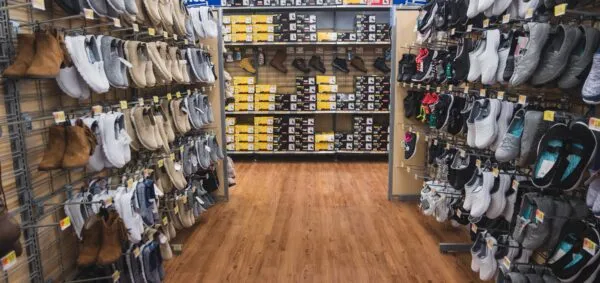
In the fast-paced world of footwear retail requires a distribution strategy that can handle a vast array of styles, sizes, and seasonal trends with precision and speed. From managing a high volume of SKUs to ensuring accurate order fulfillment and returns processing, your distribution center is the engine that drives customer satisfaction and brand loyalty. Our expertise helps footwear retailers streamline their distribution centers, improving inventory management, accelerating order processing, and ensuring your team can efficiently move products from the receiving dock to the final customer, no matter the season.
Pharmaceutical, healthcare, and life science companies face mounting pressure from evolving regulatory requirements, rising fulfillment costs, and intensifying accuracy demands. In this environment, automation isn’t optional—it’s essential. Designed Conveyor Systems (DCS) helps distributors of these critical products stay compliant and competitive.
Designed Conveyor Systems (DCS) partners with wholesale, industrial, and electronics distributors to design efficient, optimized fulfillment solutions. Every operation DCS designs streamlines end-to-end functional processes—from inbound receiving and putaway to picking, packing, and shipping. Designed Conveyor Systems (DCS) partners with wholesale, industrial, and electronics distributors to design efficient, optimized fulfillment solutions. Every operation DCS designs streamlines end-to-end functional processes—from inbound receiving and putaway to picking, packing, and shipping.
Designed Conveyor Systems (DCS) has 40 years of experience serving major clients in multiple industries by providing material handling, full-scale warehouse operations, and conveyor design solutions that are custom crafted for their needs. DCS does not sell ready-made conveyor systems but builds relationships that empower collaboration to craft custom warehouse designs together. DCS utilizes consulting, engineering design, project management, installation services, and client support to ensure our customers can keep their promises to deliver on time.
With more than 40 years of experience providing automated system design, installation, and integration services, DCS has created solutions for companies throughout the United States in a broad range of industries and markets. We’ve completed more than 1500 projects ranging from greenfield facilities with completely new systems to expansions and retrofits of existing operations.
Designed Conveyor Systems values building strong relationships with our clients. Join us at our upcoming events to collaborate and discover how we can design a custom warehouse solution tailored to your unique needs.
Build a Supply Chain Strategy for Where Your Business Is Going
DCS provides supply chain strategy and optimization consulting to help organizations define how their distribution operations should evolve to support broader business goals.
Our consultants evaluate the current state of your supply chain, identify future requirements and develop a prioritized roadmap connecting your network, facilities, operations, inventory and technology to where your business is going next.
Whether you’re preparing for growth, responding to changing customer expectations or determining where to invest next, DCS helps turn complex supply chain decisions into a practical strategy for the future.
Supply chain strategy is the process of determining how your distribution network, facilities, inventory, operations, technology and resources should evolve to support your broader business objectives.
Supply chain optimization uses data and analysis to evaluate opportunities, trade-offs and future scenarios so organizations can make more informed decisions about where to focus and invest.
Rather than looking at one facility or operational challenge in isolation, DCS takes a broader view of the supply chain to help answer:
Where does our supply chain need to be in the next three, five or ten years?
When the strategy identifies an area requiring deeper analysis, DCS can connect that roadmap to specialized consulting in network design, distribution center design, operations optimization or warehouse automation.
Connect Supply Chain Strategy to Business Strategy
Your supply chain should support where the business is going—not simply maintain how it operates today.
Growth, acquisitions, new products, geographic expansion, changing customer expectations, labor availability and evolving fulfillment channels can all change what an effective supply chain looks like.
DCS works with stakeholders to understand the broader business objectives behind the supply chain strategy. We then evaluate what those objectives mean for future distribution requirements.
That can include questions such as:
How much capacity will we need as the business grows?
Can our existing distribution infrastructure support that growth?
Where are we likely to encounter constraints?
How could customer or market changes affect our distribution strategy?
What investments may be required?
Which initiatives should take priority?
How should those initiatives be sequenced over time?
Connecting operational planning to business strategy helps create a supply chain that is prepared to support what comes next.
Understand Where You Are Today
Before defining a future state, you need a clear understanding of the current one.
DCS consultants analyze available business and operational data to establish a baseline and identify the factors most likely to influence future strategy.
Depending on the engagement, this may include:
Order and shipment data, inventory, and SKU profiles
Facility capacity, utilization, and operational performance
Customer and demand geography, and distribution network structure
Labor requirements and transportation
Material handling, automation, and supply chain technology
Service-level requirements and current operating costs
Growth projection
The objective at this stage is not to redesign every element of the operation. It is to understand the current environment well enough to make informed strategic decisions about the future.
Define the Future State
Once the current state is understood, DCS helps establish what the future supply chain needs to accomplish.
Future-state planning can consider changes in demand, product mix, customer geography, service expectations, acquisitions, fulfillment channels, labor and other business requirements.
Our consultants can evaluate different scenarios to understand how those changes may affect:
Distribution capacity
Facility requirements
Inventory strategy
Network structure
Operational requirements
Technology and automation needs
Capital investment
Supply chain risk
This allows your team to evaluate potential paths forward before making significant operational or capital commitments.
Adding capacity in one location may affect transportation and inventory. Consolidating facilities may reduce fixed costs but change service levels. Automation may reduce dependence on labor but require greater capital investment. A network change may create the need for a new distribution center.
DCS helps evaluate these relationships so decisions aren’t made in a vacuum.
Scenario analysis and business-case development can help compare potential strategies based on factors such as cost, capacity, service, risk, investment requirements and future flexibility.
The goal isn’t simply to identify what is possible. It’s to determine which path best supports the broader business strategy.
Build Resilience Into the Strategy
An effective supply chain strategy should account for more than efficiency.
DCS can help identify vulnerabilities that could affect future distribution performance and incorporate those considerations into long-term planning.
Depending on the organization, strategic risks may involve:
Facility capacity
Labor availability
Technology and systems
Inventory positioning
Transportation
Supplier or network dependencies
Demand variability
Growth assumptions
Operational flexibility
Understanding those risks can help organizations build a supply chain strategy that balances performance with the ability to adapt as conditions change.
From Business Goals to a Supply Chain Roadmap
A supply chain strategy engagement should result in more than a vision for the future. It should establish how to get there.
DCS helps translate analysis into a practical roadmap that identifies the initiatives required to move from the current state to the desired future state.
Recommendations can be prioritized and sequenced based on factors such as:
Business impact
Operational need
Investment requirements
Expected return
Risk
Complexity
Timing
Dependencies between initiatives
The resulting roadmap helps establish what should happen now, what should happen next and what requires longer-term planning.
Some recommendations may be ready to move directly into implementation. Others may identify areas where more detailed analysis is needed.
When Should You Reevaluate Your Supply Chain Strategy?
Supply chain strategy becomes particularly important when the business itself is changing.
Organizations may benefit from a strategic engagement when:
The business is experiencing significant growth
New markets or geographic regions are being considered
The company has grown through acquisition
Customer expectations or service requirements are changing
New products or fulfillment channels are being introduced
Existing distribution capacity may not support future demand
Distribution costs are increasing
Significant capital investments are being considered
Technology or automation investments need to be prioritized
The distribution network has evolved without a broader strategy
Supply chain resilience has become a greater priority
Leadership lacks a clear roadmap for future distribution operations
The objective is to make these decisions proactively rather than waiting until the existing supply chain becomes a constraint.
From Strategy to Focused Solutions
A supply chain strategy can identify where change is needed. From there, more focused analysis can determine exactly what that change should look like.
Network Design & Optimization
Question: Where should our facilities be, how many do we need and what role should each play?
DCS can evaluate facility locations, network structure, inventory positioning, transportation and service requirements to determine how the broader distribution network should operate.
Question: How can our existing warehouse or distribution center perform better?
DCS can evaluate processes, labor, layout, inventory, equipment and technology to identify bottlenecks and develop a prioritized plan for operational improvement.
Question: Where, when, and how should we automate?
DCS can evaluate automation opportunities, compare potential approaches and help build the operational and financial case before a significant technology investment is made.
A supply chain roadmap may ultimately lead to changes in networks, facilities, operations, technology or automation. DCS combines strategic supply chain consulting with decades of material handling and systems integration experience.
Supporting the Next Phase
When recommendations require additional analysis or implementation, DCS can support the next phase through specialized consulting, engineering, systems integration, software, project management, installation and ongoing lifecycle support.
Clients are not required to use DCS for implementation. When they choose to do so, however, the transition from strategy to execution can happen with a team that already understands the business objectives and operational rationale behind the roadmap.
— Supply Chain Strategy in Action
Connecting Strategy to Distribution Center Decisions
DCS worked with Bermuda Hospitals Board to evaluate its distribution network and develop a centralized, scalable distribution center strategy.
The engagement connected broader distribution considerations with facility-level planning, helping establish a path forward based on current needs and future requirements.
A supply chain strategy consultant evaluates how an organization’s distribution network, facilities, inventory, operations and technology support its broader business objectives. The consultant helps define future requirements, evaluate potential scenarios and develop a roadmap for how the supply chain should evolve.
Supply chain strategy defines the future direction of the supply chain and how it should support the business. Supply chain optimization uses data and analysis to evaluate opportunities and trade-offs that can help achieve that strategy.
The specific deliverables depend on the engagement, but the objective is typically to establish a future-state strategy and prioritized roadmap. That roadmap can identify near-term actions, longer-term initiatives, investment priorities and areas requiring more detailed analysis.
Network Design & Optimization focuses specifically on the structure of the distribution network, including the number, location, size and role of facilities and how inventory moves between them.
Supply Chain Strategy & Optimization takes a broader view, determining how the overall distribution organization should evolve and whether network changes should be part of that strategy.
An Operations Assessment & Optimization engagement focuses on improving performance within an existing warehouse or distribution center.
Supply Chain Strategy & Optimization looks across the broader distribution organization and focuses on the future state, strategic priorities and long-term roadmap.
It can be. A strategic engagement may identify automation as an opportunity or future requirement. A dedicated Warehouse Automation Consulting engagement can then evaluate where automation makes sense, which approaches should be considered and whether the investment is justified.
Yes. DCS can help evaluate potential initiatives based on operational impact, business objectives, investment requirements, risk, timing and dependencies to establish a prioritized roadmap.
Yes. Depending on the roadmap, DCS can provide additional support in areas such as network optimization, distribution center design, operations improvement, warehouse automation consulting, engineering and systems integration.
Turn Your Supply Chain Strategy Into a Plan
You don’t need to solve every supply chain challenge at once. You need to understand where you’re going, what needs to change and what should happen first.
DCS combines data, supply chain expertise and real-world implementation experience to help organizations define the future state and build a practical roadmap for getting there.